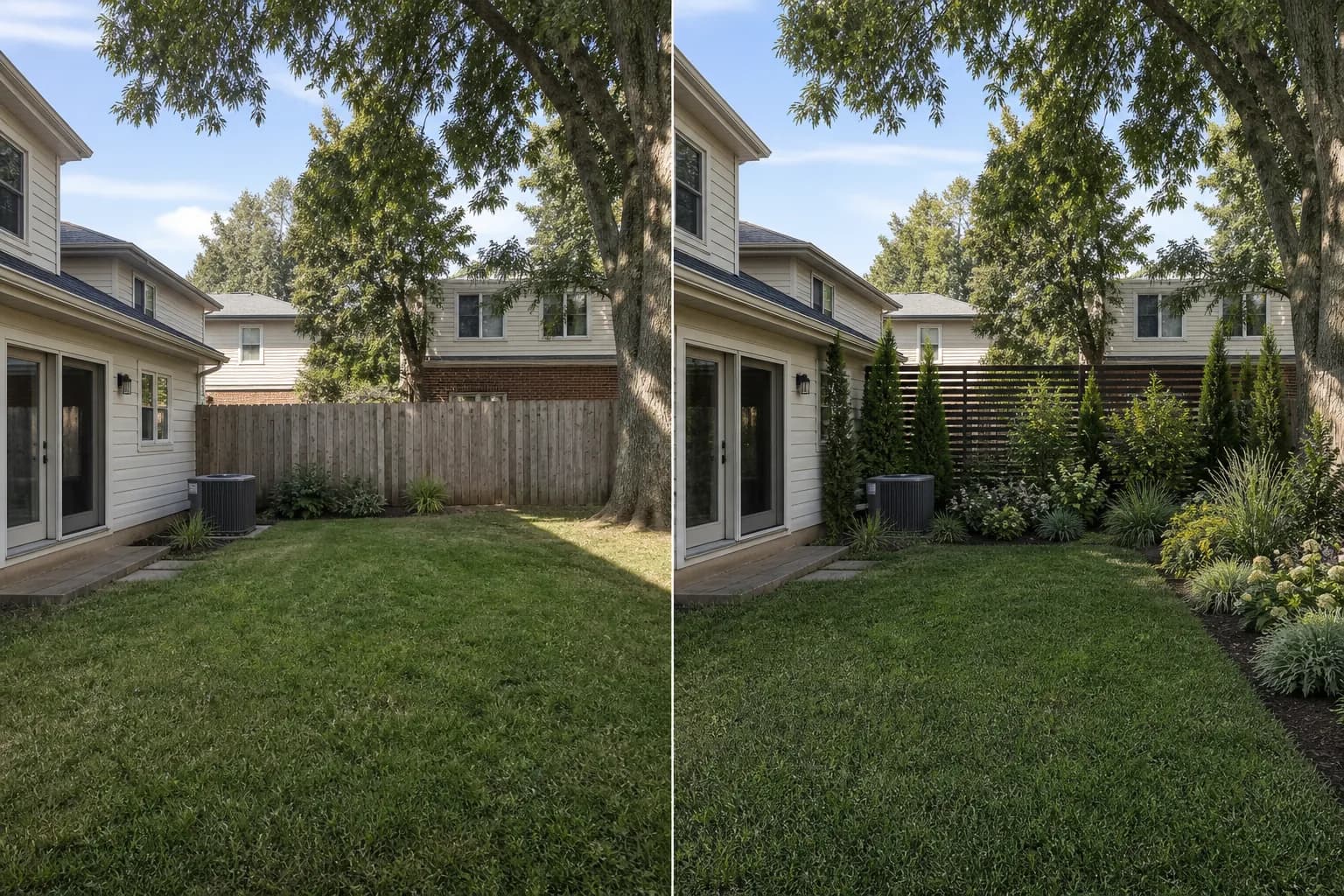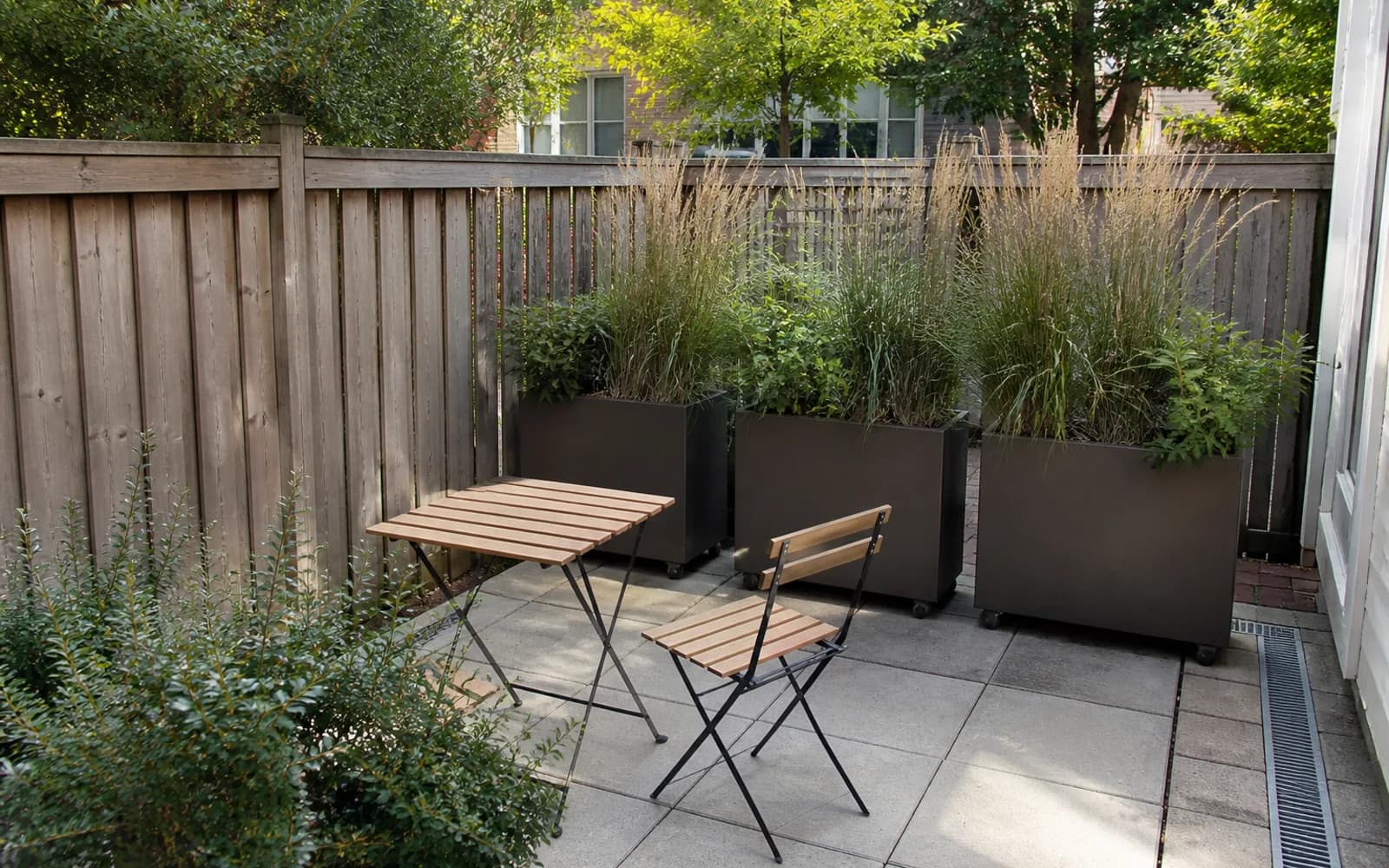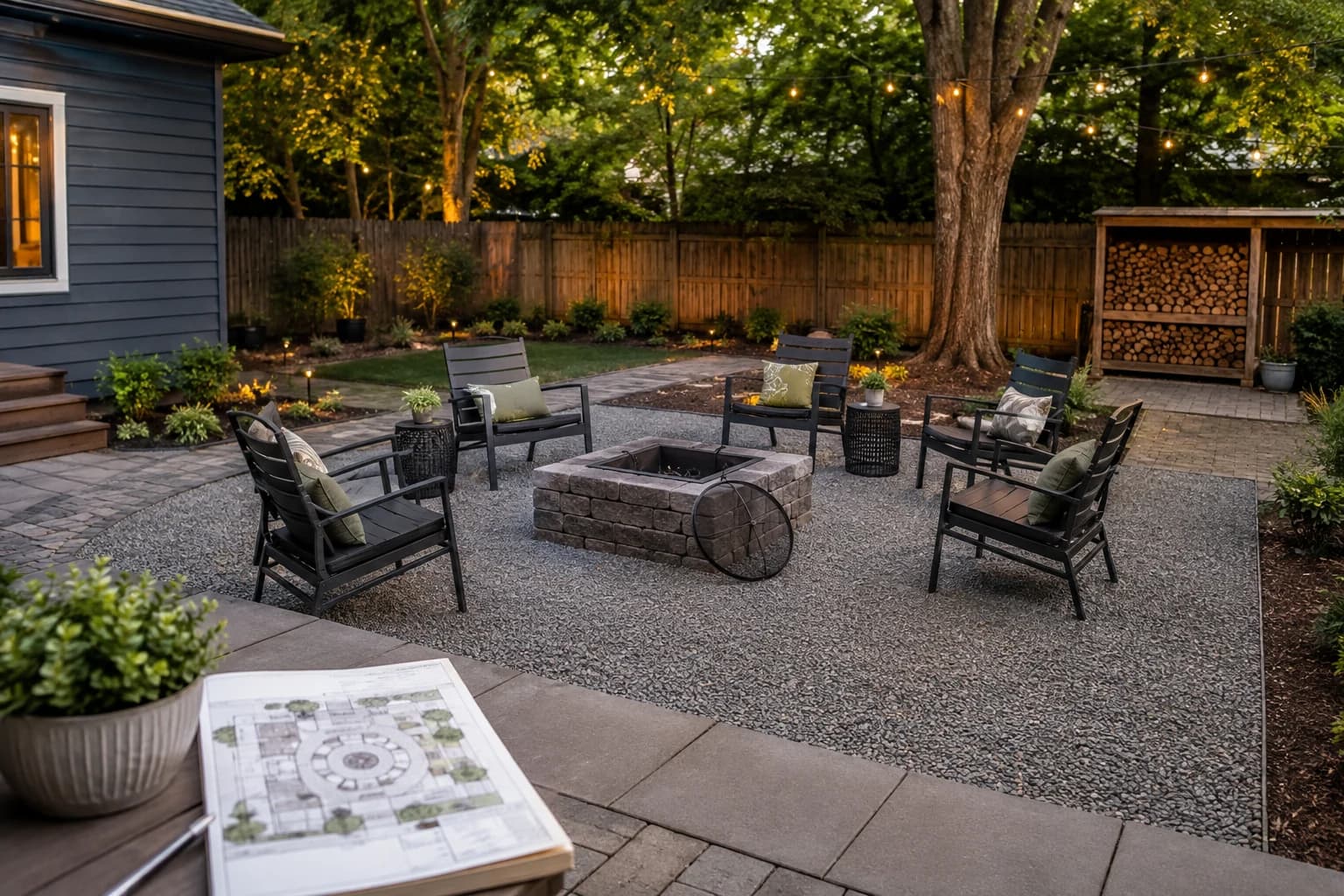
A fire pit is not a metal bowl dropped into lawn; it is an outdoor room organized around heat, movement, smoke, fuel, and supervision.
Start with official fire guidance, local rules, manufacturer instructions, and real circulation; use the numbered layouts only after those constraints are visible.
Key takeaways before you choose
- Choose the allowed location and actual fire product before drawing the patio around it.
- Organize three zones: the fire feature, the social seating ring, and a separate service and extinguishing route.
- Fuel choice changes smoke, storage, utilities, shutdown, permits, and who must install the feature.
Safety before style
USFA advises keeping outdoor fire pits at least 10 feet from a home or anything that can burn; local rules and manufacturer instructions may require more.
| Check | Record | Why it changes layout |
|---|---|---|
| Combustibles | House, fence, canopy, furniture | Sets location and clear zone |
| Wind and smoke | Prevailing direction and neighbors | Changes opening and seating |
| People and pets | Routes and supervision | Protects circulation |
| Fuel and shutdown | Gas, wood, storage, extinguishing | Defines service zone |
Choose fuel before style
This is a planning comparison, not installation approval.
| Fuel format | Plan around | Verify locally |
|---|---|---|
| Wood burning | Smoke, sparks, dry storage, ash, shutdown | Burn bans, setbacks, product and fire rules |
| Gas or fixed fuel | Utility route, shutoff, ventilation, servicing | Licensed installation and manufacturer rules |
| Portable unit | Stable placement, cooling, weather storage | Every-use placement and local restrictions |
14 layouts that work as an outdoor room
Use the list as concepts, not universal clearance instructions.
Start with the ground plane
1. A circular gravel conversation room
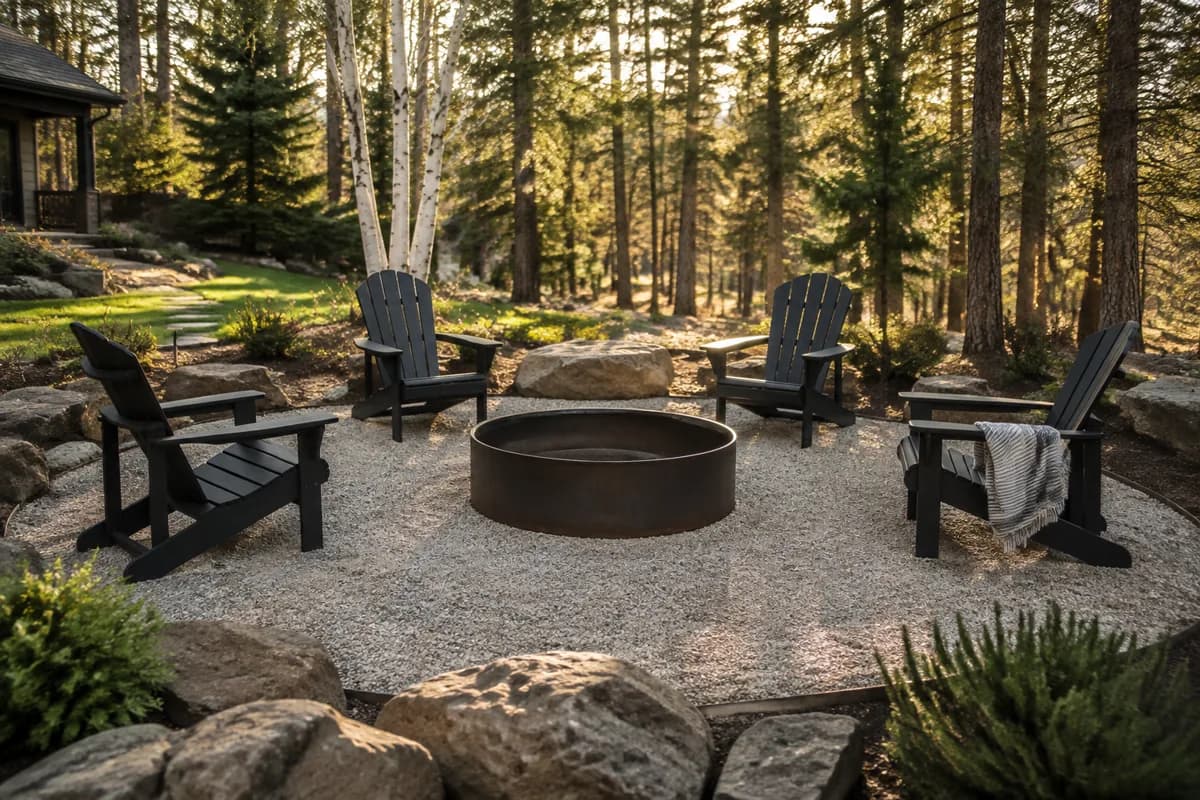
Keep the fire feature on a stable noncombustible assembly approved for the product; verify drainage, edging, heat, and local rules.
2. A rectangular paver lounge
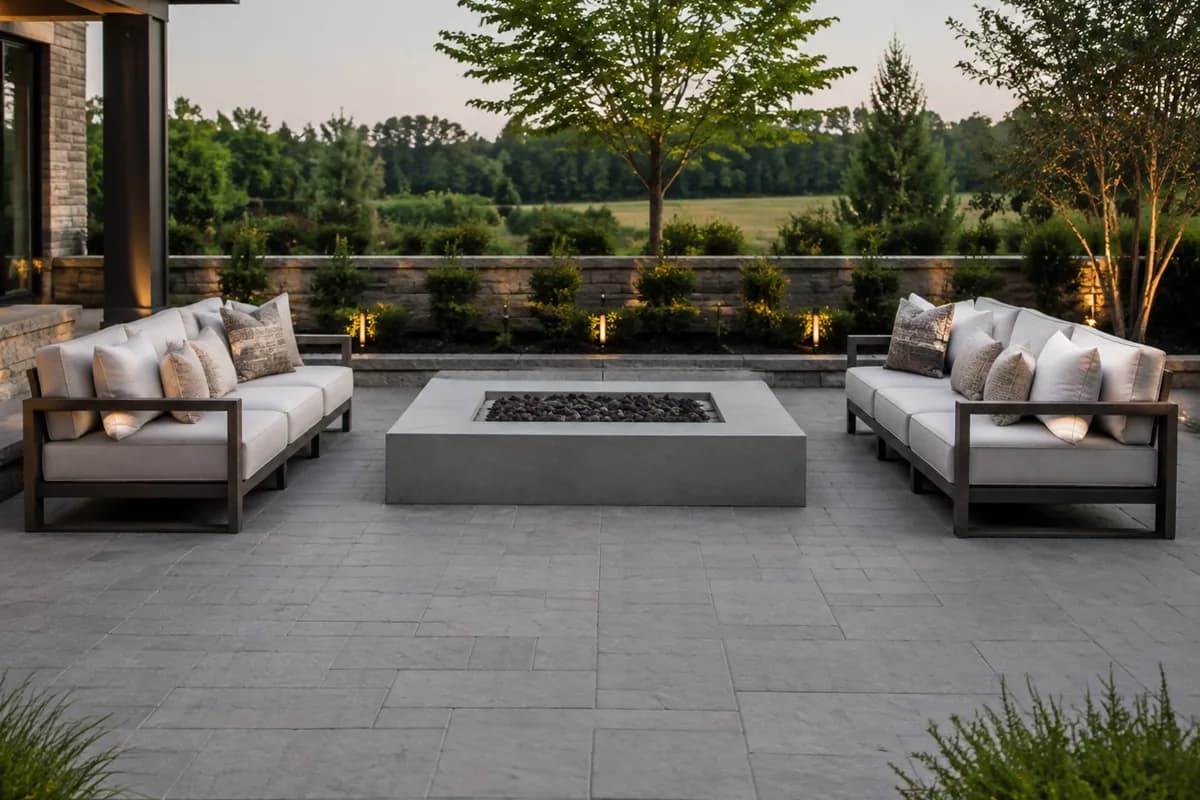
Keep the fire feature on a stable noncombustible assembly approved for the product; verify drainage, edging, heat, and local rules.
Seat people without blocking escape
3. Movable chairs with a clear ring
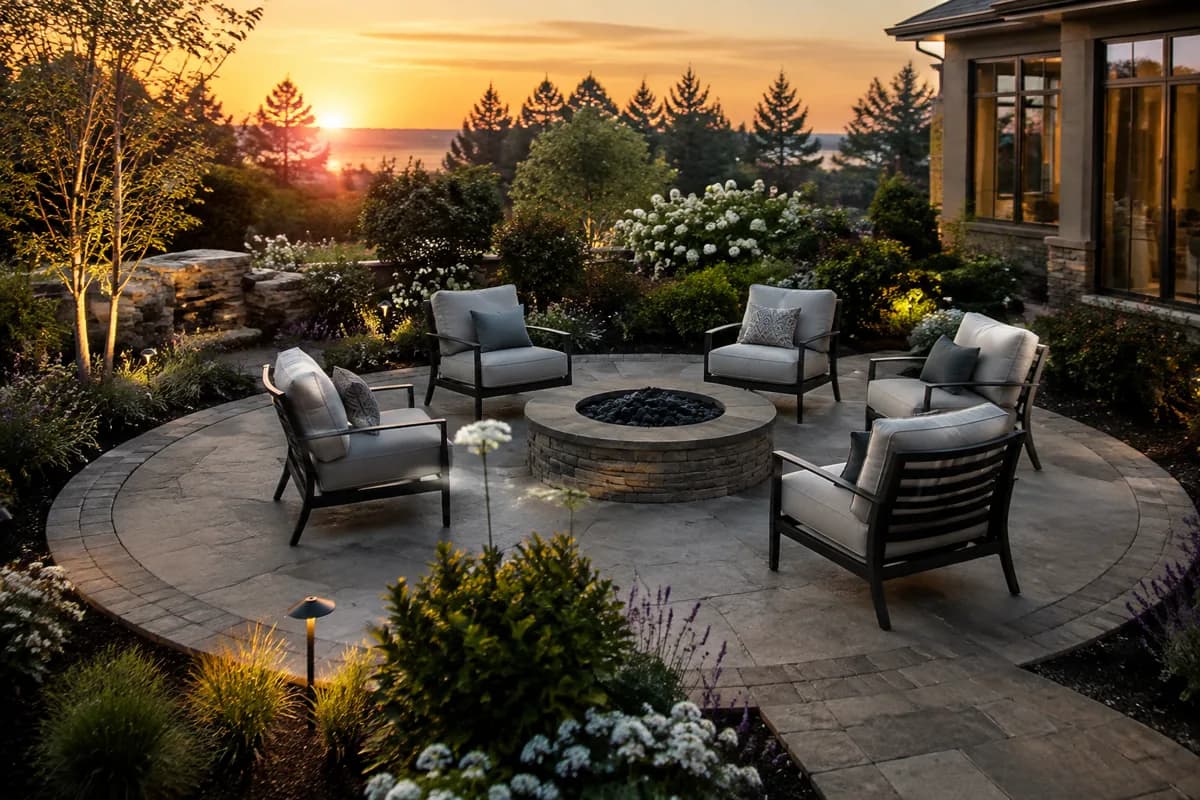
Use realistic chair pullback and a complete route that does not force anyone between seats and heat.
4. A seat wall outside the heat zone
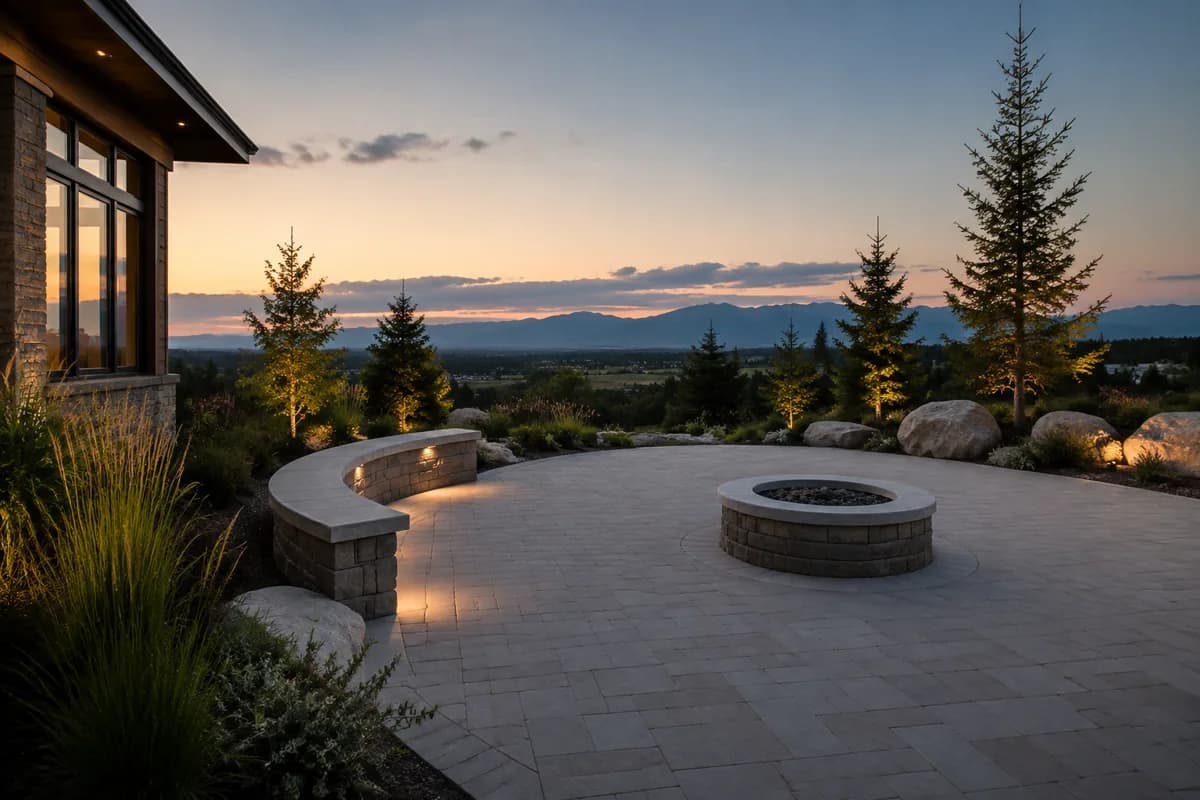
Use realistic chair pullback and a complete route that does not force anyone between seats and heat.
5. A path that bypasses the fire
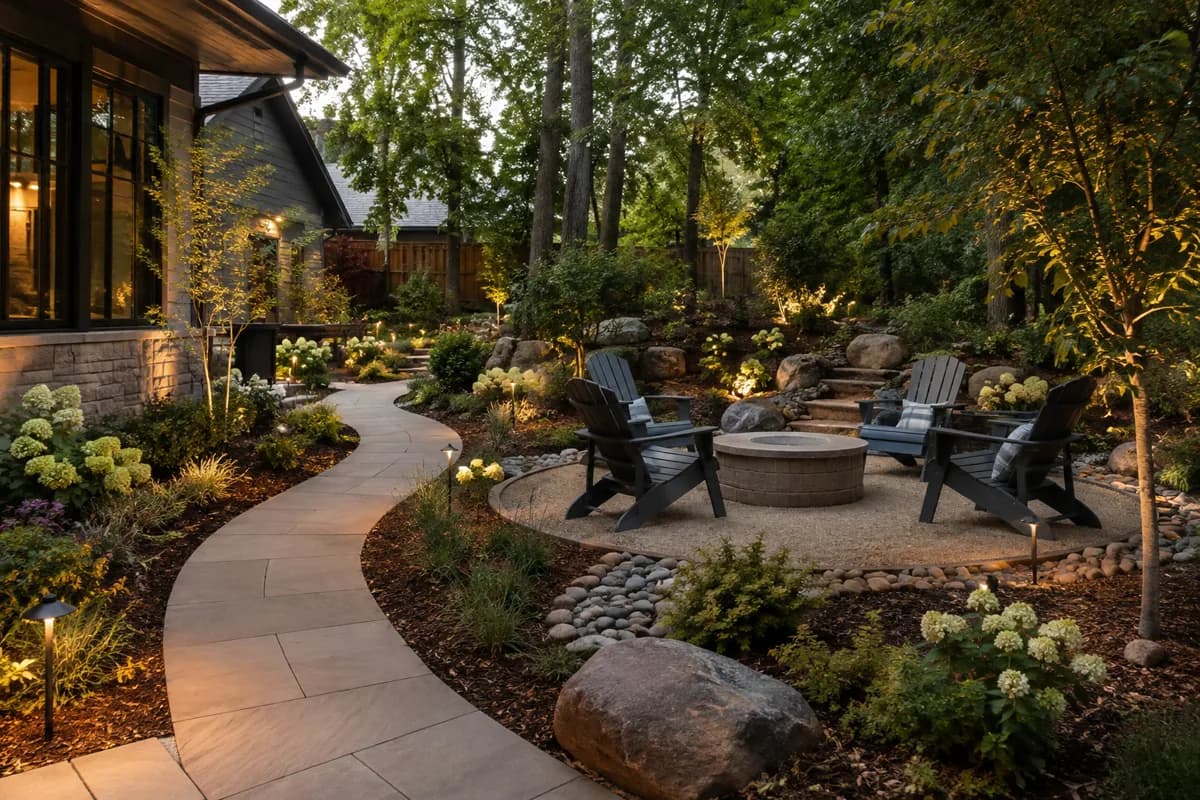
Keep arrival, departure, lighting, and emergency access obvious even when every chair is occupied.
Separate planting, fuel, and service
6. A low, maintained planting buffer
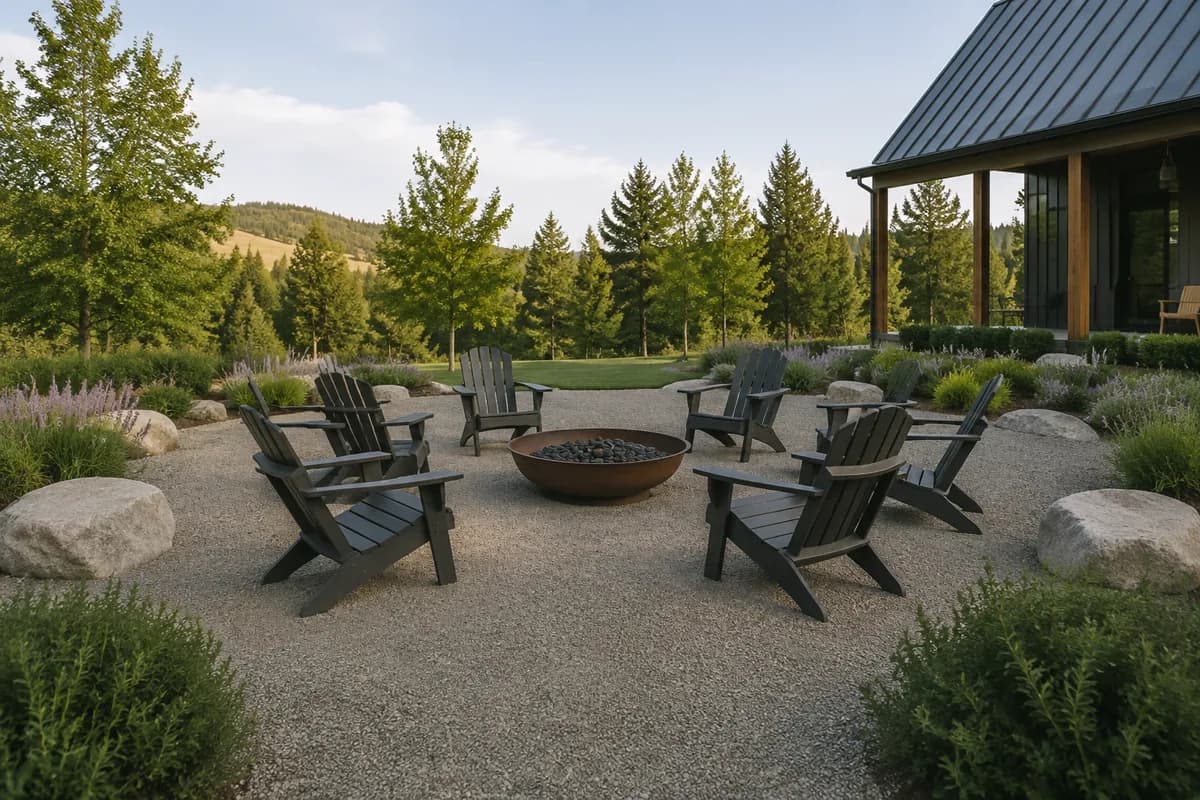
No plant is fireproof. Keep vegetation maintained and separated according to local fire guidance and seasonal conditions.
7. Wood storage in a separate service zone
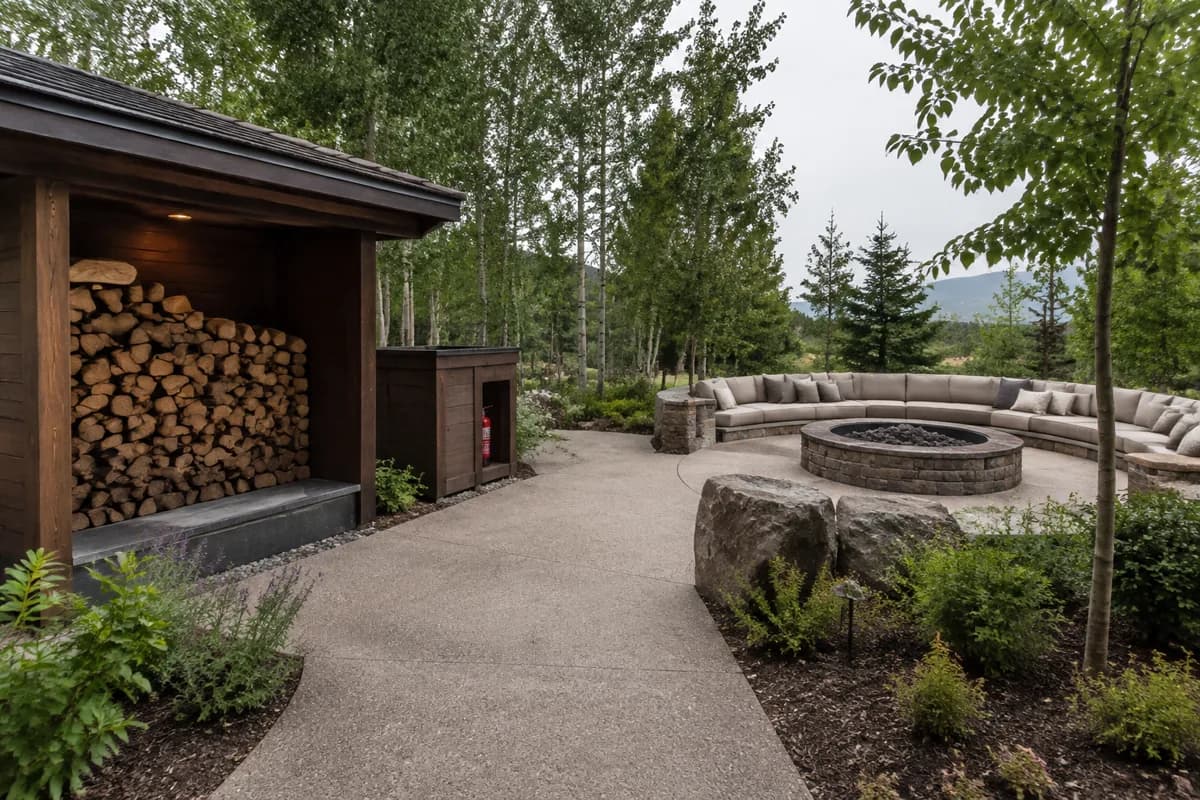
Fuel and extinguishing access belong outside the social ring but must remain visible and reachable.
8. A layout that responds to wind
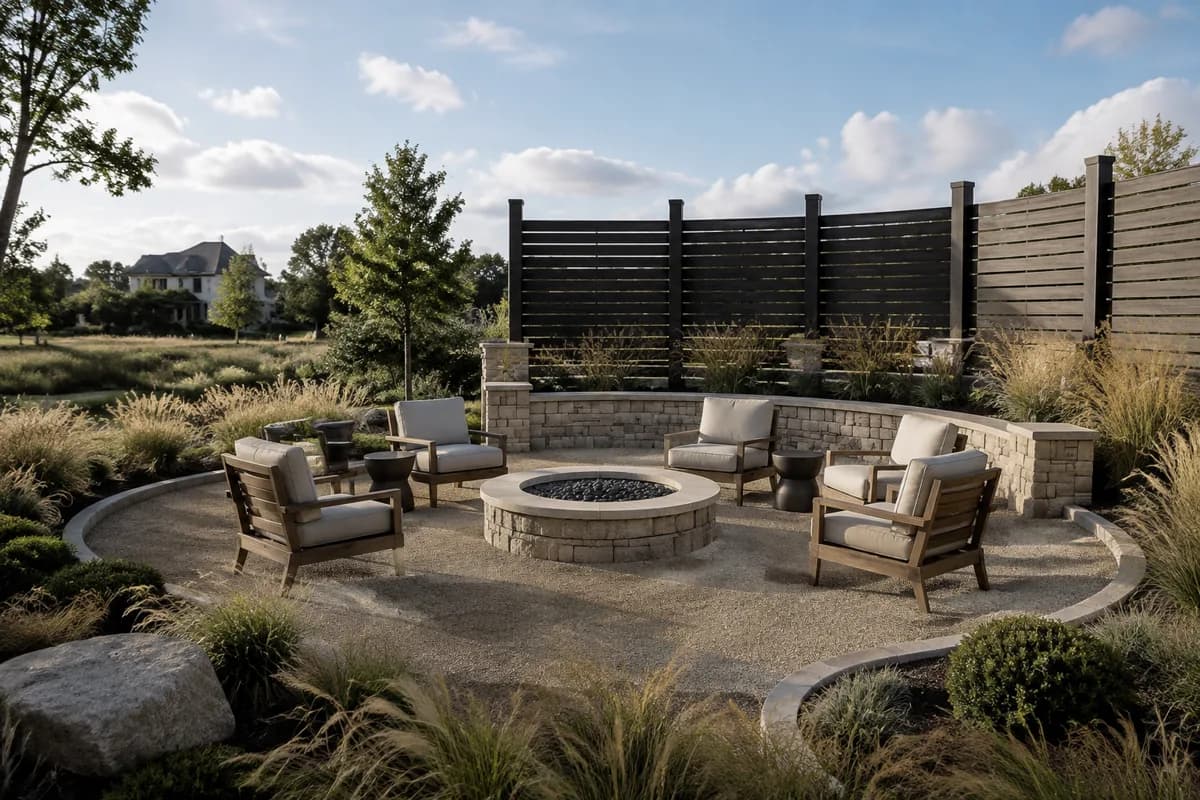
Smoke, sparks, drought, wind, overhanging branches, and neighbors can make the visually preferred location unsuitable.
Portable and finished-room details
9. A portable smokeless-style setup
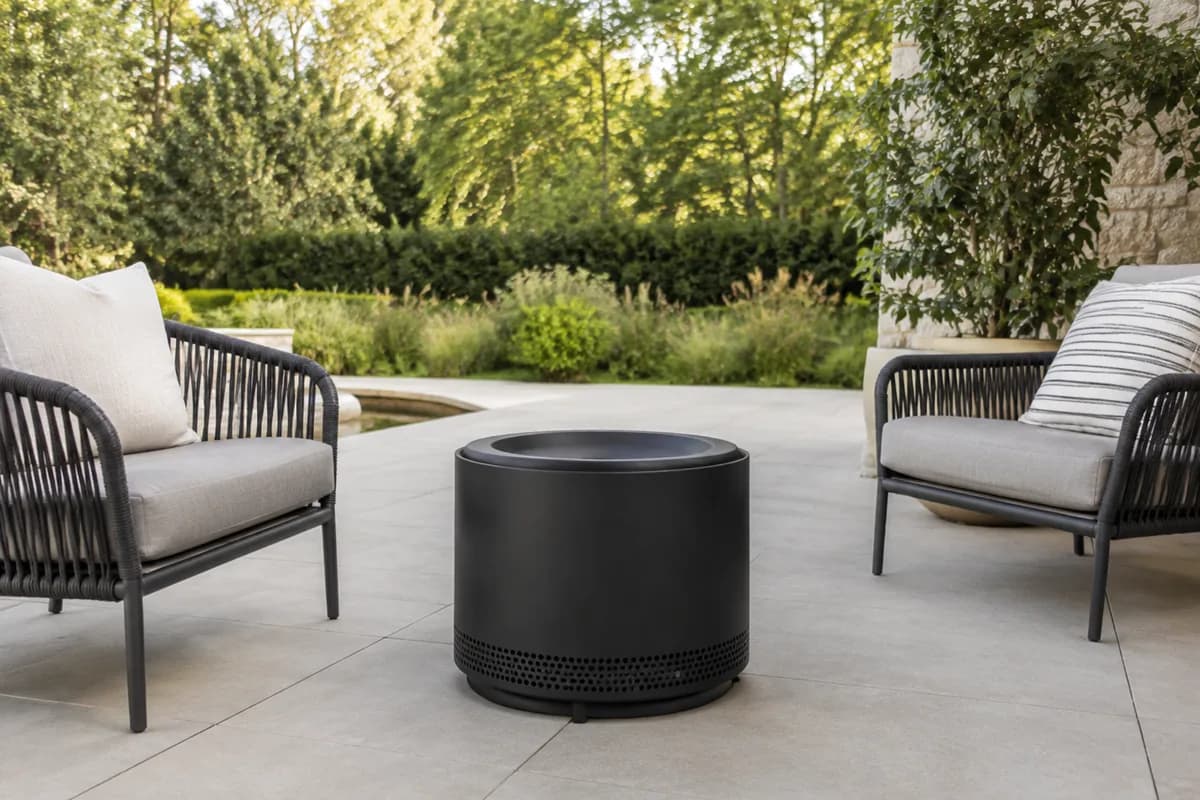
Portable arrangements reduce permanent commitment; follow product placement, storage, cooling, and weather instructions every use.
10. A gas feature with licensed installation
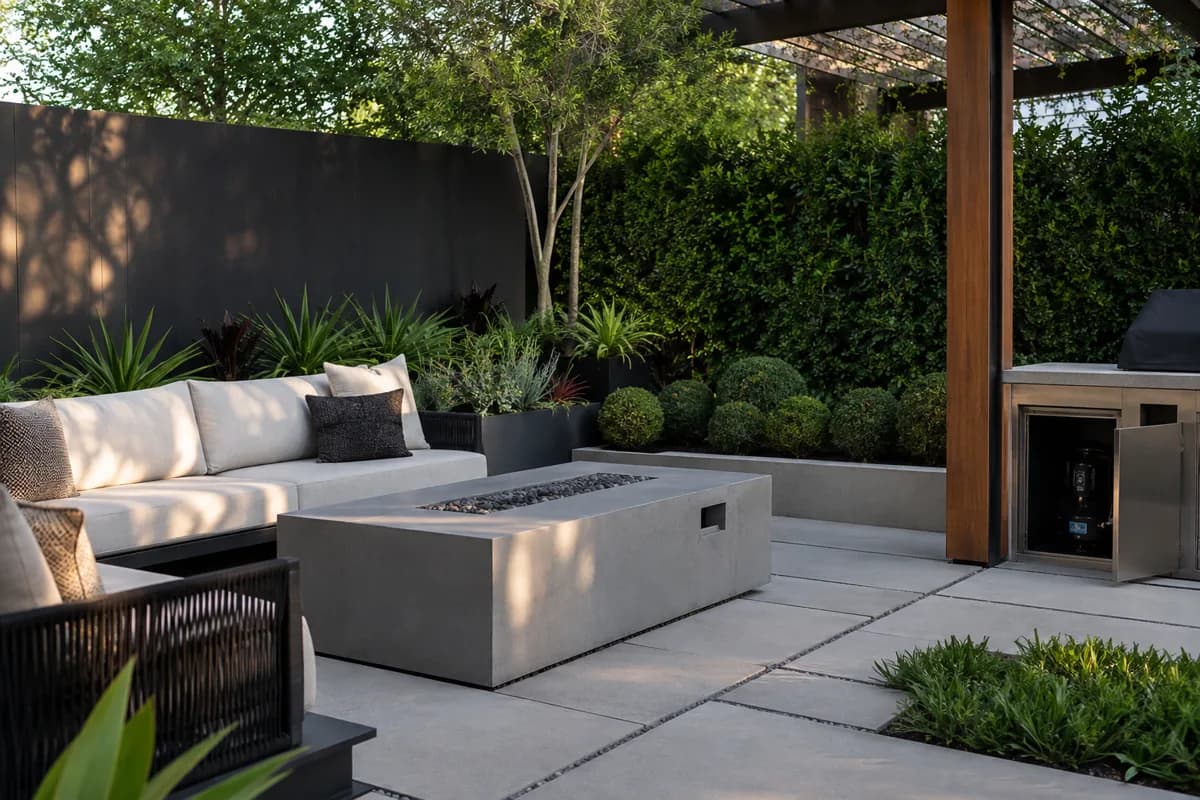
Gas lines, electrical work, combustion equipment, and permanent installations require manufacturer-compliant and locally qualified work.
11. A seasonal setup that leaves no dead zone
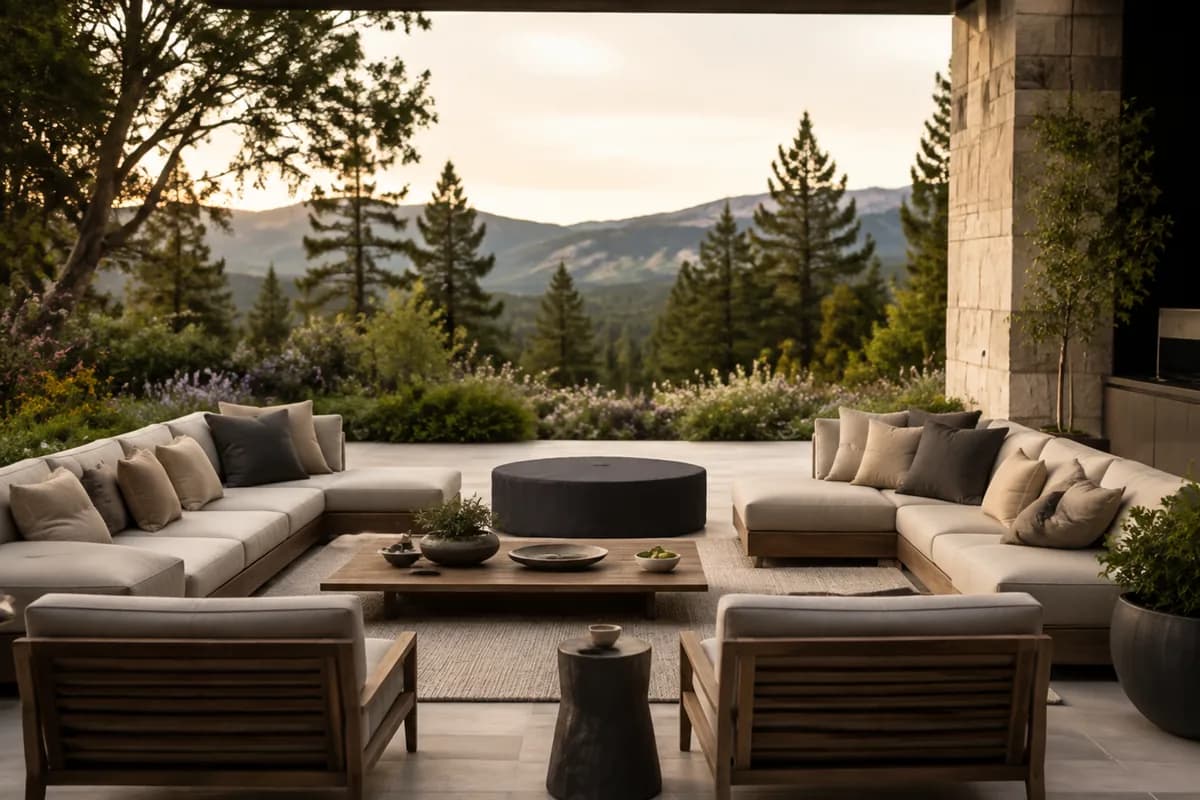
Portable arrangements reduce permanent commitment; follow product placement, storage, cooling, and weather instructions every use.
12. Low-glare lighting on the approach
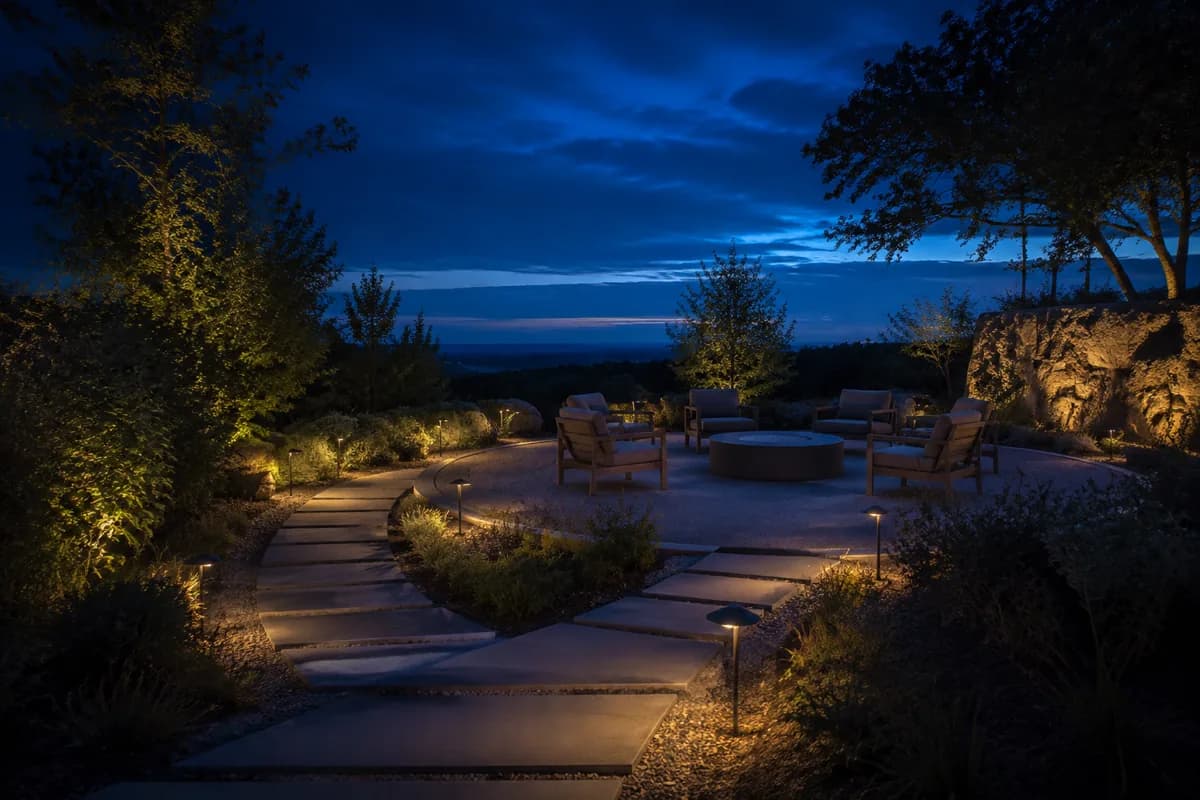
Keep arrival, departure, lighting, and emergency access obvious even when every chair is occupied.
13. Extinguishing access kept visible
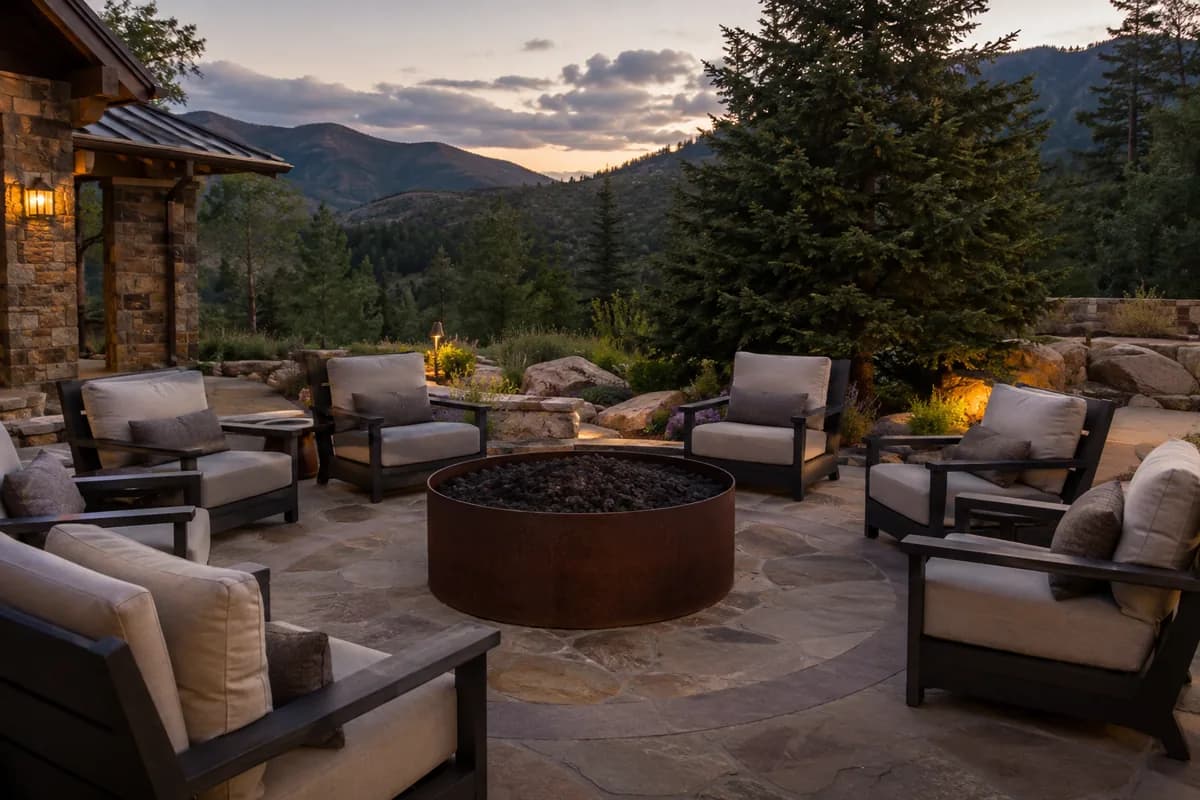
Fuel and extinguishing access belong outside the social ring but must remain visible and reachable.
14. A noncombustible threshold near the patio
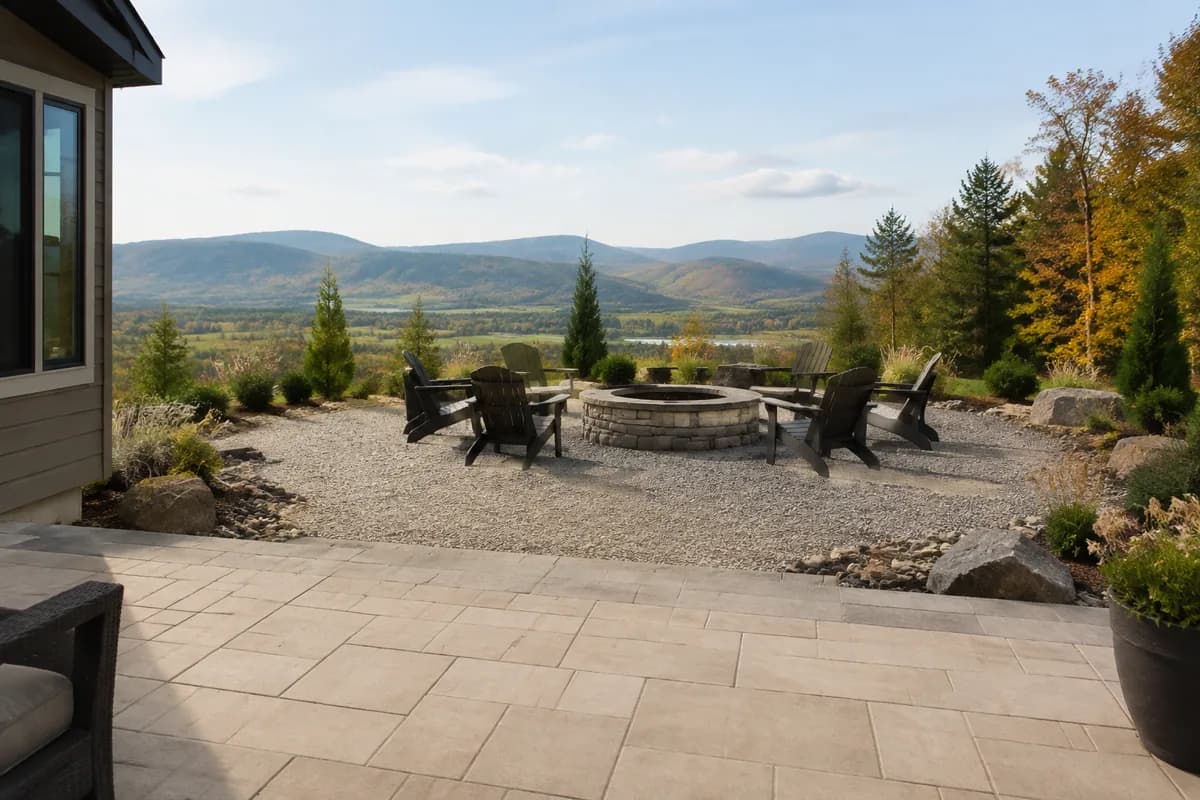
Keep the fire feature on a stable noncombustible assembly approved for the product; verify drainage, edging, heat, and local rules.
A concept image cannot approve an open flame
From photo concept to a checked layout
- Photograph the entire yard, house, canopy, fence, routes, utilities, and neighbors.
- Mark every combustible and service constraint before comparing looks.
- Use GardenGPT to compare at most three room relationships with the fire unlit.
- Select an actual product and verify manufacturer and local fire requirements.
- Measure the approved location, seating, path, fuel storage, and extinguishing access.
Frequently asked questions
How far should a fire pit be from a house?
USFA says at least 10 feet from the home or anything combustible; local rules and the manufacturer may require more.
Can plants be fireproof?
No. Moisture, maintenance, dead material, spacing, season, and local fire conditions all matter.
Can GardenGPT choose a safe location?
No. It can compare visual room relationships; qualified local review determines whether a location is allowed and safe.
Is gravel always a safe base?
No universal surface is automatically approved. Follow the product, local code, drainage, and construction requirements.
The strongest fire-pit design is the one that still works after chairs move, wind changes, children arrive, fuel is stored, and the fire must be put out.