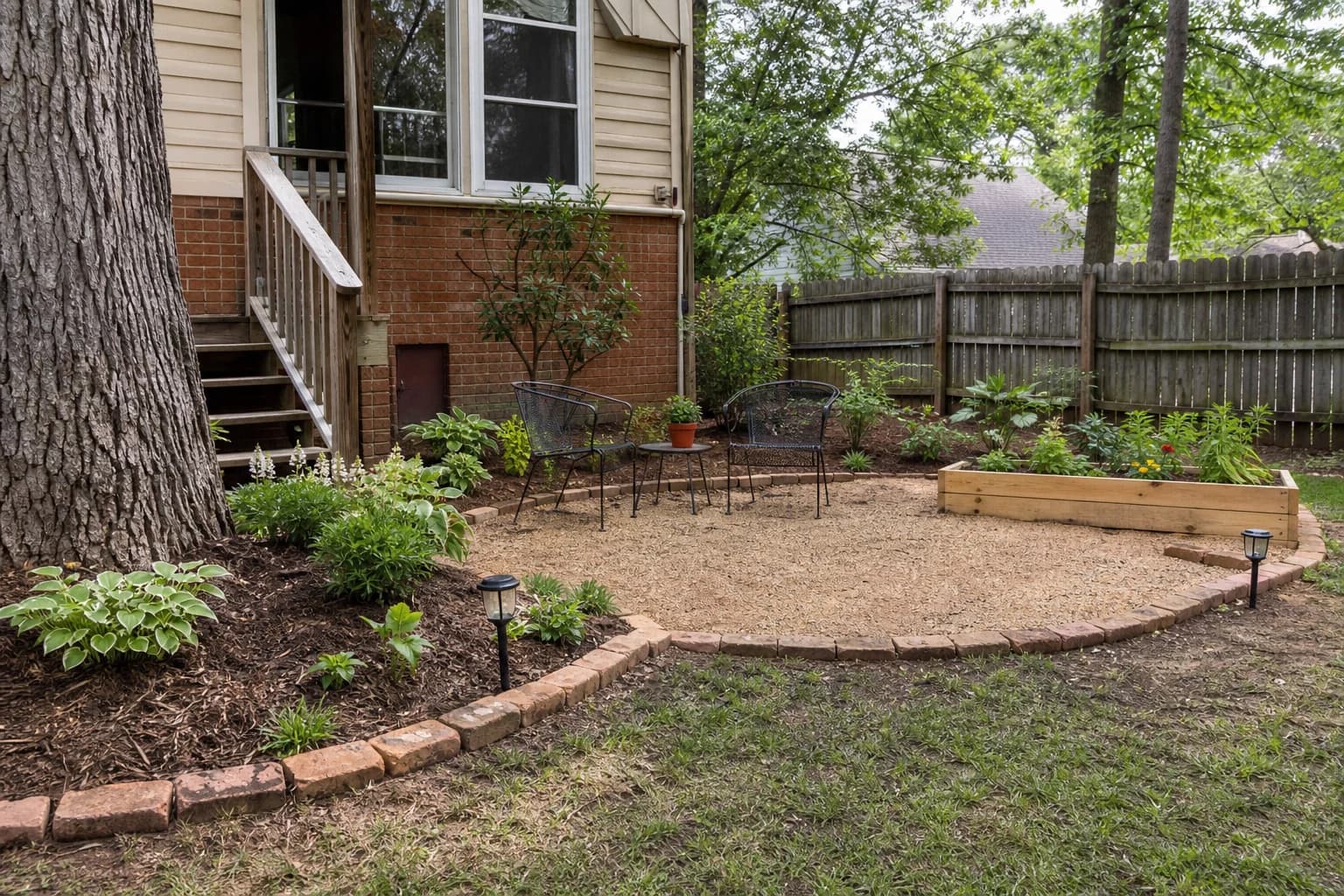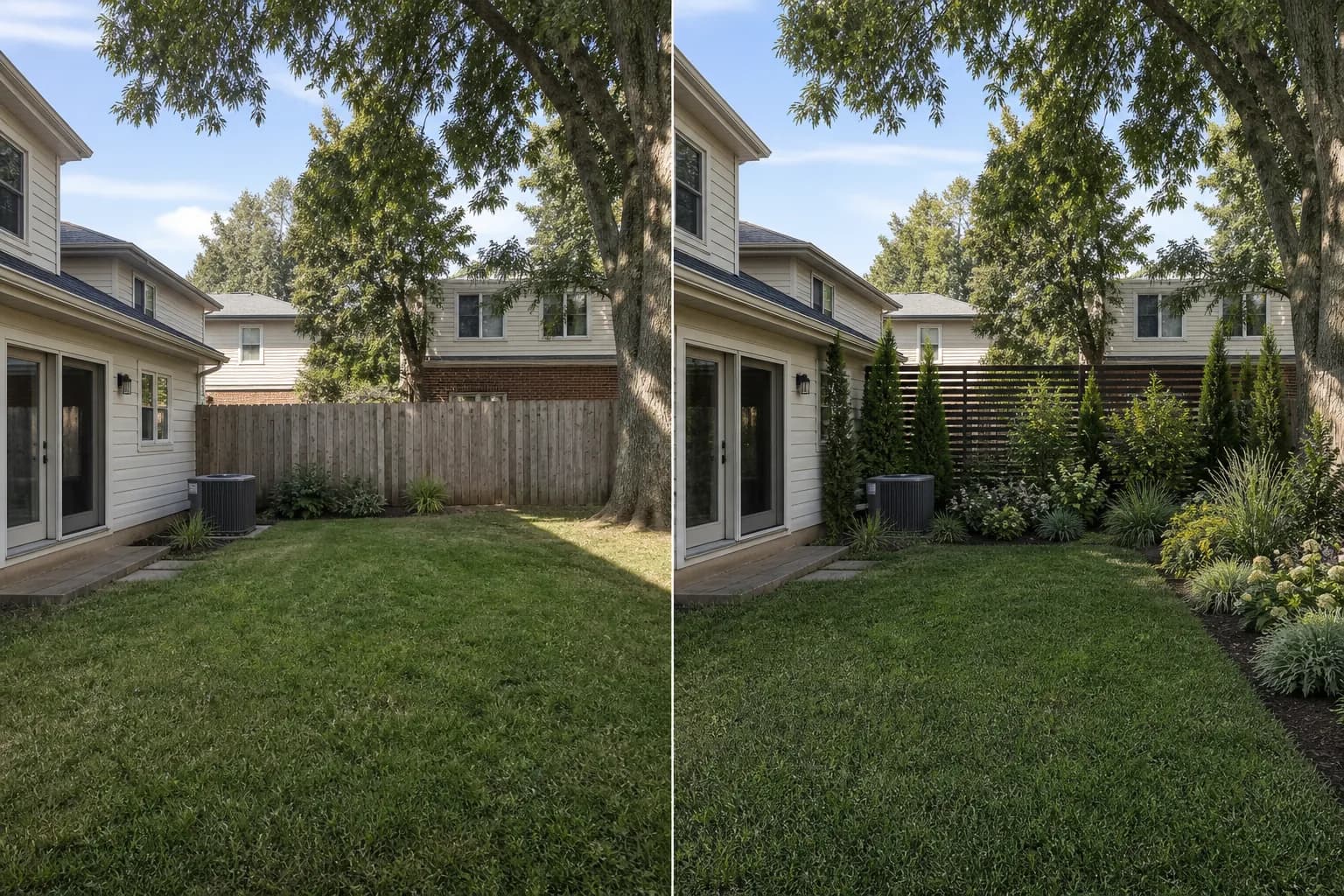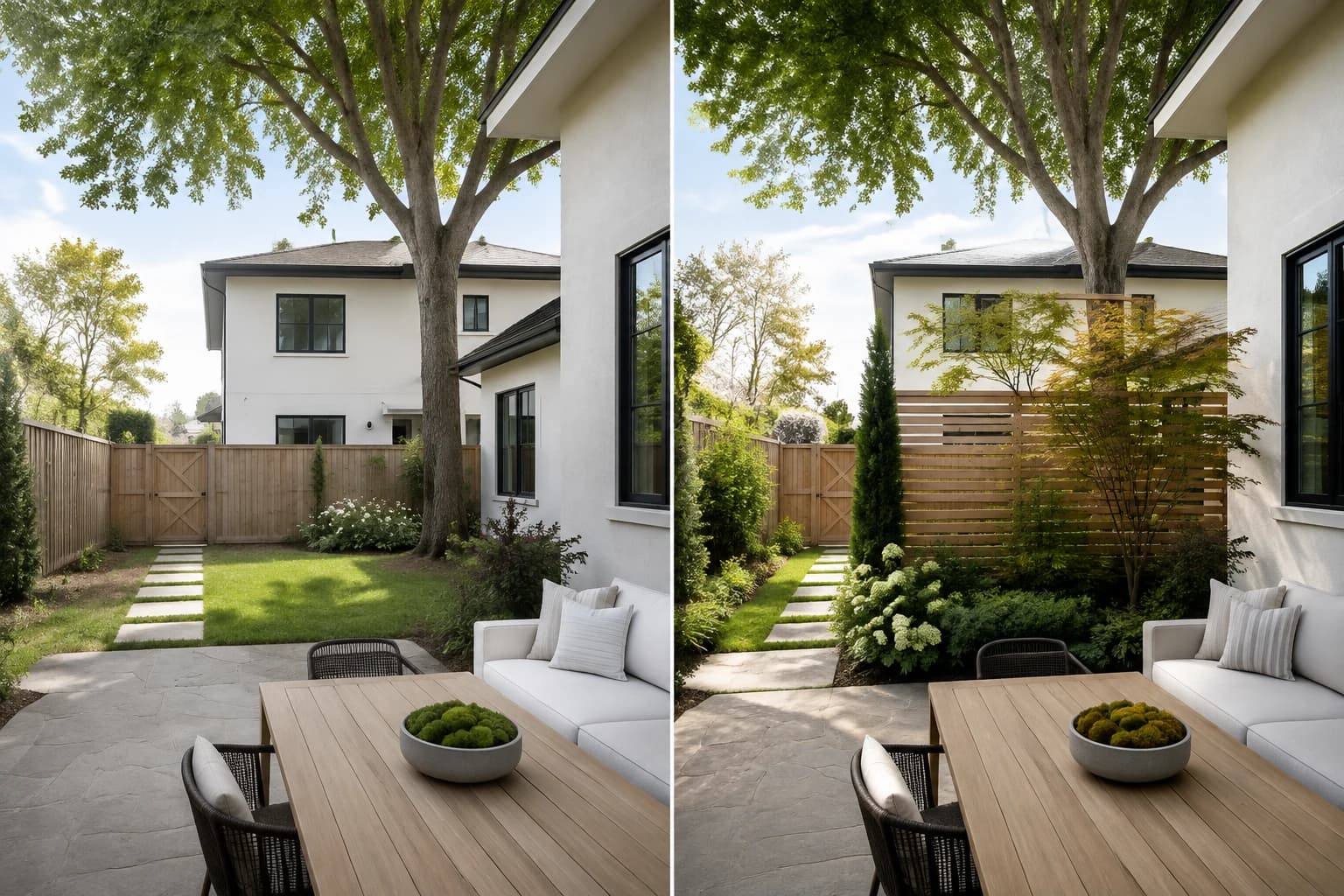
Privacy is a sightline problem before it is a fence problem. A second-story window, a patio next door, and a street corner each need a different height, depth, and location.
Use the quick comparison first, then scan the numbered ideas by speed, footprint, maintenance, and the checks each option needs.
Key takeaways before you choose
- Block the unwanted sightline, not the entire boundary; a closer screen often needs less height and width.
- For immediate privacy, test furniture orientation, freestanding panels, or tall containers before waiting for a hedge.
- Living and structural screens need mature-size, wind, boundary, access, and local-rule checks.
Name the view before choosing the screen
Stand where you actually sit and record eye level, source, season, and the route that must stay open.
| Problem | What to record | Likely response |
|---|---|---|
| Second-story window | Angle and seated eye line | Near-seat screen, canopy, or shade |
| Neighbor patio | Distance and shared boundary | Layered screen close to use |
| Street or corner | Vehicle and pedestrian sightlines | Low planting plus legal boundary |
| Rental | What can be fixed | Movable containers or freestanding panels |
12 ways to block the right view
Choose the smallest intervention that solves the actual sightline.
No-build and near-seat fixes
1. Turn the seating away from the exposed view
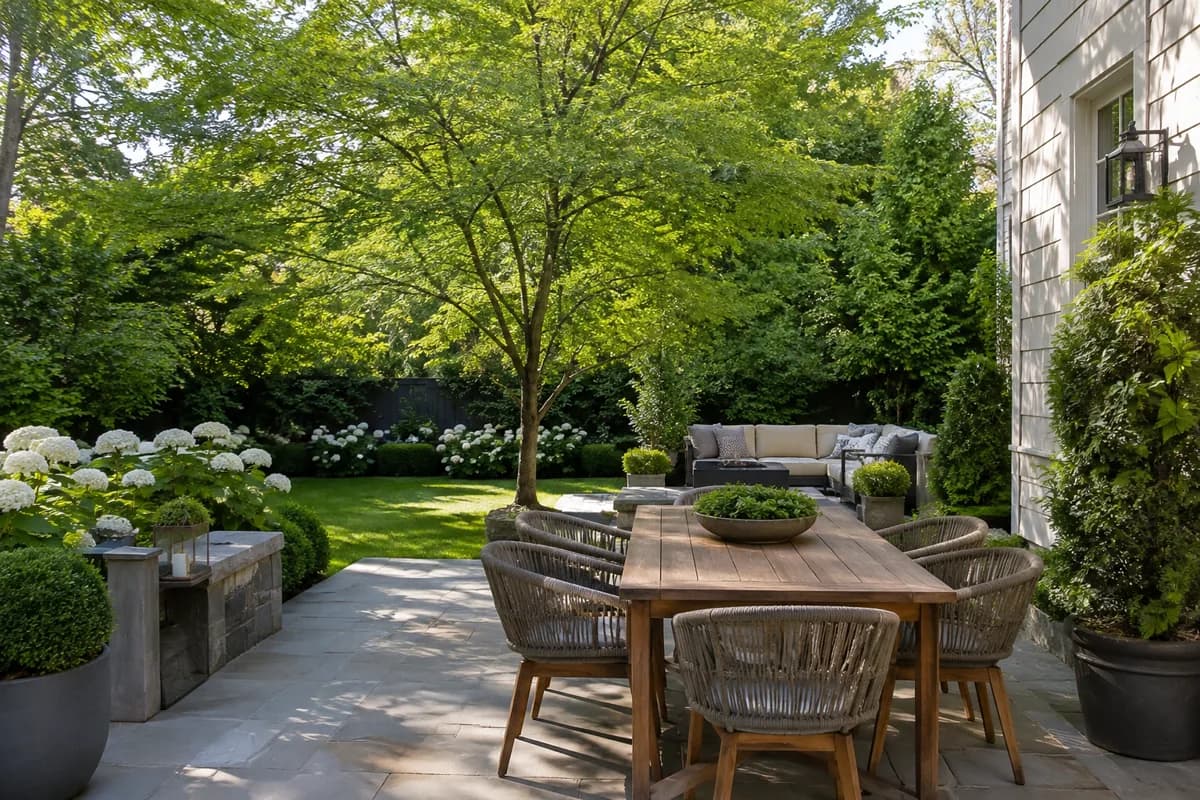
Costs nothing and preserves openness; test the new orientation against sun, doors, and circulation.
2. Place one screen close to the seating
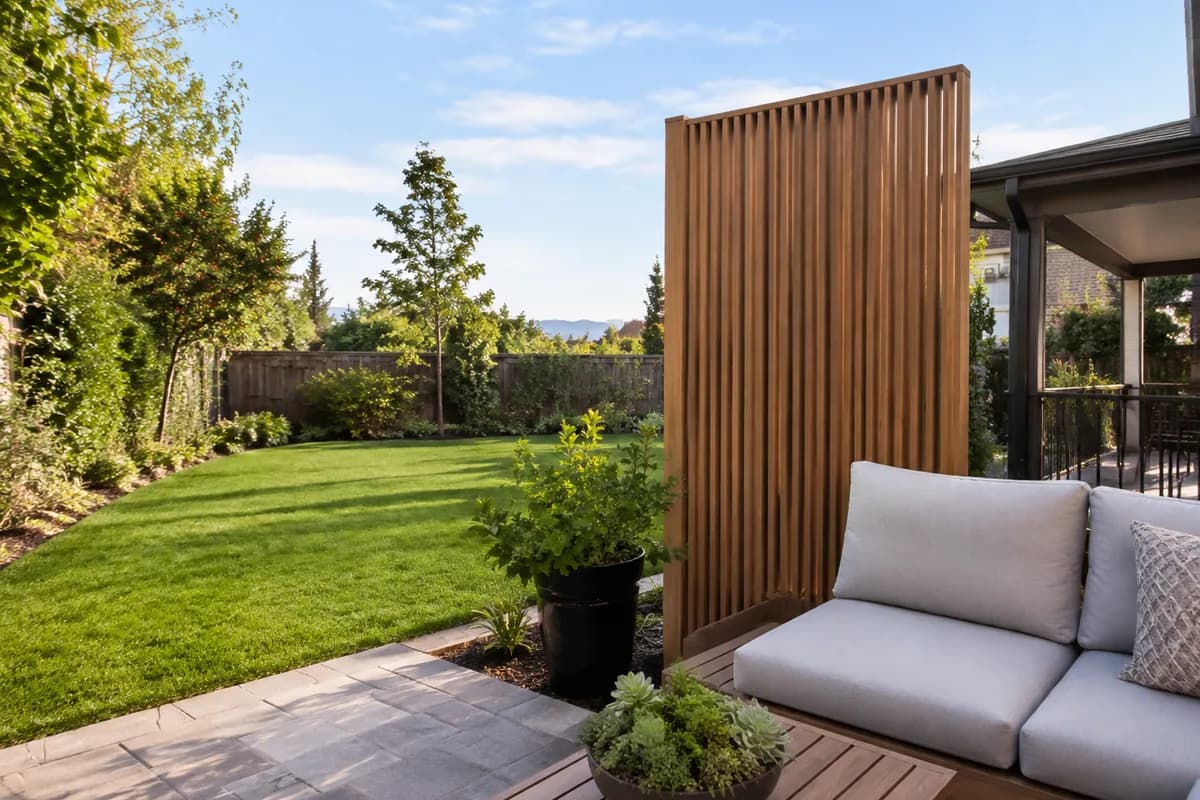
A screen close to the viewer can be lower and narrower than one at the boundary; keep footings and access clear.
3. Build a raised planter screen
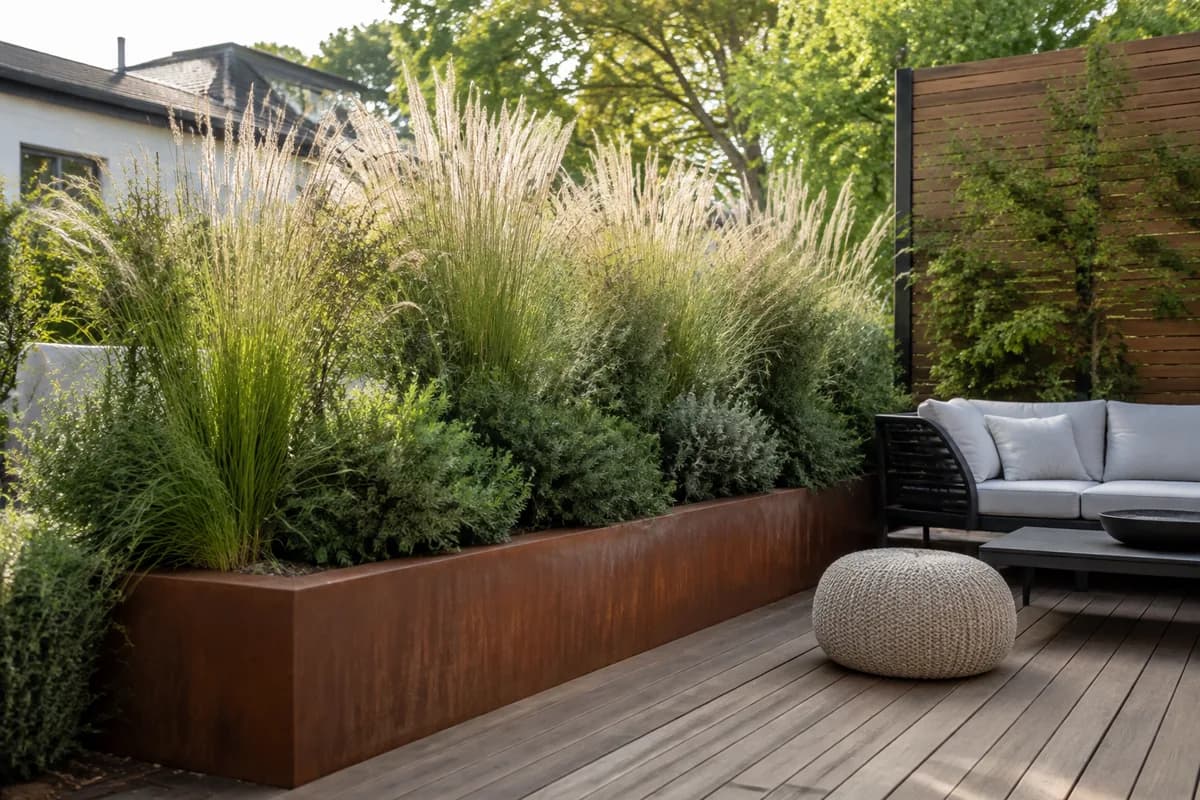
A screen close to the viewer can be lower and narrower than one at the boundary; keep footings and access clear.
Living screens that improve with time
4. Layer one small tree with shrubs
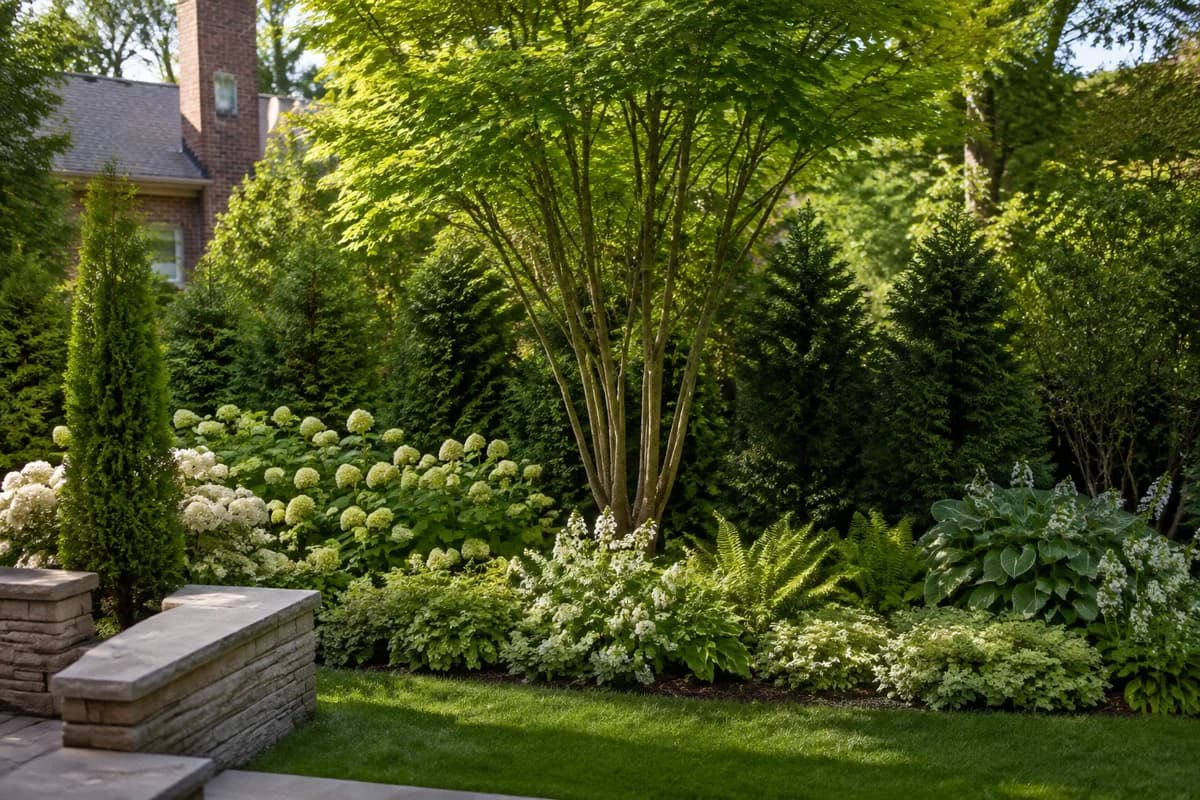
Choose by mature width, height, roots, sun, soil, water, evergreen habit, maintenance, pet safety, and invasive risk.
5. Use narrow columnar forms
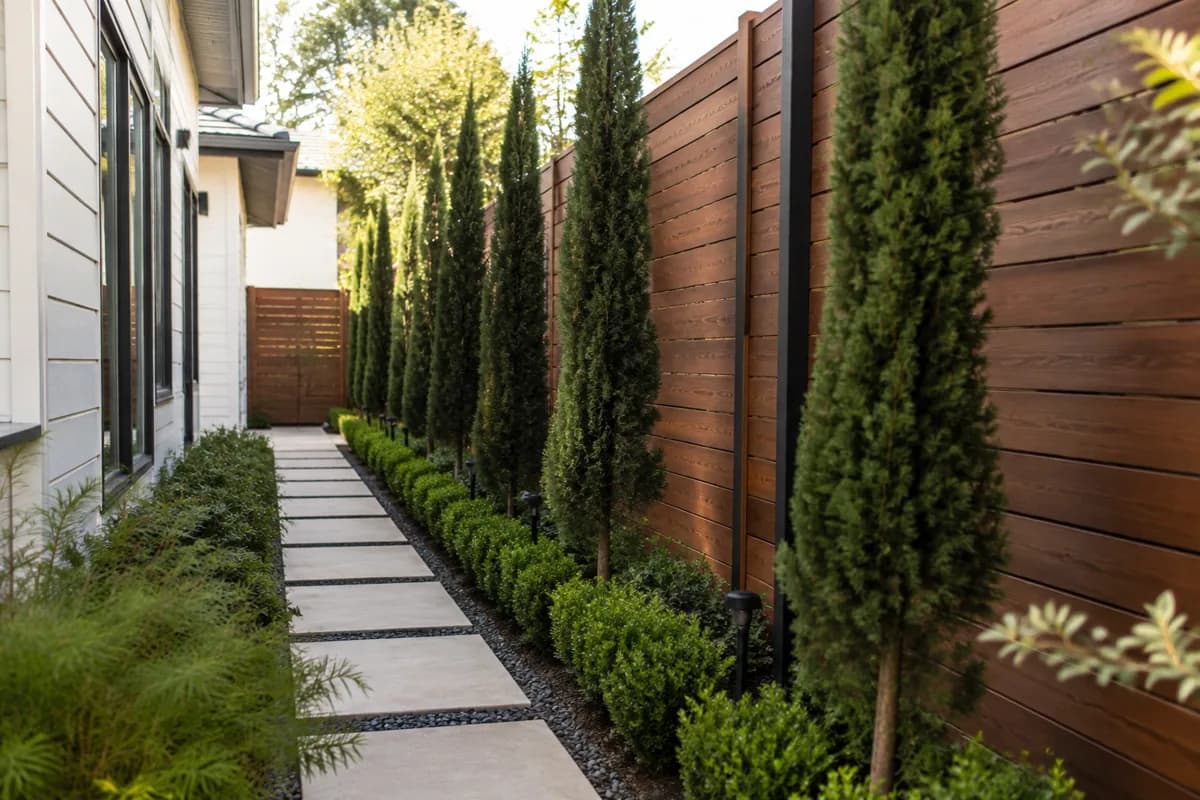
Choose by mature width, height, roots, sun, soil, water, evergreen habit, maintenance, pet safety, and invasive risk.
6. Add a trellis with a controlled climber
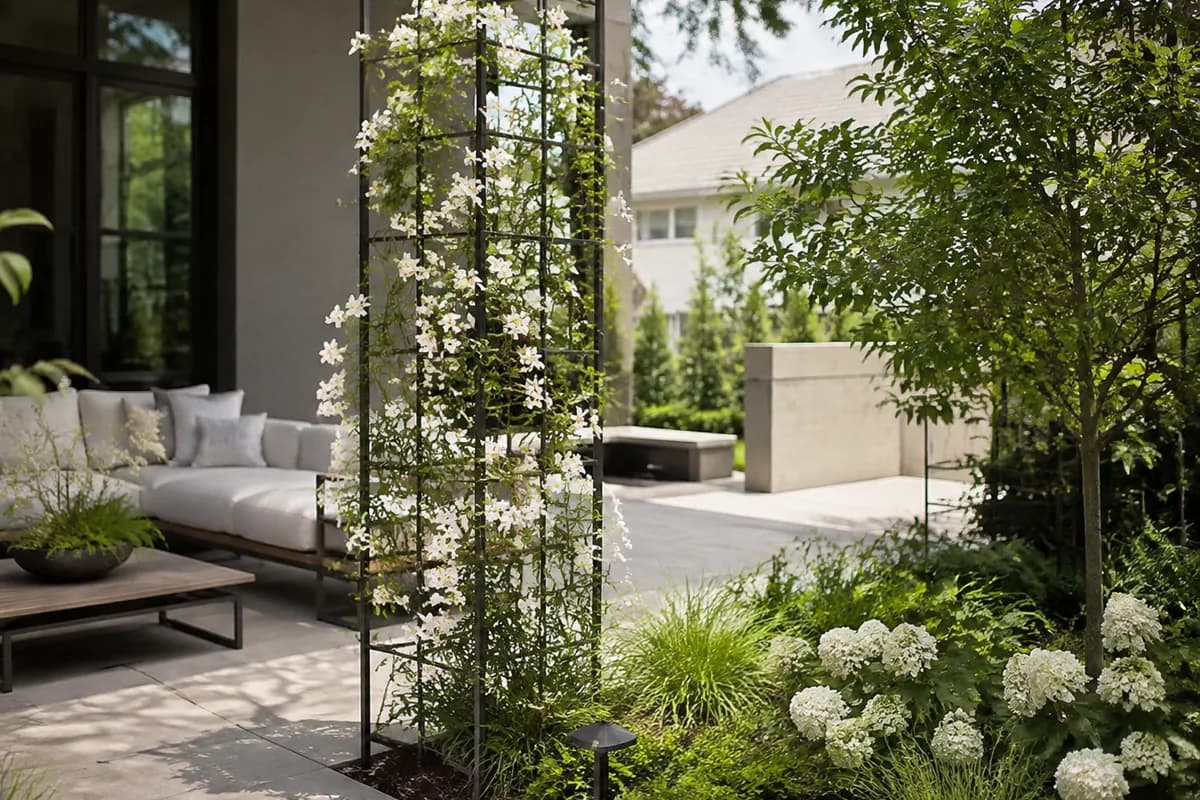
Choose by mature width, height, roots, sun, soil, water, evergreen habit, maintenance, pet safety, and invasive risk.
Built, overhead, and mixed layers
7. Offset two partial panels
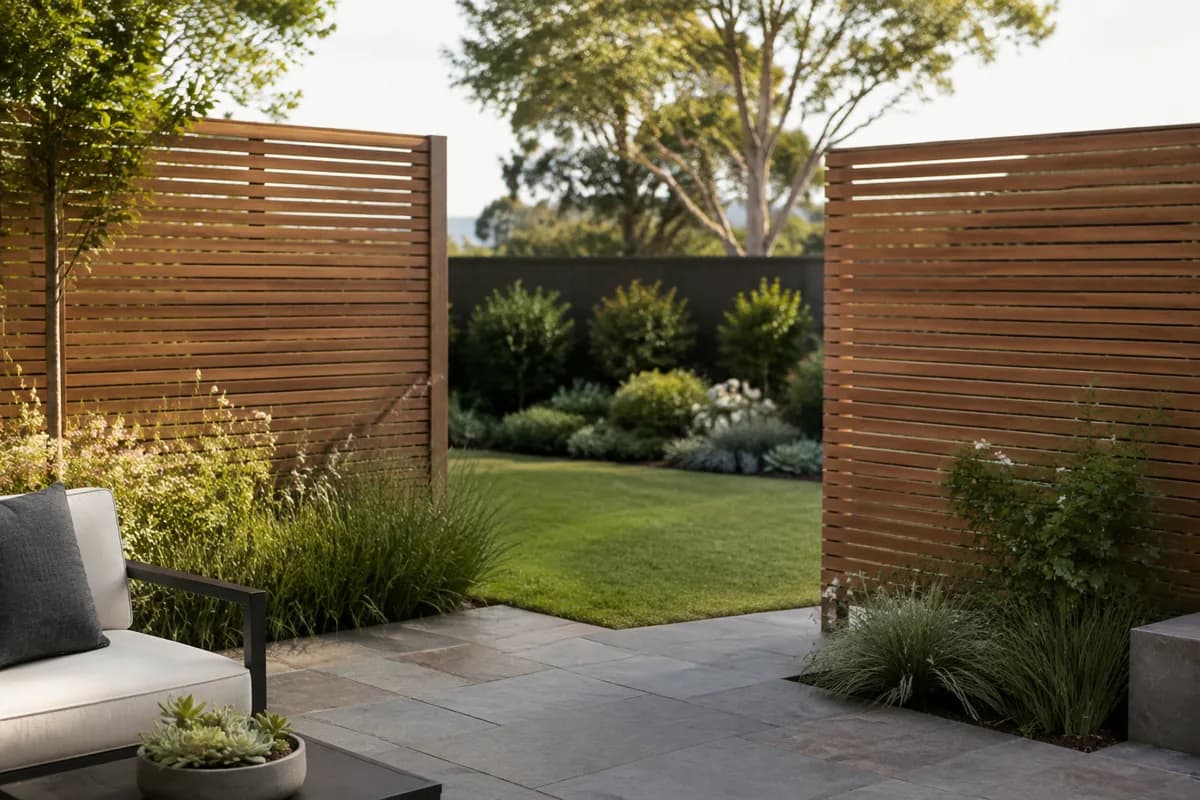
Check boundary ownership, wind, footings, height limits, neighbor impact, and permits before fixing anything.
8. Add a locally permitted fence topper
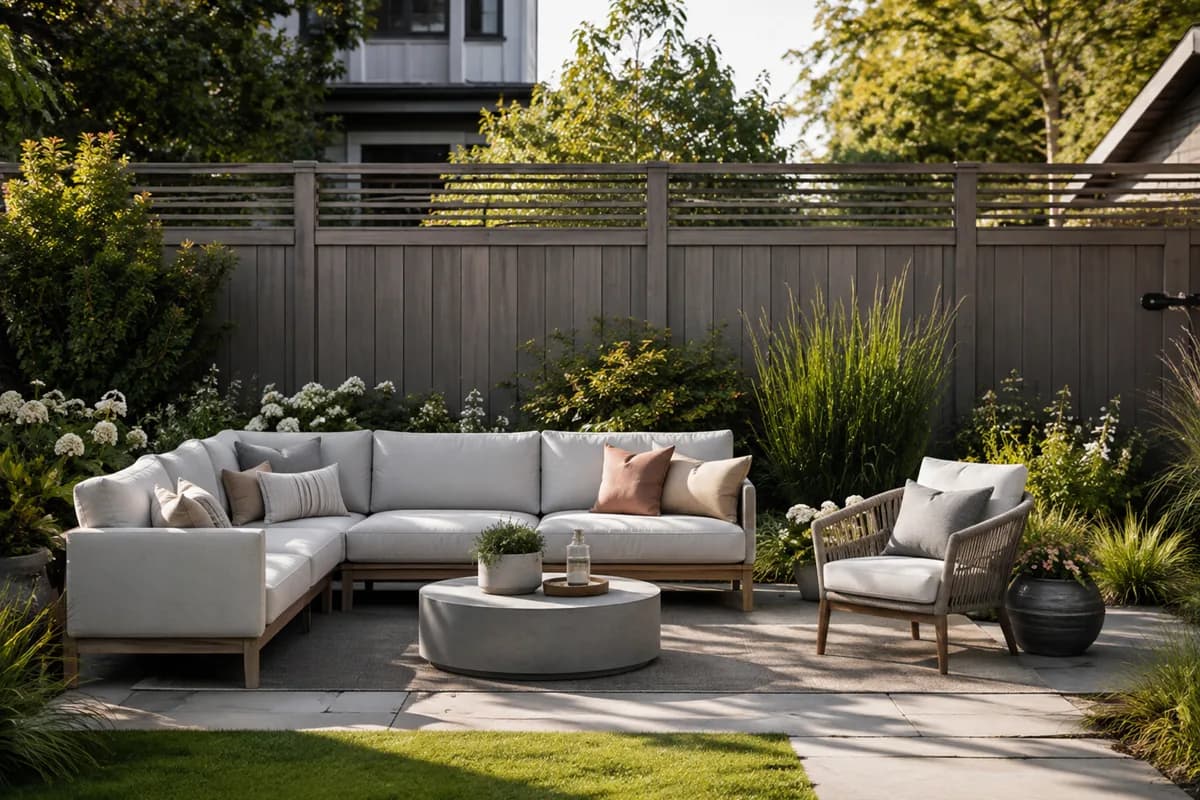
Check boundary ownership, wind, footings, height limits, neighbor impact, and permits before fixing anything.
9. Use movable tall containers
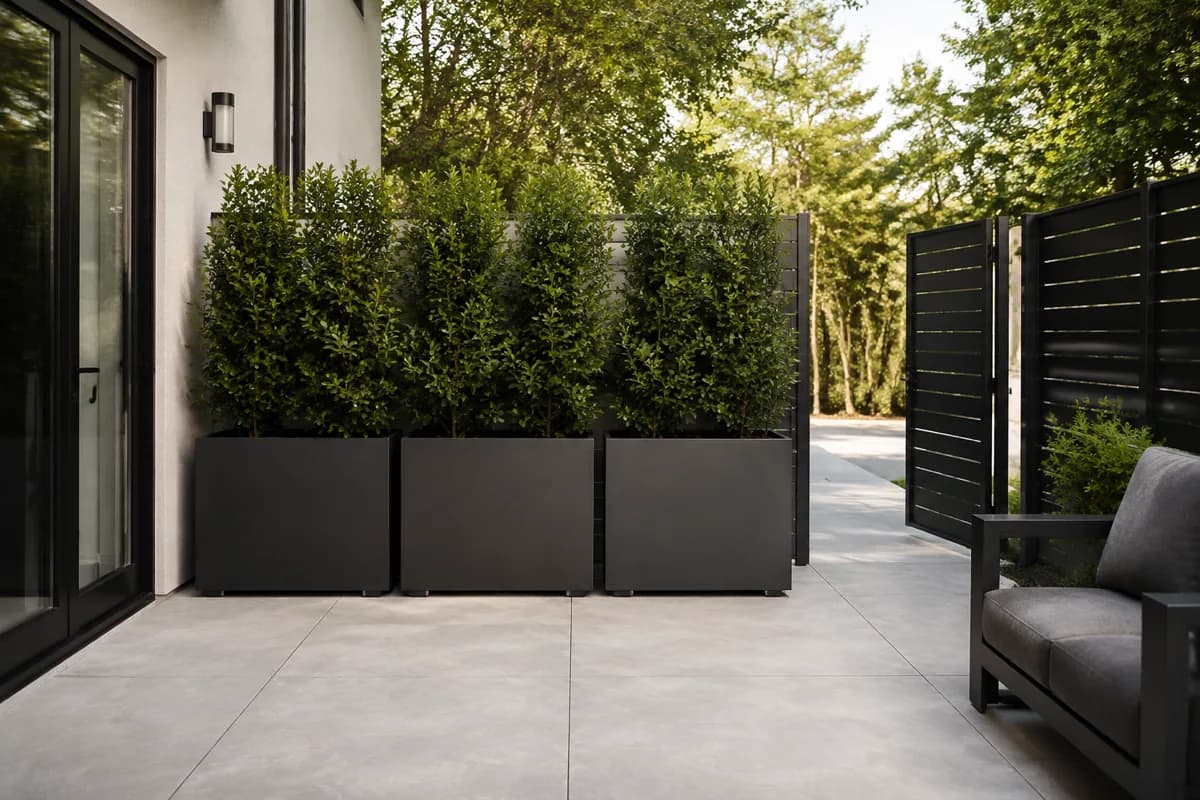
Useful for renters and changing seasons; confirm stability, drainage, weight, and accessible routes.
10. Block the downward view with shade
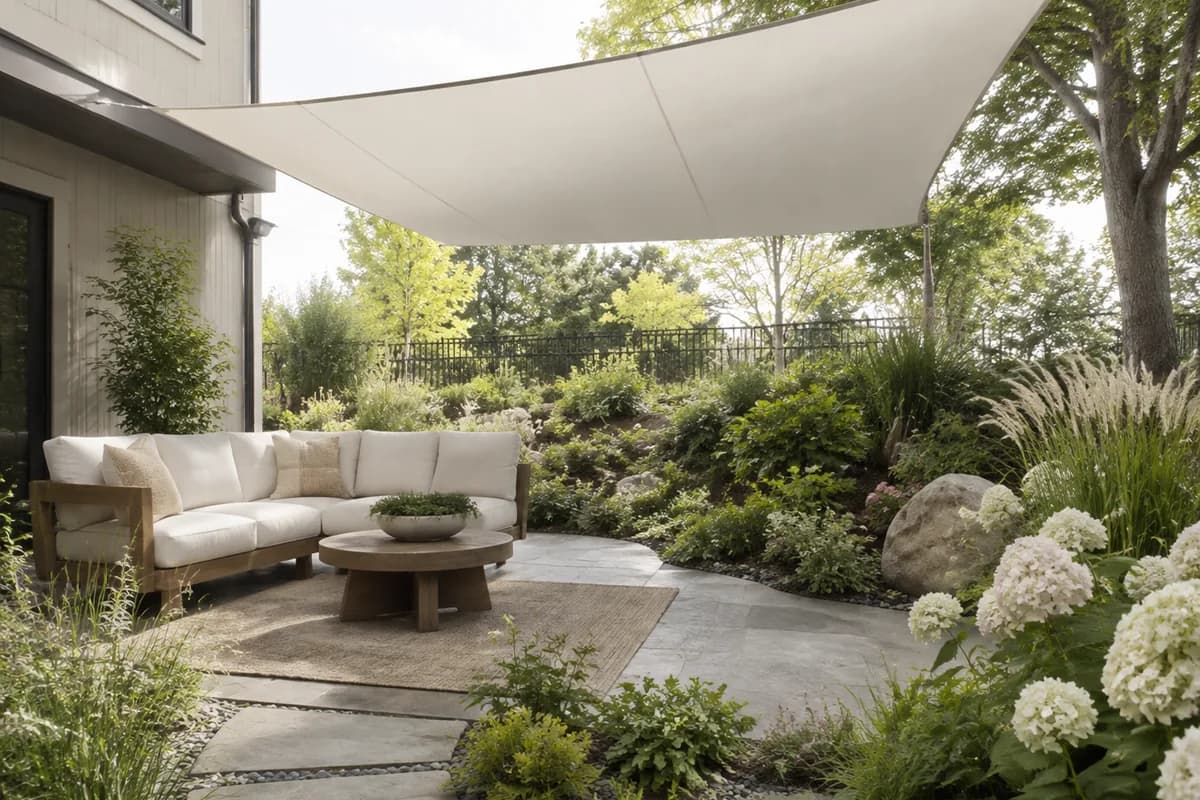
Helps with downward views and shade, but check wind, attachment, drainage, and fire clearance.
11. Add a side screen to an existing pergola
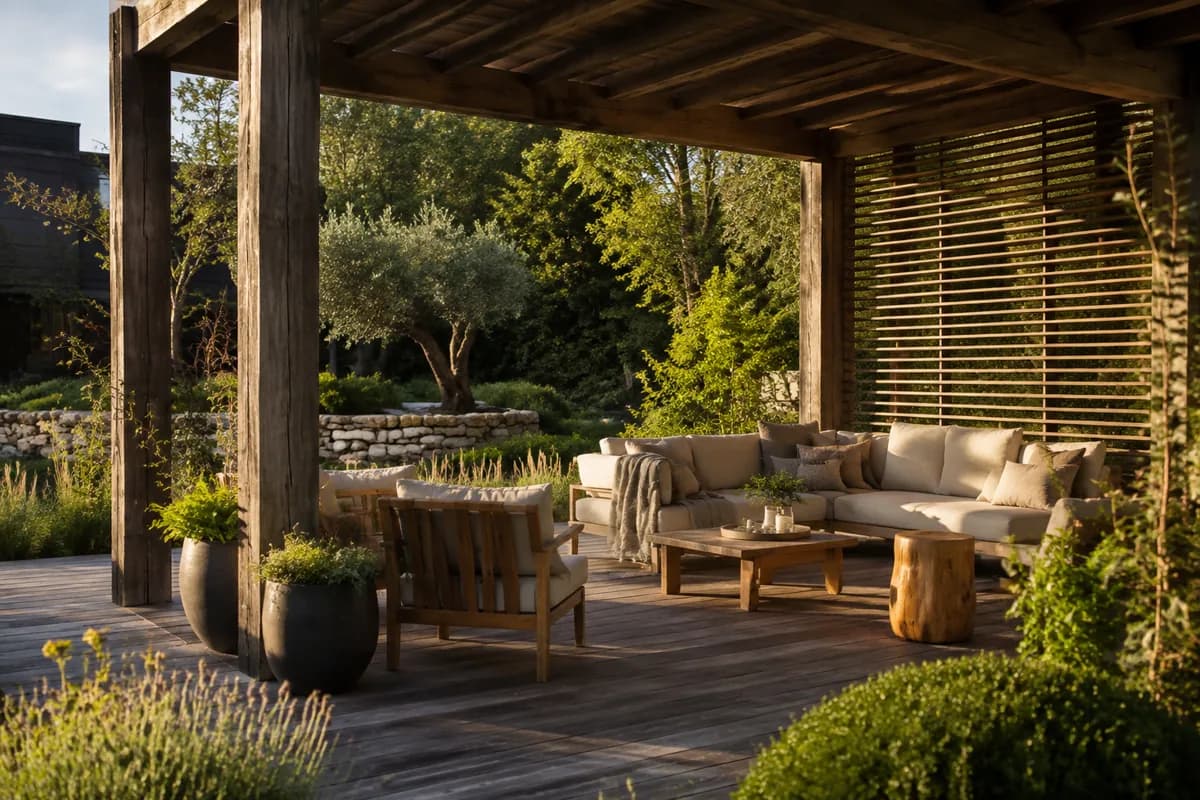
Check boundary ownership, wind, footings, height limits, neighbor impact, and permits before fixing anything.
12. Combine a low wall with planting
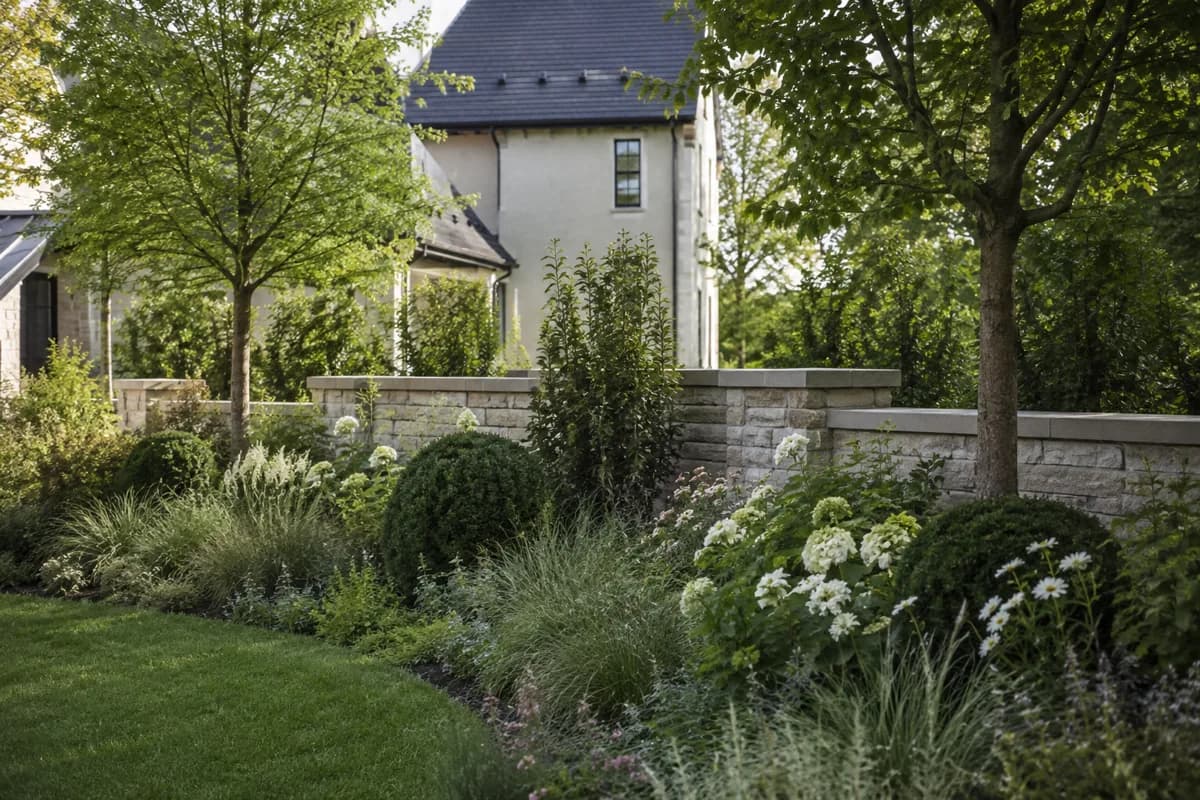
Combines immediate structure with slower planting; leave enough room for mature growth and repair.
Privacy cannot remove safety and access
Test privacy on the real photo
- Photograph the yard from the seat and from the unwanted view.
- Mark gates, doors, utilities, drains, mature trees, and routes that cannot move.
- Compare three concepts: near-seat screen, living layers, and flexible/structural combination.
- Verify height, wind, mature plant size, roots, maintenance, boundaries, and permits locally.
Frequently asked questions
What is the fastest backyard privacy idea?
A stable freestanding screen or movable container near the seating can work quickly, subject to wind, access, and local rules.
Are privacy plants better than a fence?
They are slower and need space and care, but can filter views softly. Match mature size and site conditions.
How do I block a second-story view?
A near-seat screen, canopy, small tree, or shade element often works with less height than a boundary fence.
Can GardenGPT verify privacy height?
No. It compares visual directions; verify height and sightlines with measurements and local rules.
The best privacy solution is rarely the tallest one. It is the smallest combination that blocks the real view while keeping the yard open, usable, and maintainable.