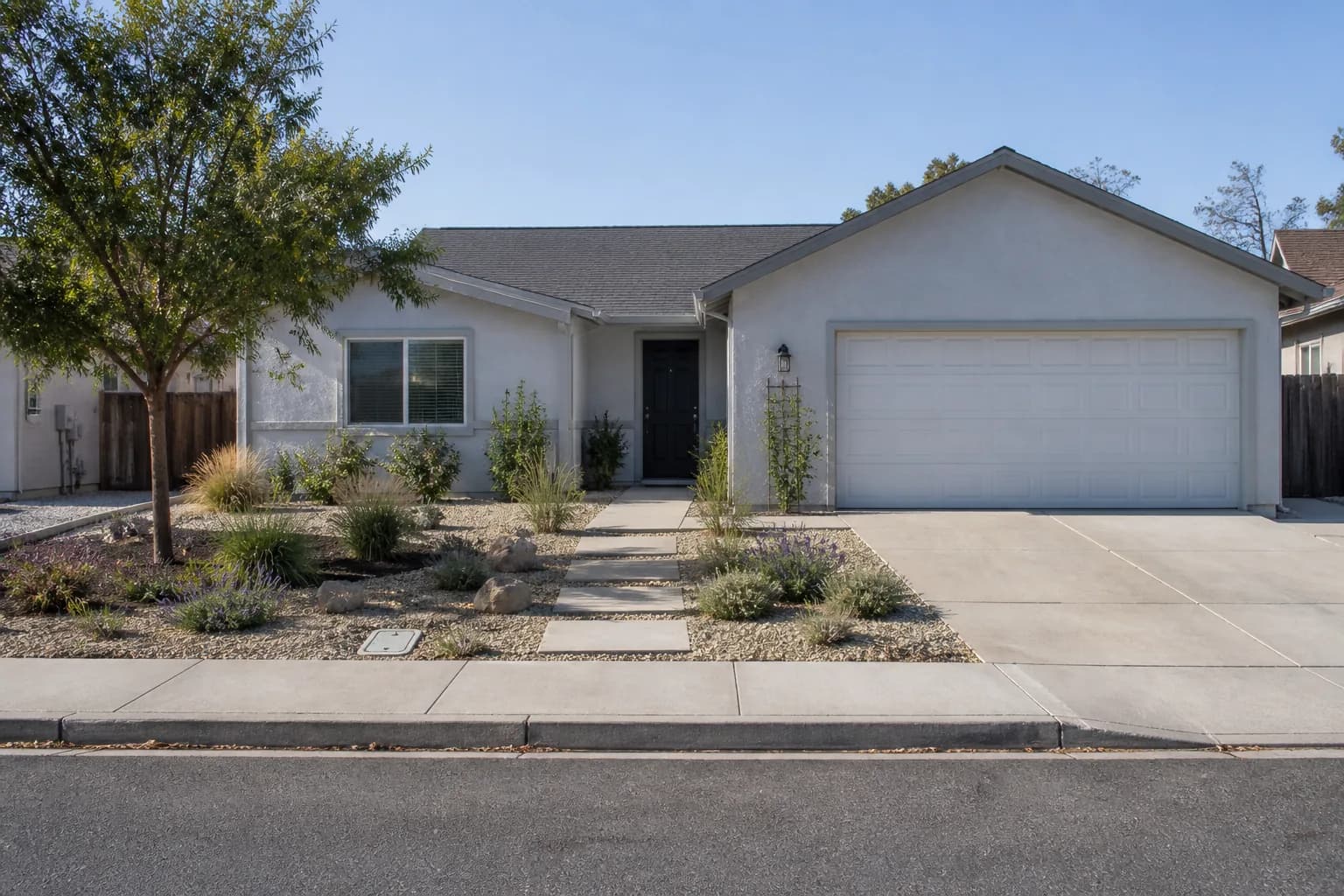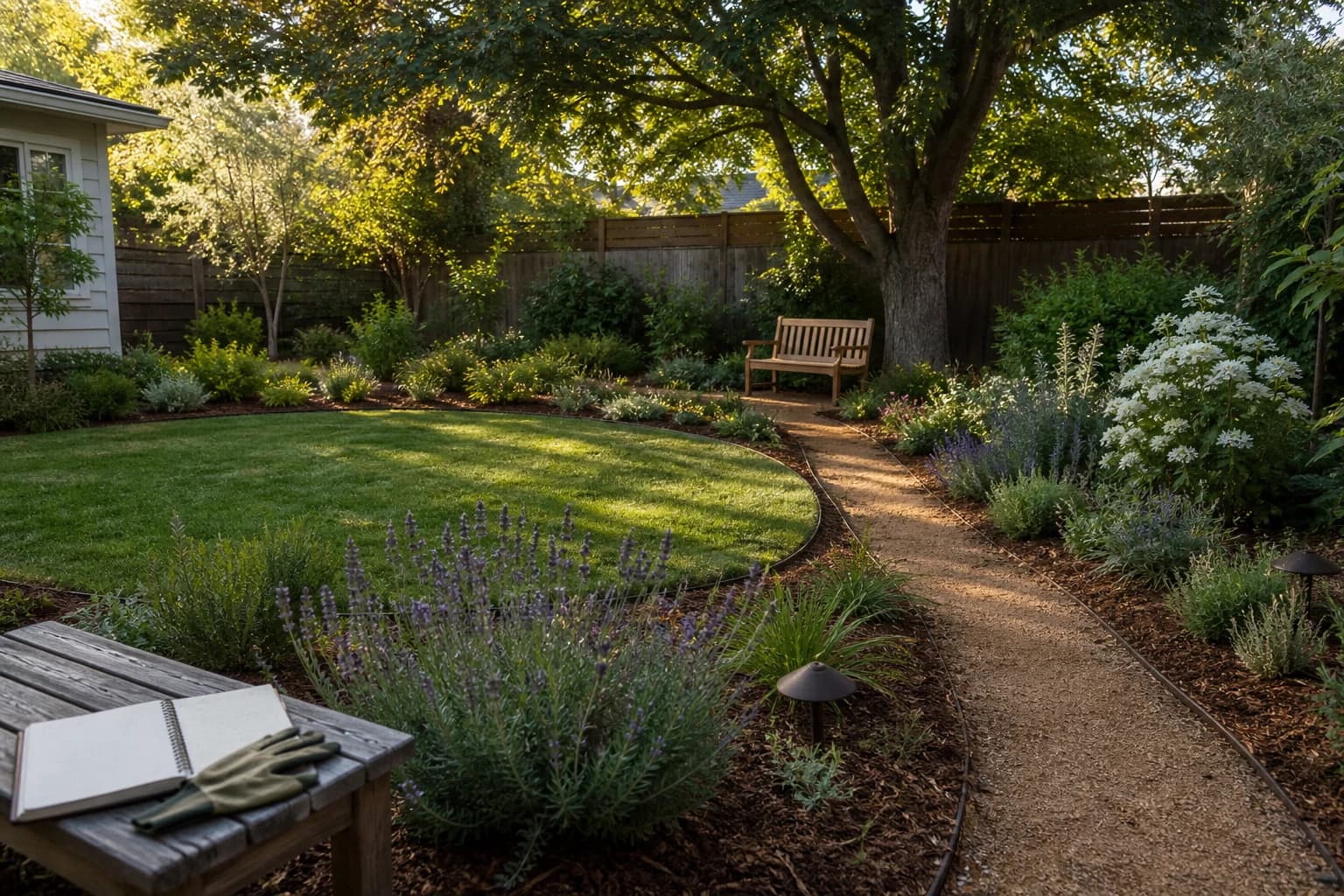
Driveways are transport corridors, drainage surfaces, snow-storage edges, utility routes, and a large part of the first view of a home. Landscaping beside them has to perform under movement and weather, not just in a still photograph.
These fifteen ideas begin with visibility, turning, doors, pedestrian safety, runoff, and maintenance. Local driveway permits, right-of-way rules, utilities, fire access, and sight-distance requirements always outrank an inspiration image.
Key takeaways
- Keep planting lowest where the driveway meets the street, sidewalk, path, garage door, and any place drivers or pedestrians need a clear view.
- Design water first. Do not trap runoff against the pavement, send it onto a neighbor or public way, or bury culverts and drainage access.
- Draw the swept path and open doors before shaping beds. Plants, stones, lights, and edging must remain outside the usable vehicle envelope.
Start with the edge condition
The same decorative move can be safe in one location and obstructive in another. Match the strategy to how the edge carries sight, water, snow, people, and vehicles.
| Edge condition | Useful move | Do not block |
|---|---|---|
| Street and sidewalk | Low, set-back planting | Sight triangle, pedestrians, signs, snow |
| Long side edge | Repeated groups or spaced trees | Door swing, mirrors, drainage, utilities |
| Downhill or wet edge | Engineered swale or planted capture area | Pavement base, culvert, neighbor, public way |
| Garage and parking edge | Durable low strip with clear gaps | Doors, charging, bins, delivery, path |
What a photo concept cannot verify
15 driveway landscaping ideas
Use these as layout patterns. Dimensions, planting, structures, and drainage must be adapted to the measured site and local rules.
1. Keep the street sight triangle low
At the public edge, use low planting and open branching so drivers can see vehicles, cyclists, and pedestrians. Move taller accents farther into the property where they frame the entrance without creating a blind corner.
2. Repeat a low planted edge
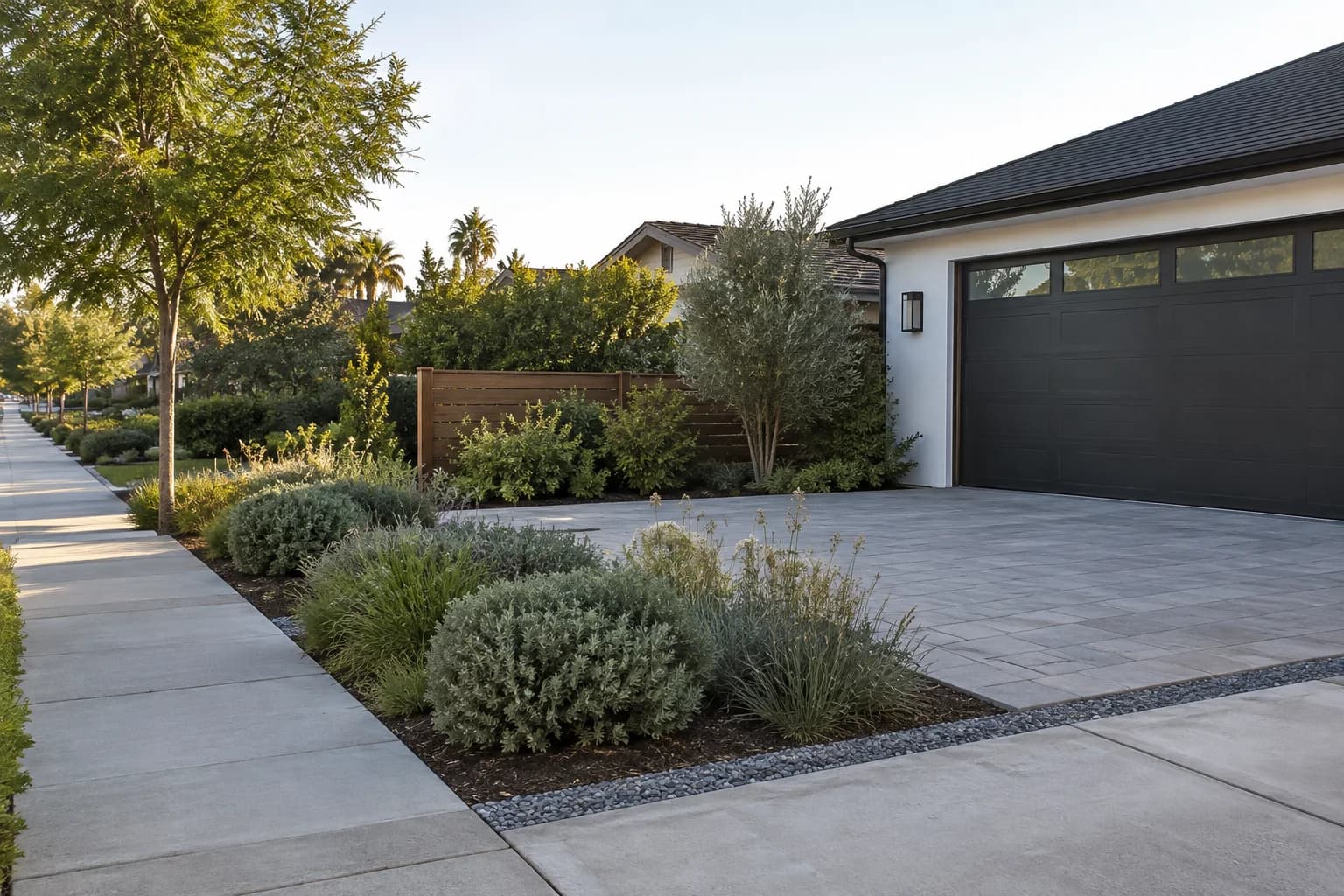
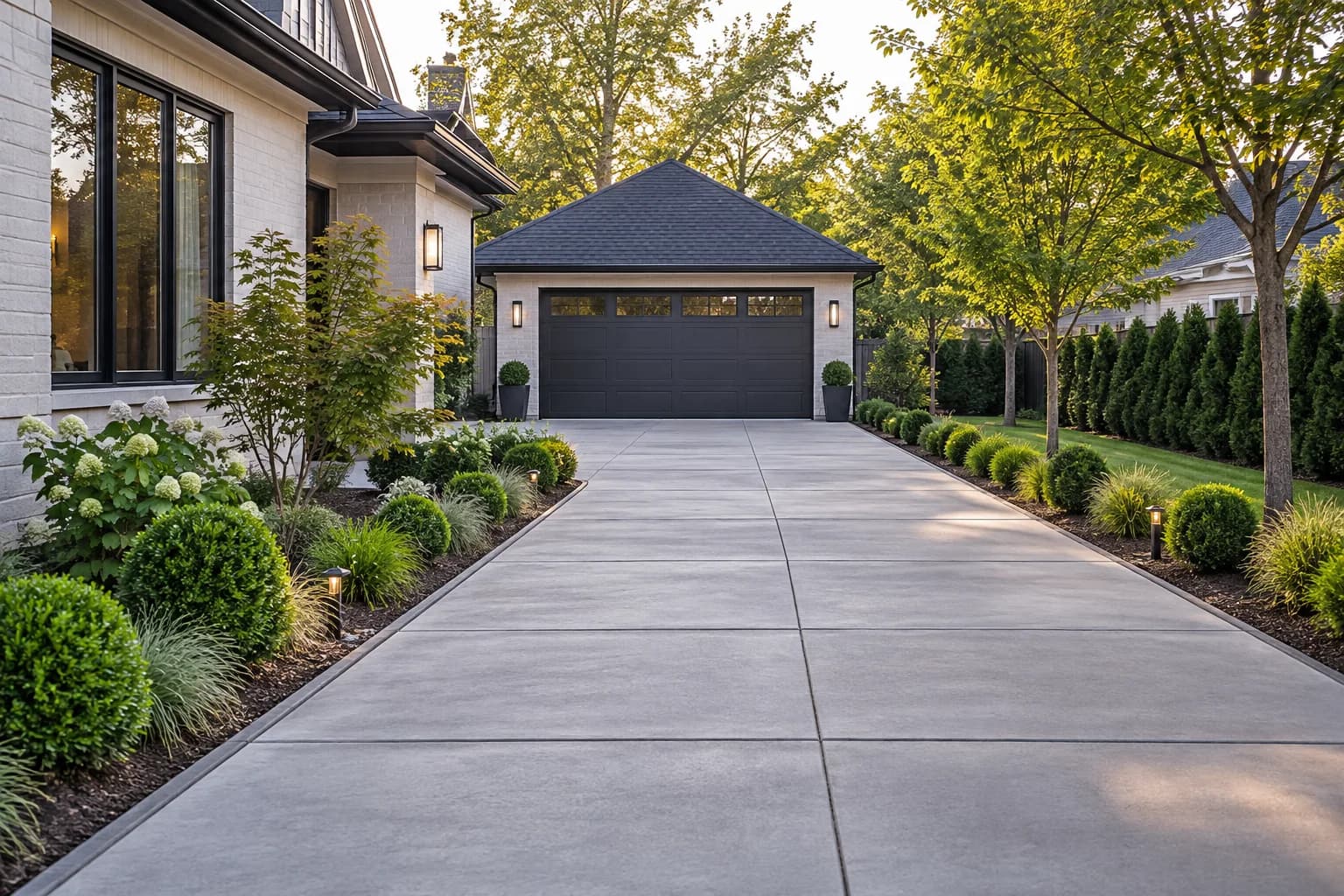
A simple rhythm of groundcover, grasses, or compact shrubs can visually narrow a wide paved surface without physically narrowing it. Repetition is calmer and easier to maintain than a different specimen every few feet.
3. Widen the bed near the house, not the road
Keep the public end simple, then broaden the planting where the driveway approaches the house. The deeper bed can absorb the scale of a garage facade and create an arrival garden away from the most constrained sight area.
4. Add a permeable shoulder where appropriate
A stable gravel, reinforced aggregate, or planted infiltration strip can soften the pavement edge and accept occasional runoff or wheel overrun. The assembly must be designed for the soil, traffic, slope, sediment, and maintenance.
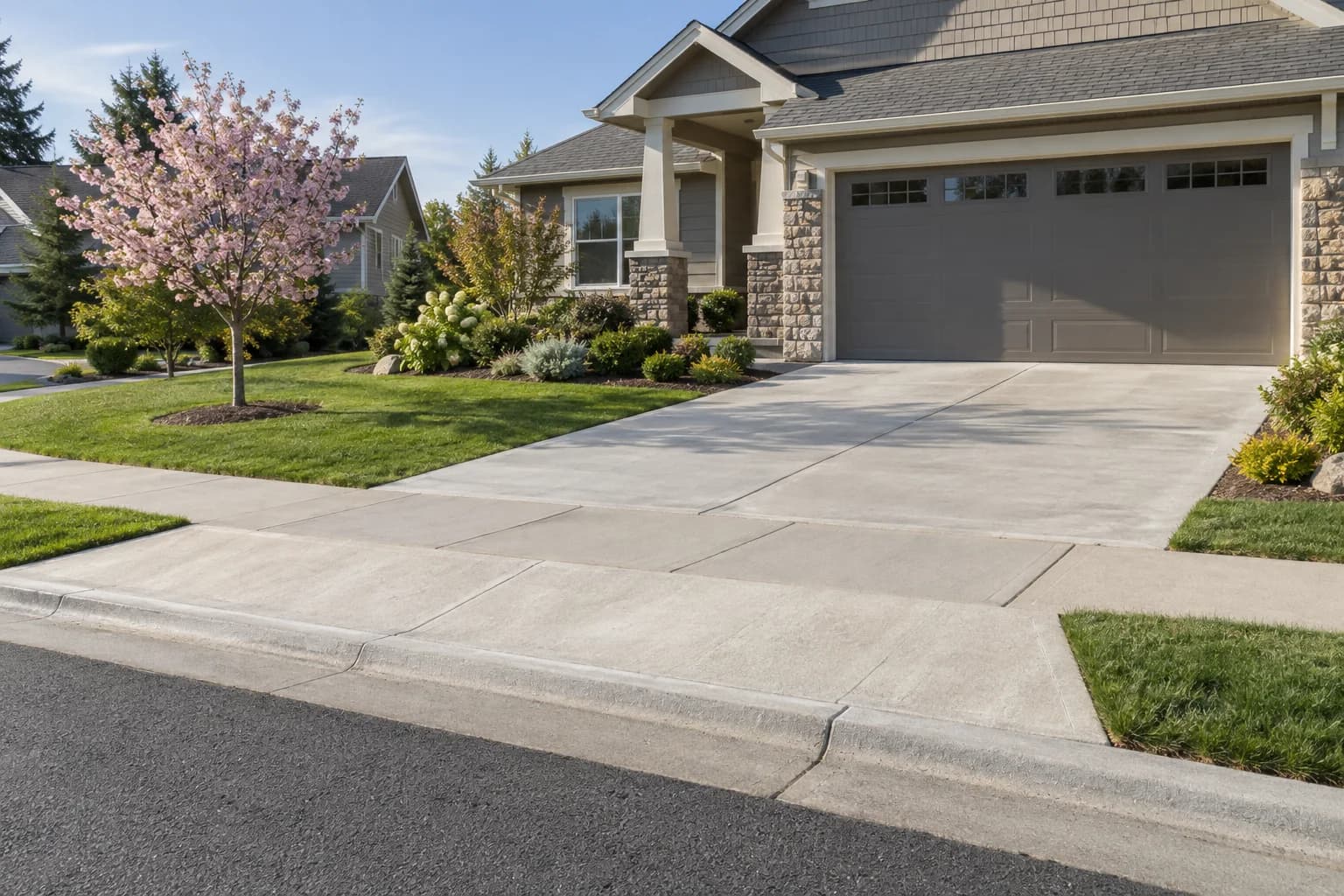
5. Capture runoff on the lower side
Where measured grading supports it, a vegetated swale, rain garden, or other approved capture feature can receive driveway runoff before it leaves the property. Shape it as part of the landscape, with a defined inlet and safe overflow.
6. Set entrance markers behind the visibility zone
A pair of trees, modest posts, stone accents, or planting masses can identify the drive without sitting at the pavement throat. Moving them inward often creates a clearer, safer, and more generous entrance.
7. Use spaced trees as a rhythm, not a tunnel
Along a long drive, widely spaced trees can guide the eye and connect the house to the wider landscape. Use fewer trees with enough room to mature instead of a dense avenue that closes the route.
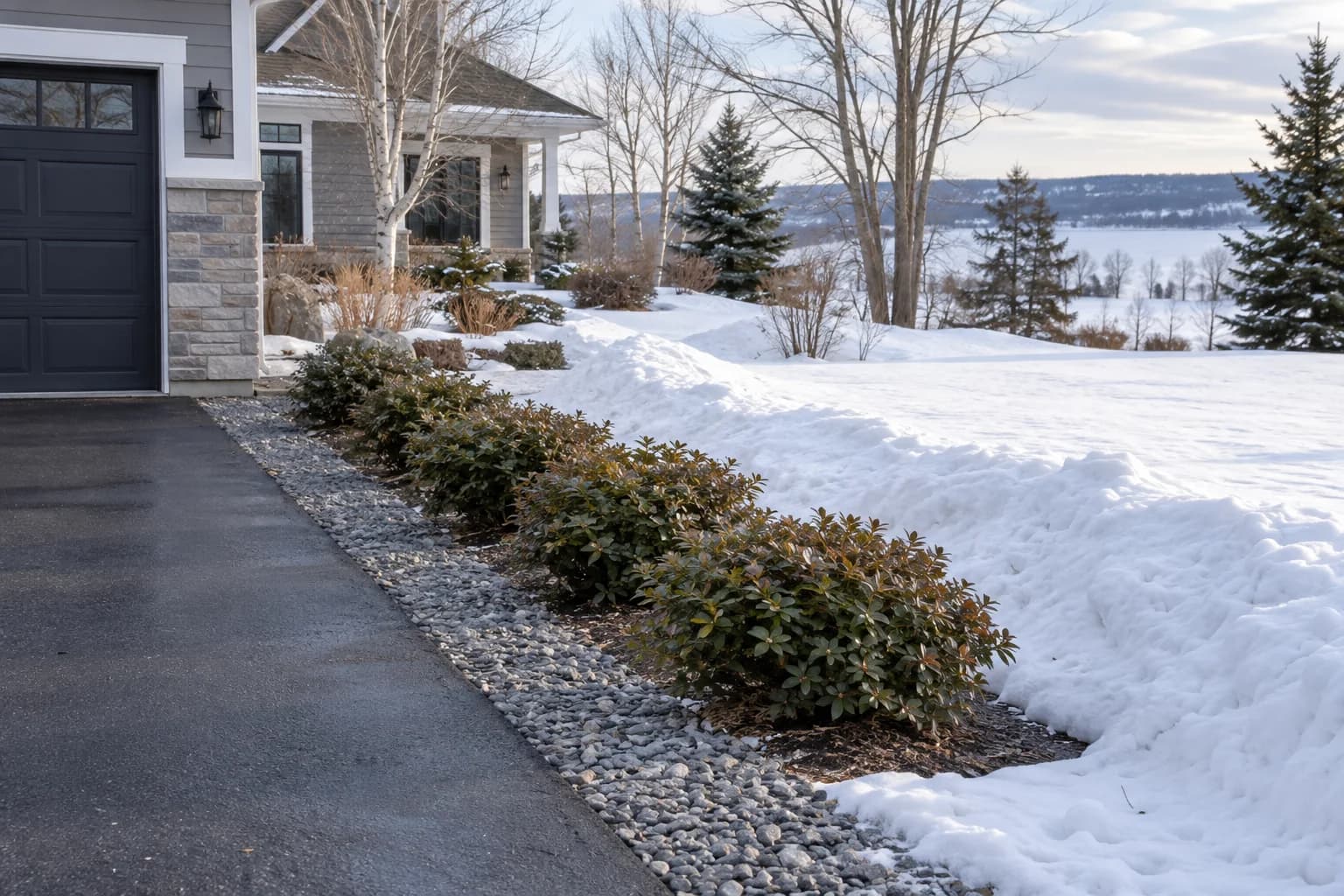
8. Plant the hot strip for reflected heat
Dark paving, walls, and parked vehicles can make the edge hotter and drier than the rest of the garden. Use a short palette adapted to heat, drought, road splash, and the available soil volume.
9. Leave door and unloading pockets open
Break the planted edge where passengers step out, children unload, groceries move, mobility devices transfer, or charging cables cross. A deliberate paved or gravel pocket is better than plants repeatedly crushed by daily use.
10. Make the mailbox bed serviceable
Use a compact planting ring or offset bed that marks the address while leaving the carrier approach, door, post, and road shoulder clear. Repeat one material or plant from the house to connect the small feature to the larger garden.
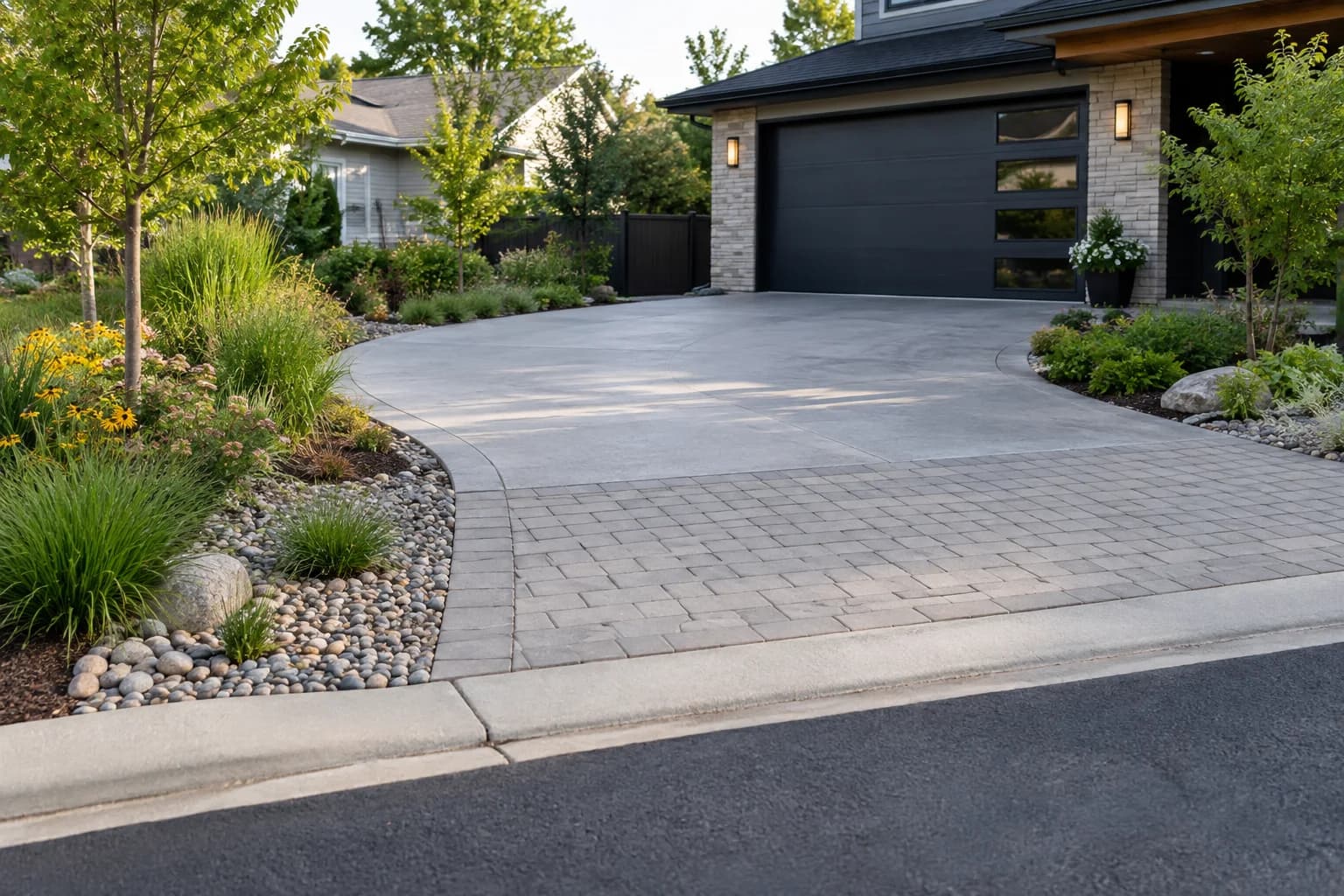
11. Screen parking with offset layers
Use overlapping groups at different distances to interrupt the direct view of parked cars without building a solid hedge. Gaps preserve airflow, surveillance, snow movement, and a readable route to the house.
12. Use low-glare lighting to reveal edges
Place shielded, restrained lighting at decision points such as a bend, step, path crossing, parking edge, or address. Light the route and vertical references rather than outlining every foot of pavement.
13. Reserve a real snow-storage strip
In snowy climates, leave a durable strip where plowed snow can land without burying prized shrubs, blocking a sidewalk, or pushing meltwater toward the house. Use resilient planting beyond the primary pile zone.
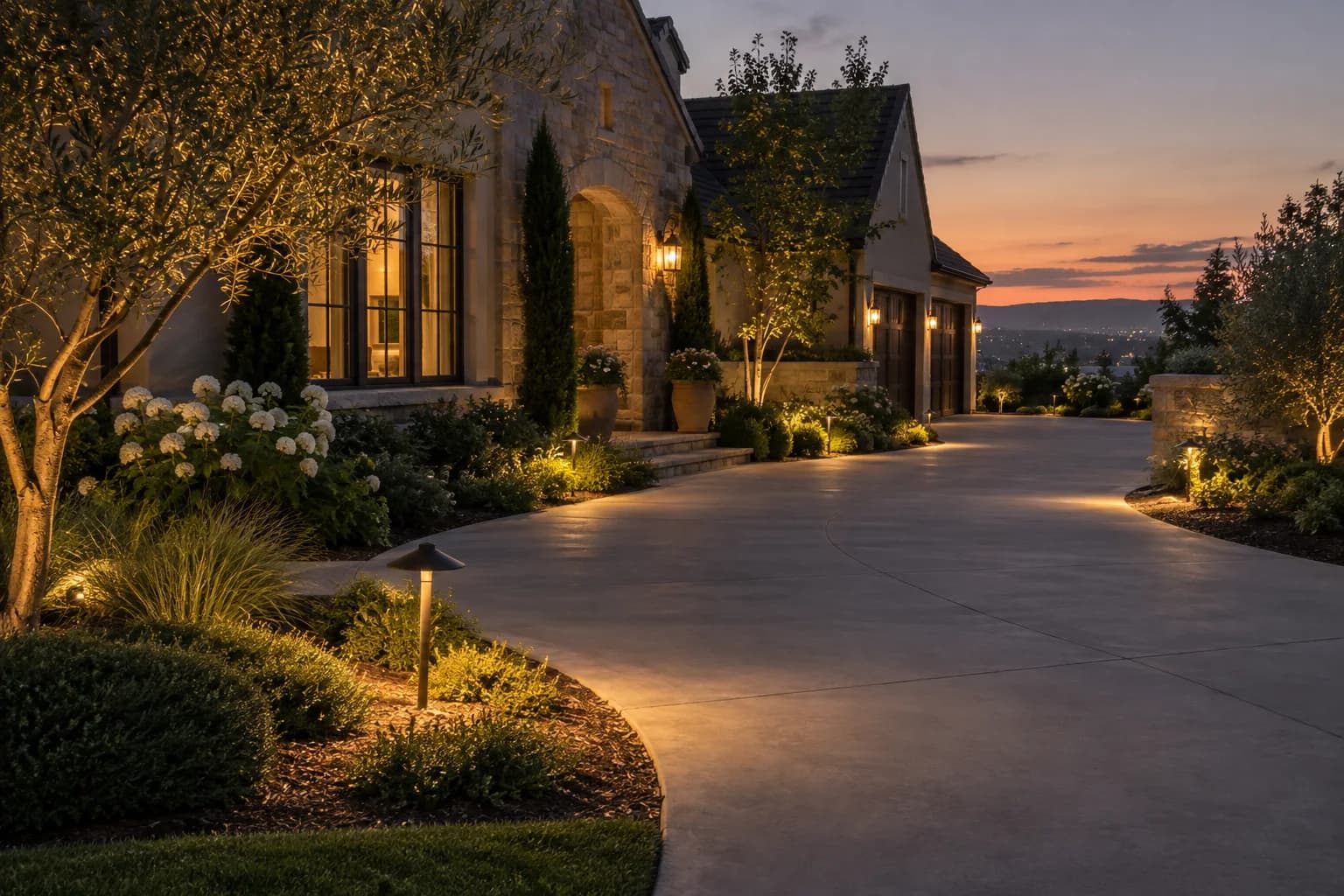
14. Protect culverts, ditches, and drainage access
Treat roadside ditches, culvert ends, inlets, channel edges, and cleanouts as working infrastructure. Use low, erosion-aware planting around them while keeping flow paths and inspection points obvious.
15. Create one arrival garden near the destination
Concentrate richer planting, a specimen, seating view, or seasonal display near the parking-to-entry transition. Keeping the long approach restrained and the destination richer gives the driveway a clear beginning, journey, and arrival.
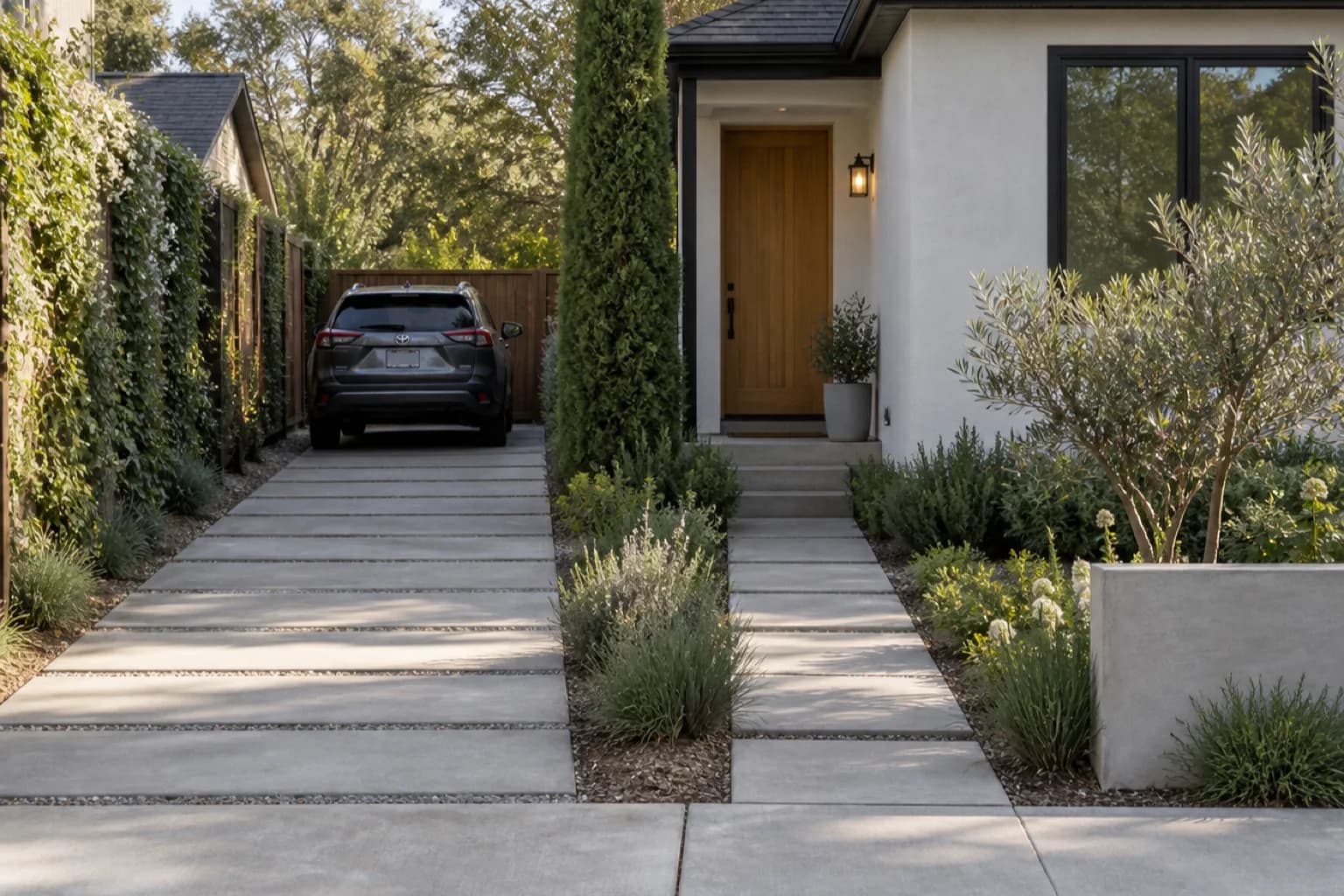
A driveway landscape workflow
Resolve legal and functional envelopes before choosing the planting style.
- Photograph the street view, both approach directions, full driveway, garage, parking positions, drainage points, utilities, and pedestrian links.
- Obtain property, right-of-way, permit, utility, easement, sight-distance, fire-access, and drainage information before drawing permanent features.
- Measure the pavement, grades, turning and door envelopes, walk routes, snow or waste operations, and every fixed obstruction.
- Mark no-plant, low-plant, water-management, service, and arrival zones, then compare visual concepts inside those limits.
- Select locally suitable materials and plants, document maintenance, and have qualified people review civil, electrical, structural, access, and permit work.
Sources reviewed
Reviewed September 7, 2026. Source names are plain text; local transportation, public works, utility, fire, accessibility, and stormwater requirements control the actual design.
- Federal Highway Administration intersection and driveway safety guidance
- United States Environmental Protection Agency green infrastructure guidance
- United States Access Board accessible route guidance
- International Dark-Sky Association outdoor lighting guidance
- Penn State Extension stormwater and rain garden guidance
- Local transportation, public works, fire, utility, and stormwater authorities
Frequently asked questions
What can I plant along a driveway?
Choose plants that fit local climate, soil, heat, salt, runoff, mature size, visibility, and maintenance. Keep anything tall, thorny, brittle, or floppy away from vehicle and pedestrian envelopes.
How close can plants be to a driveway?
There is no single distance. Draw mature spread outside tires, mirrors, doors, snowplow reach, accessible paths, drainage, and required sight zones.
How do I landscape a driveway entrance?
Keep the street end low and open, then place taller markers farther inside the property. Confirm right-of-way, sight distance, utilities, gates, emergency access, and permits first.
Can a rain garden take driveway runoff?
Sometimes, if soil, grading, water quality, pavement support, groundwater, inlet, overflow, utilities, and local stormwater rules support it. A measured site assessment is required.
What is a low-maintenance driveway edge?
A short palette of site-suitable plants, clear durable edging, accessible drainage, and enough mature spacing is usually easier than mixed specimens, narrow beds, or loose decorative features.
Can GardenGPT design my driveway?
It can compare photo-based planting and material concepts. It cannot verify vehicle geometry, pavement engineering, legal sightlines, drainage, utilities, structures, access, or permits.
The best driveway landscape makes movement and water easier to understand. Protect sightlines and operations first, then use a limited planting and material language to connect street, route, parking, and entry.