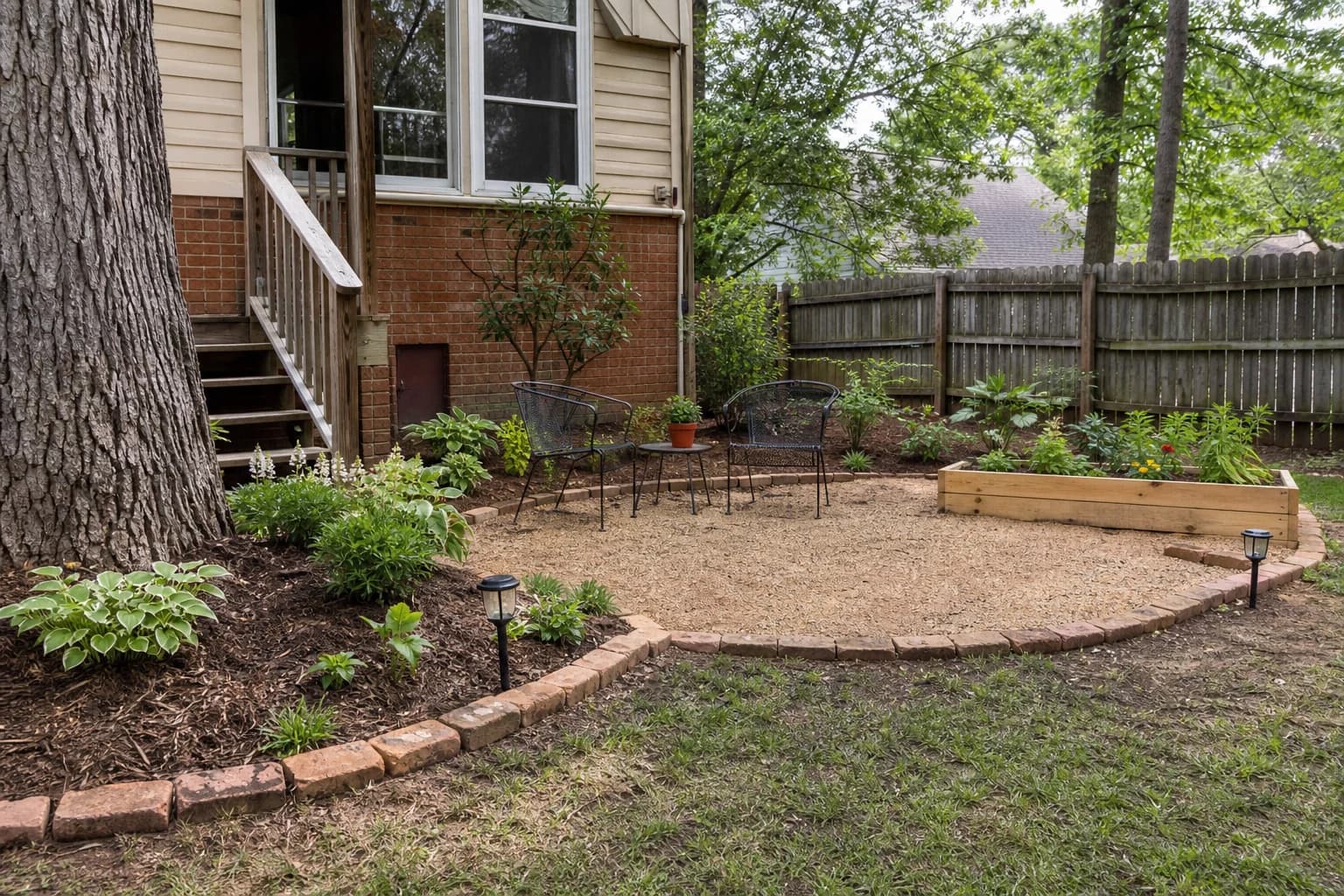
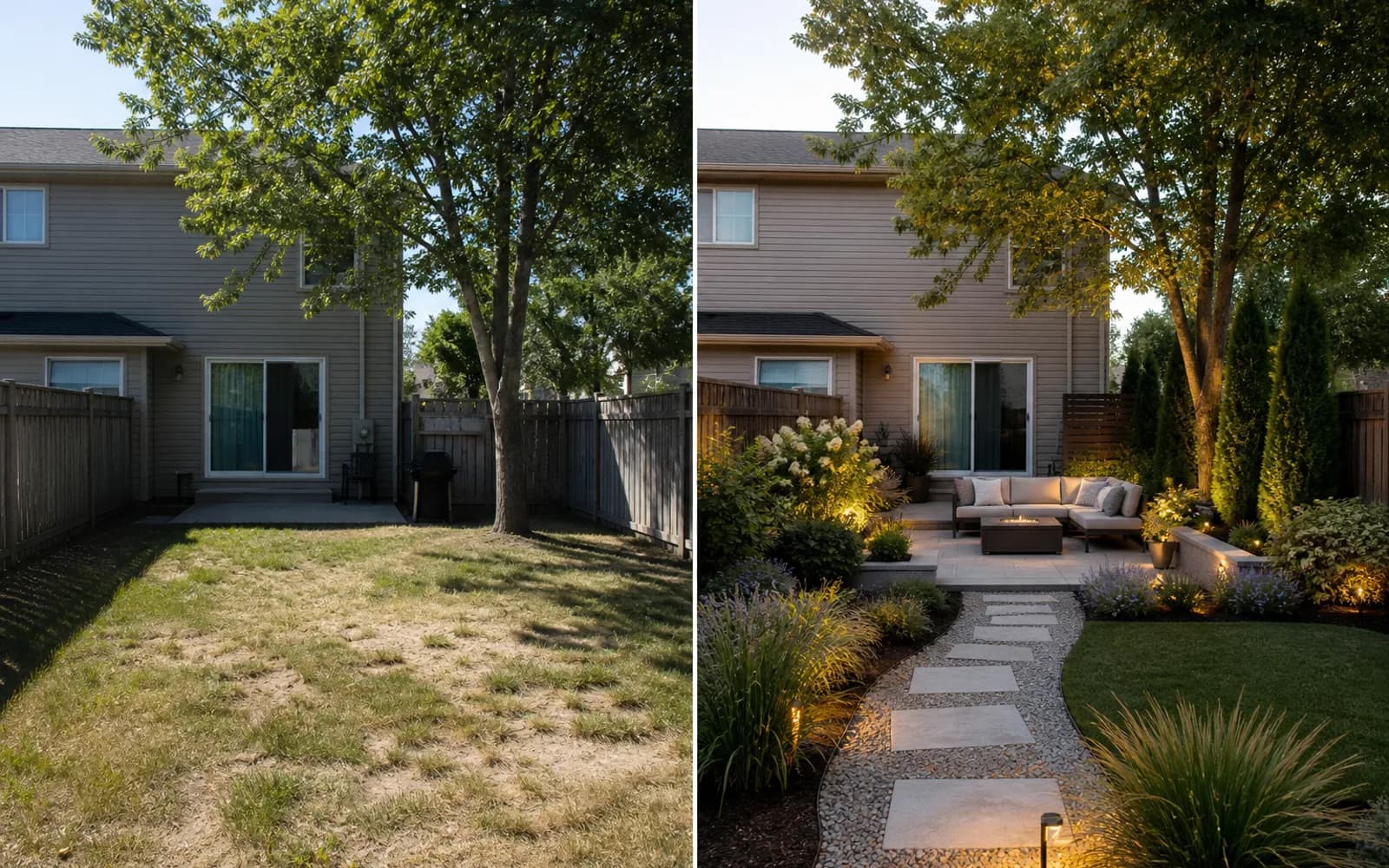
A lawn-free front yard can reduce mowing and irrigation, but gravel collects leaves, groundcovers spread, planting beds need renewal, and paving must still handle water. Low maintenance comes from site-fit materials, repeated planting, and clear edges—not from replacing turf with an unmanaged surface.
These 15 ideas address common dry, shaded, entry, drainage, and reversible-remodel situations. Each includes a copy-ready English prompt for visual comparison; climate, measurements, codes, and the keep-list still decide what belongs on your site.
Start with sun, water, access, and the keep-list
Record daily sun, slope and pooling, downspouts, car-door clearance, primary paths, buried utilities, mature-tree root zones, and HOA or municipal limits. Without these facts, a polished no-grass image can simply move maintenance into a more expensive problem.
| Site signal | Consider first | Do not copy blindly |
|---|---|---|
| Hot, full sun, limited water | Native dry planting, permeable gravel, restrained hardscape | Large dark-stone or impermeable fields |
| Shade under a mature tree | Understory plants, groundcover, leaf mulch | Raised soil or major root cutting |
| Narrow entry | One clear route and low repeated planting | Tall plants crowding both sides |
| Visible low point | Sized rain garden or verified drainage route | Hiding standing water under decorative rock |
| Rental or phased budget | Containers, mulch, reversible stepping stones | Irreversible full-yard hardscape |
| Idea | Initial budget | Ongoing upkeep |
|---|---|---|
| 1. Permeable gravel and large entry steppers | Medium | Lower |
| 2. Native shrubs and perennial drifts | Medium | Medium |
| 3. Continuous groundcover instead of lawn | Medium | Medium |
| 4. A pollinator garden with deliberate edges | Medium | Medium |
| 5. A compact modern entry courtyard | Higher | Lower |
| 6. Mulch and layered shrubs | Lower | Lower |
| 7. A dry creek that follows the water | Higher | Medium |
| 8. A woodland garden beneath a mature tree | Medium | Medium |
| 9. Low raised beds for an edible front yard | Medium | Higher |
| 10. Residential-scale xeriscape | Medium | Lower |
| 11. Permeable planting strips beside the driveway | Higher | Medium |
| 12. A two-person sitting nook near the entry | Medium | Lower |
| 13. A managed native meadow | Medium | Higher |
| 14. Minimal evergreen structure | Medium | Lower |
| 15. Stone, containers, and a reversible makeover | Lower | Medium |
15 front yard landscaping ideas without grass
Let each idea solve one primary problem. Most front yards need two to four compatible moves, not all fifteen at once.
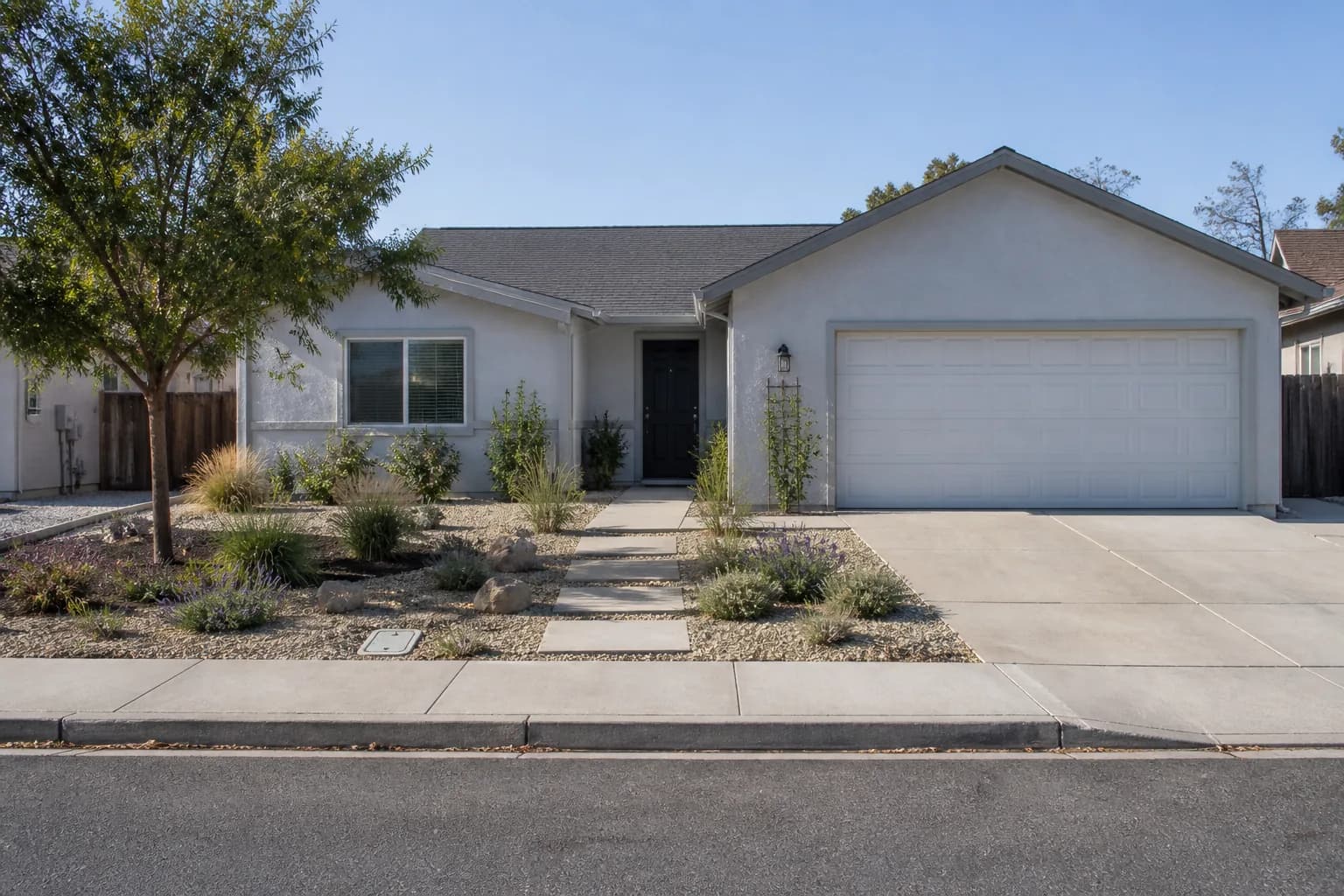
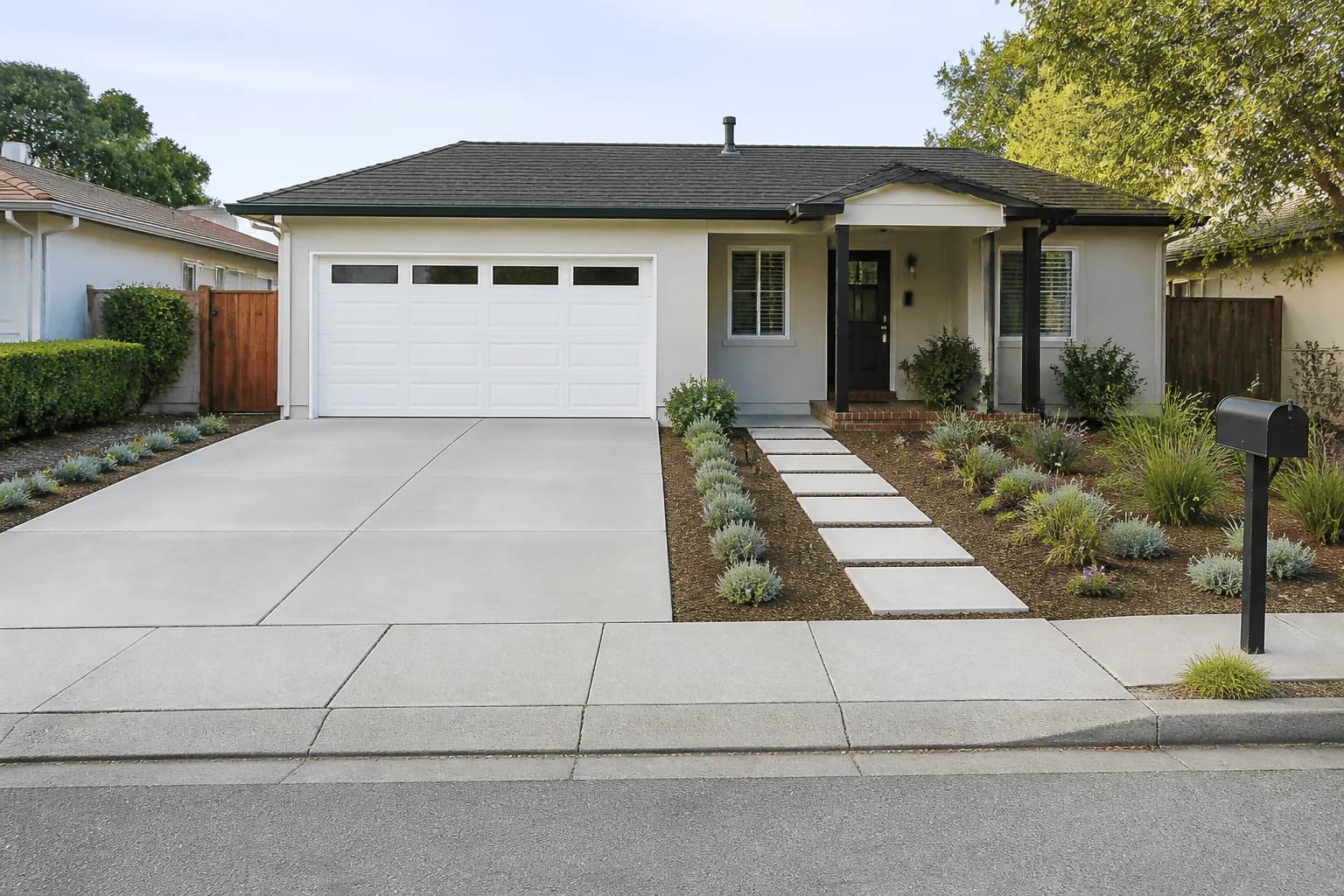
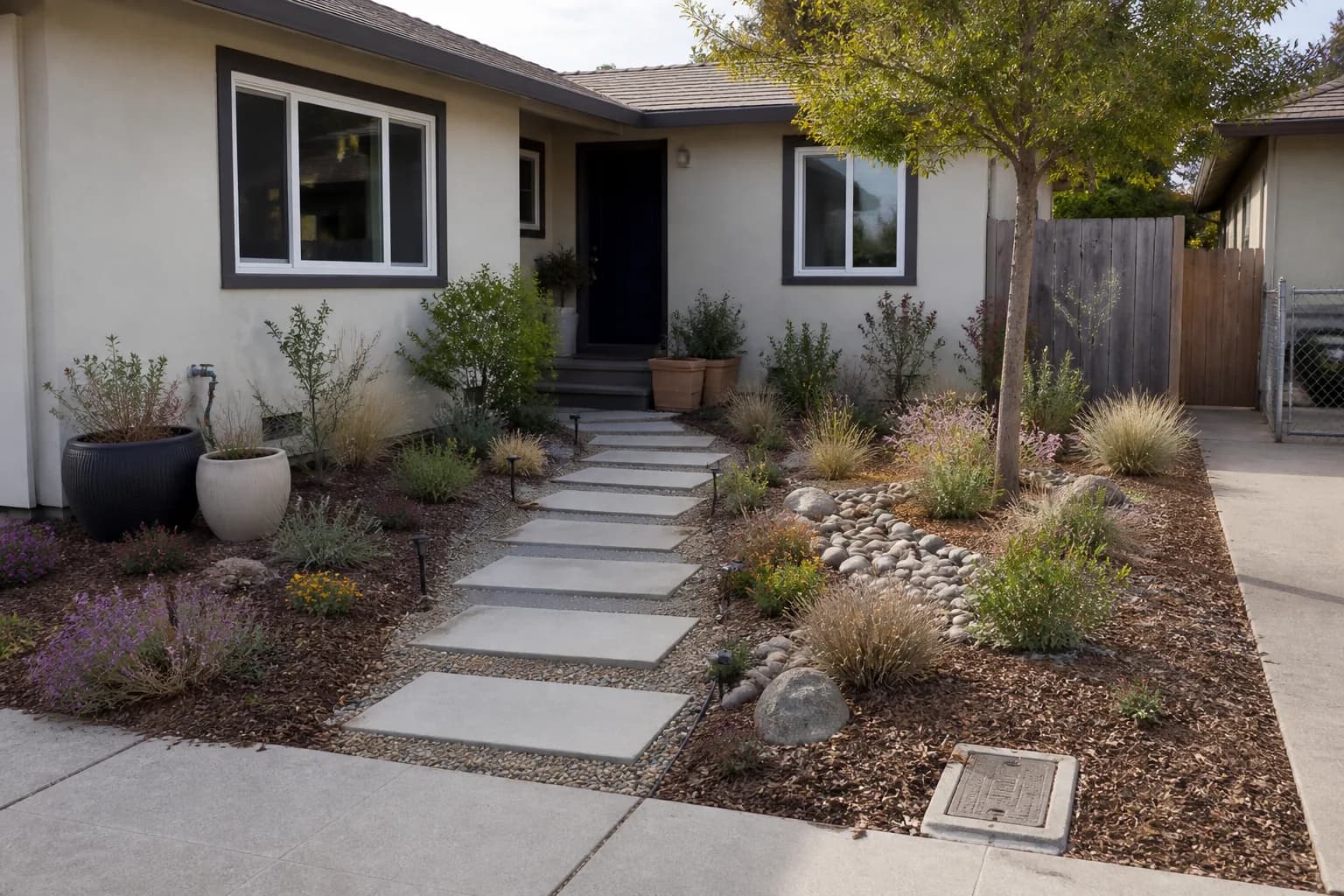
1. Permeable gravel and large entry steppers
Best for sunny yards with a clear route. Gravel needs a stable base, edging, and leaf removal; set slope, tread size, and wet-weather traction from site measurements.
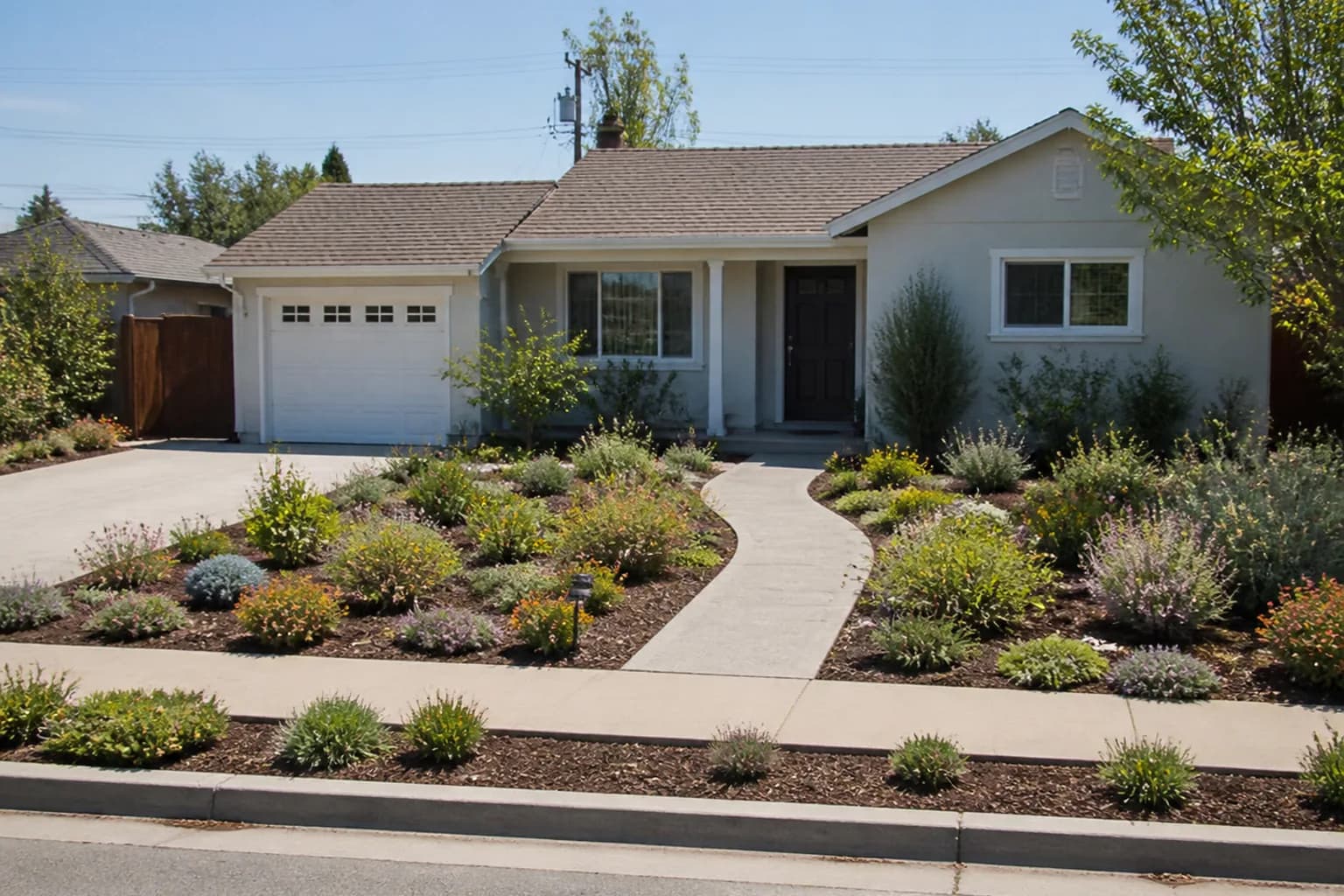
2. Native shrubs and perennial drifts
A short palette of repeated local plants can reduce irrigation and replacement after establishment. Select by ecoregion, sun, soil, and mature size—not the colors in an AI image.
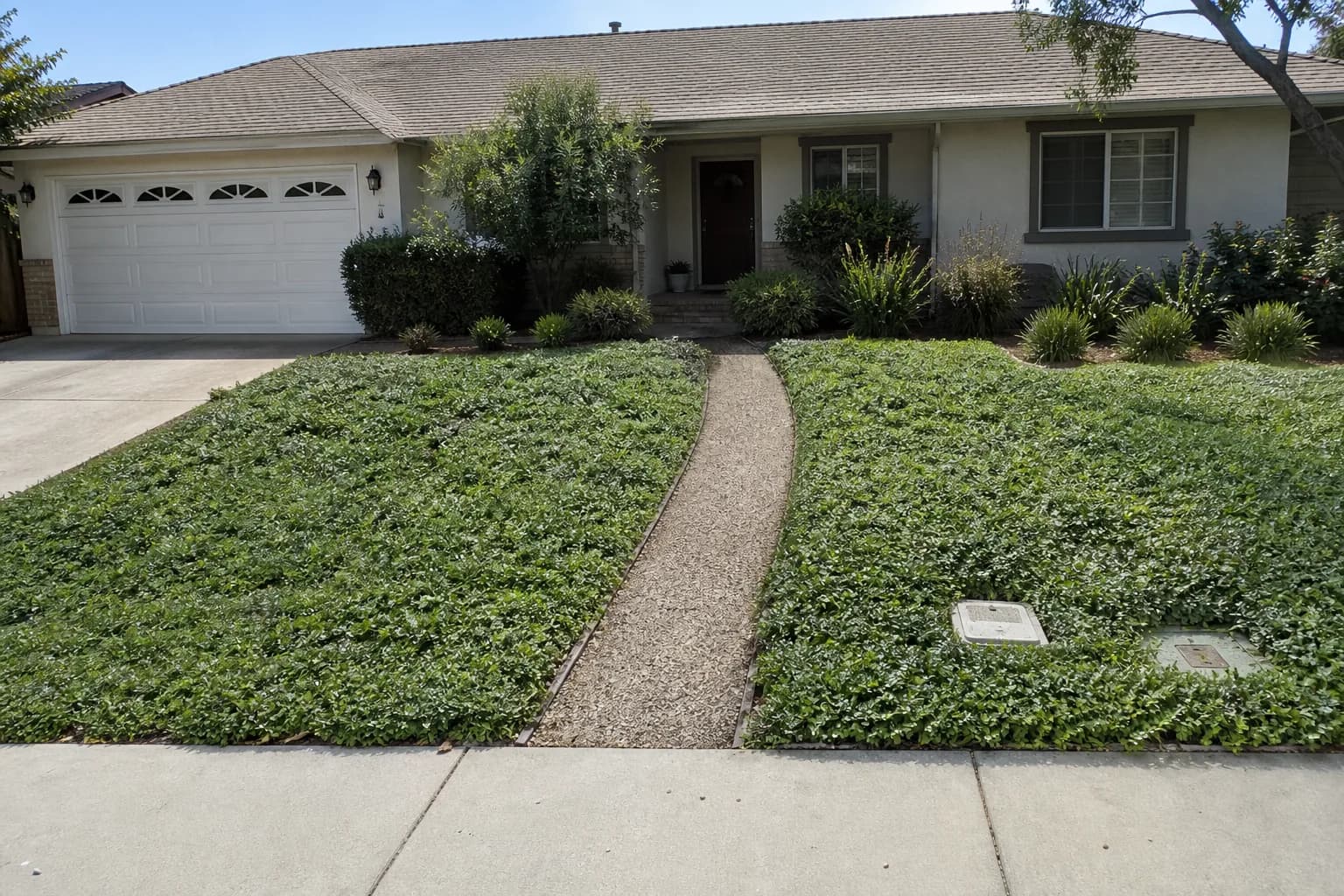
3. Continuous groundcover instead of lawn
Useful in smaller areas without regular foot traffic. Check evergreen habit, wear tolerance, spread, and access to meters, valves, and utilities.
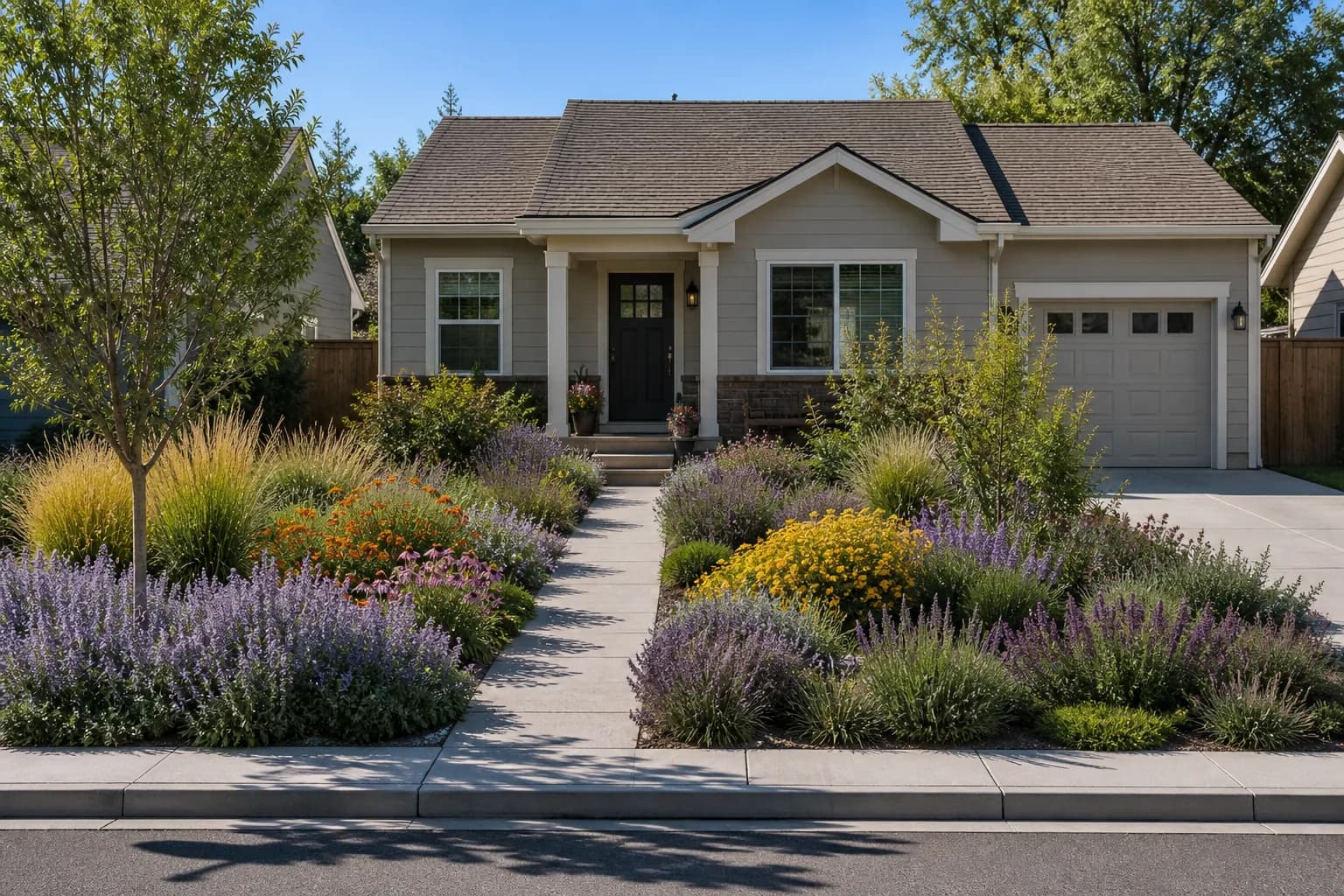
4. A pollinator garden with deliberate edges
Low street-side planting, repeated flower drifts, and winter structure make a naturalistic garden read as maintained. Plan for weeding, seasonal cutting, and local height rules.
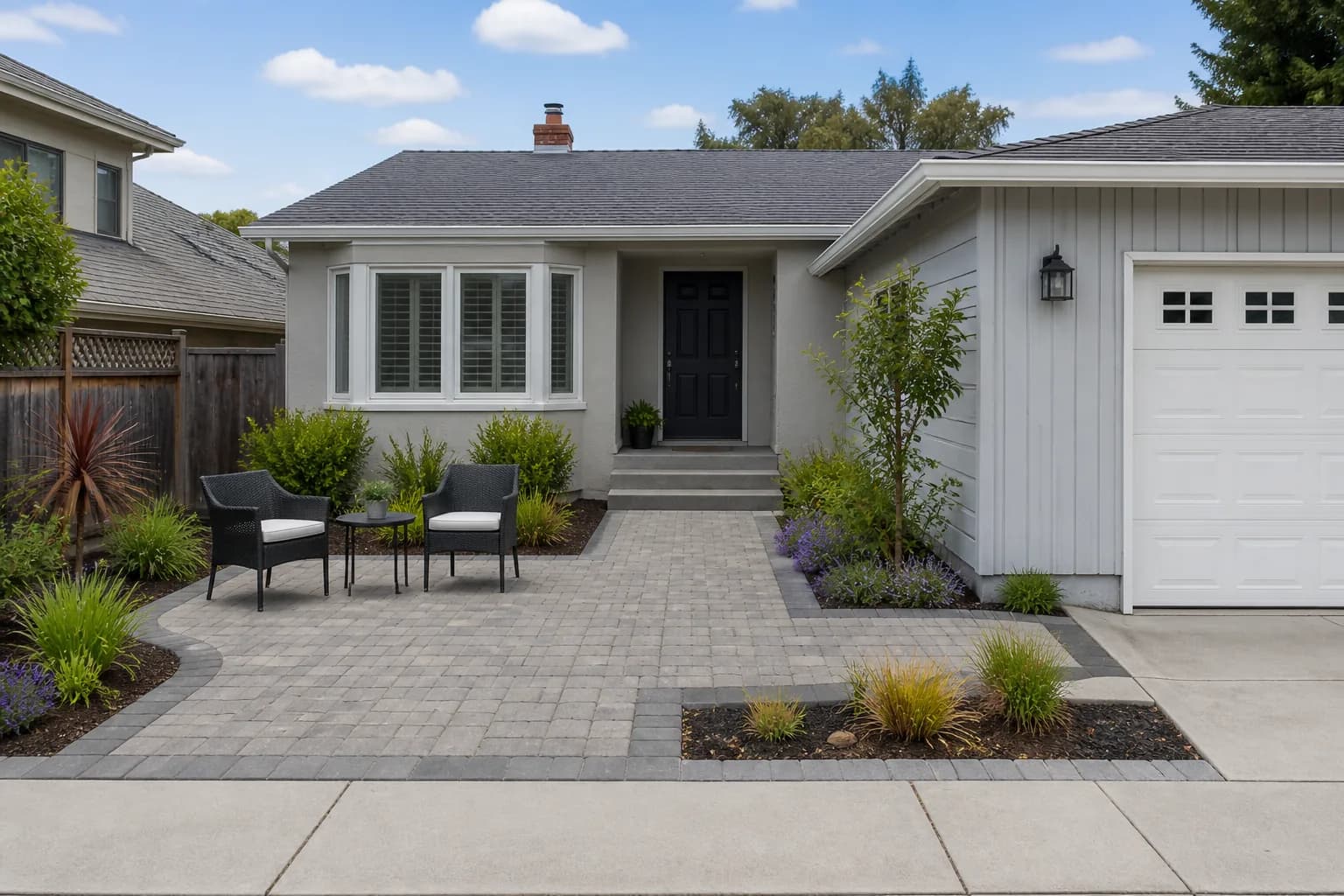
5. A compact modern entry courtyard
Add one small sitting area and a direct accessible entry rather than paving the whole frontage. Protect permeable area and keep the route to the door unobstructed.
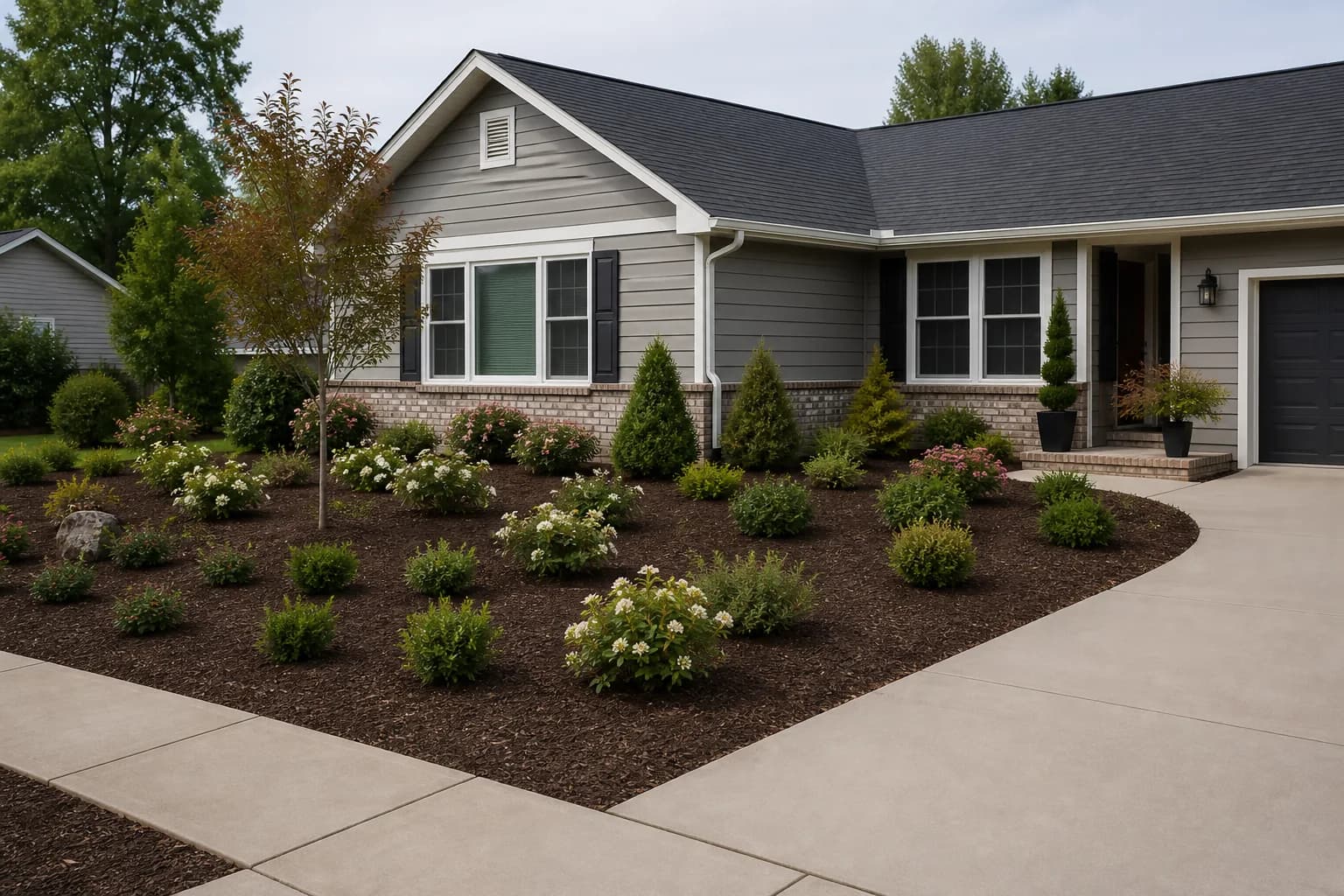
6. Mulch and layered shrubs
A practical phased lawn conversion. Replenish mulch and space shrubs for mature width; dense installation does not automatically create low maintenance.
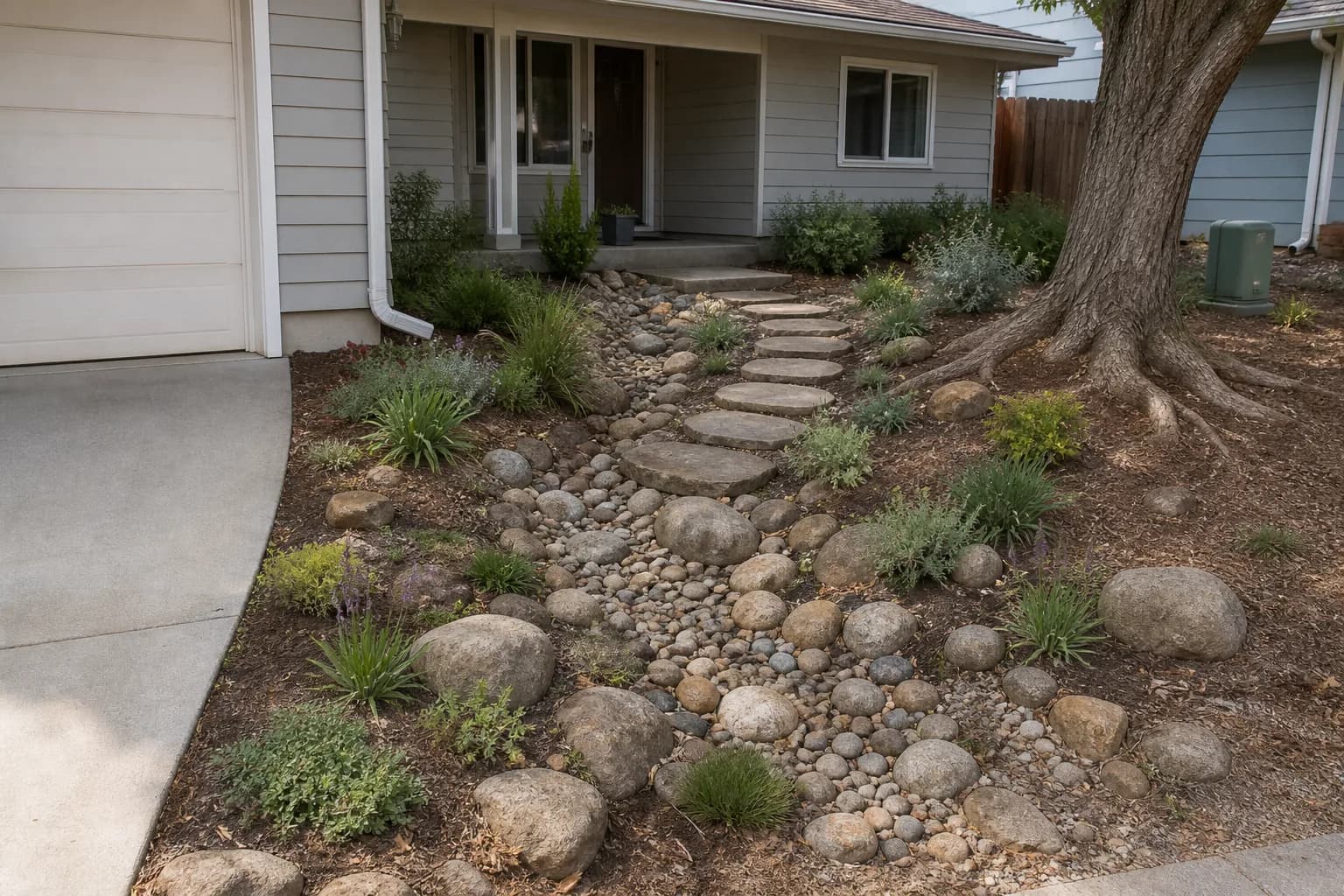
7. A dry creek that follows the water
Appropriate where a real low point or downspout problem exists, but a decorative creek is not engineered drainage. Confirm volume, outlet, infiltration, and neighboring-property effects.
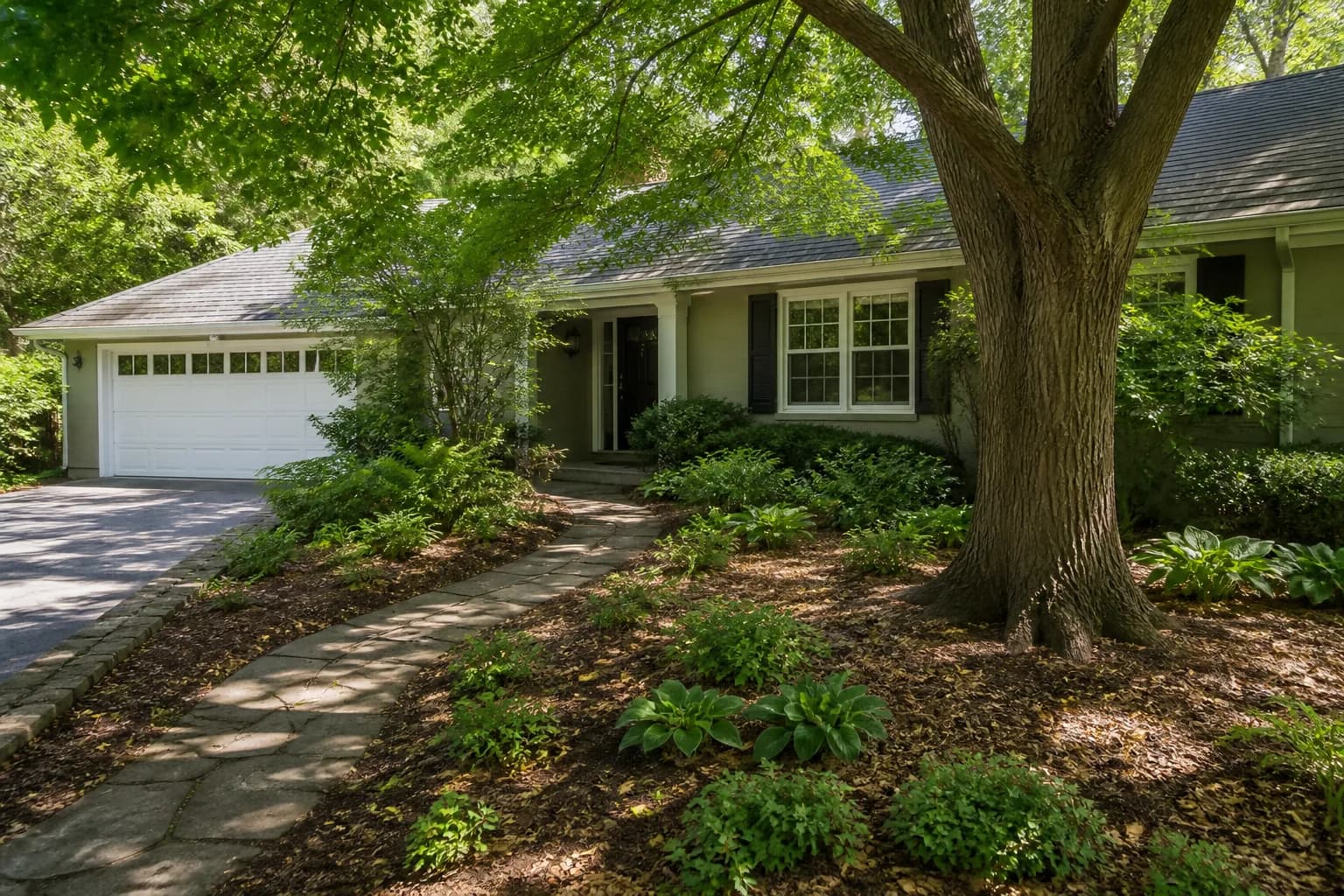
8. A woodland garden beneath a mature tree
Use shallow-rooted local understory plants and leaf mulch while keeping the natural grade. Never pile soil at the trunk, sever major roots, or build a heavy wall without arborist review.
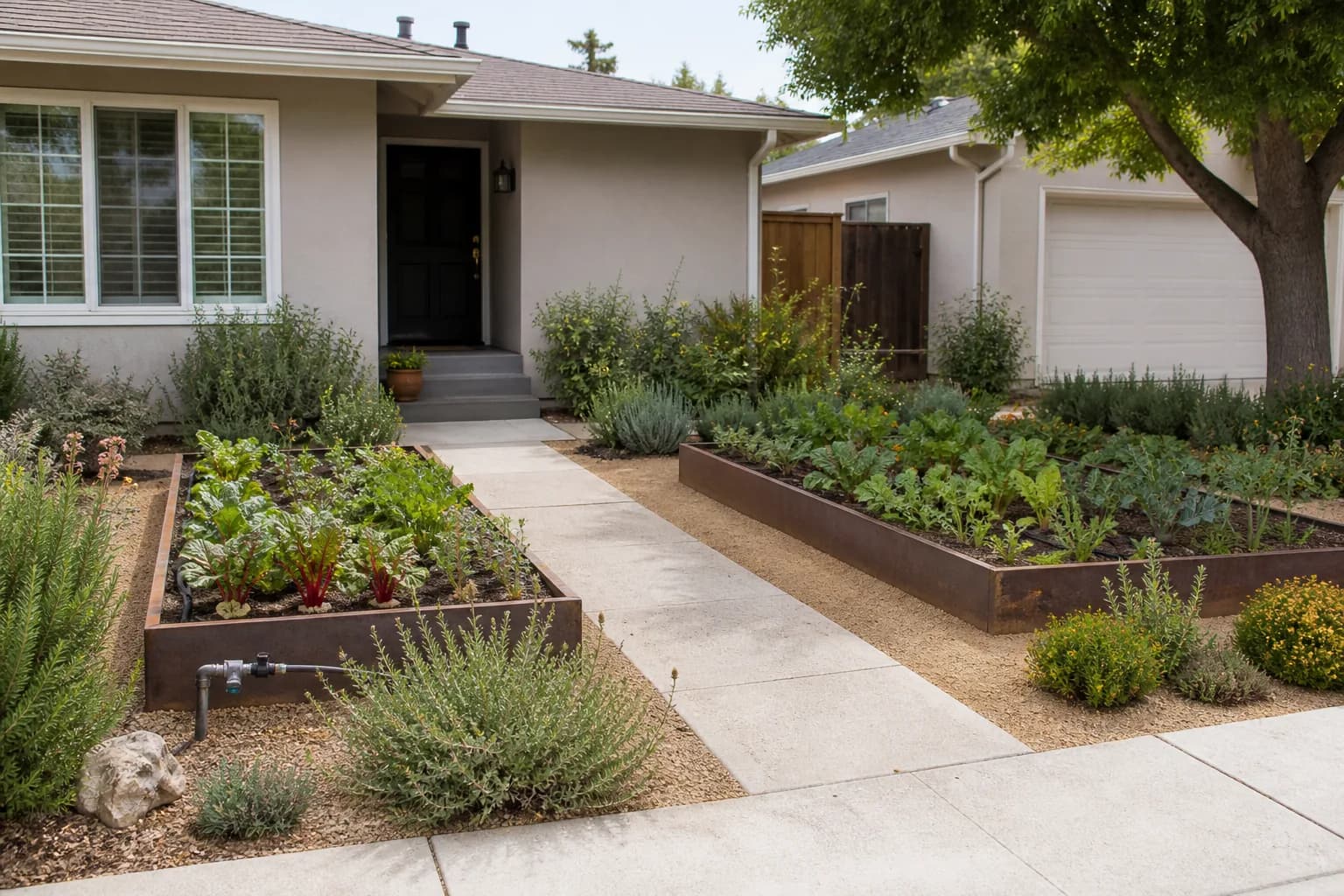
9. Low raised beds for an edible front yard
Works in sunny locations where local rules allow it. Keep beds below street sightlines and plan rotation, soil renewal, irrigation, and winter appearance.
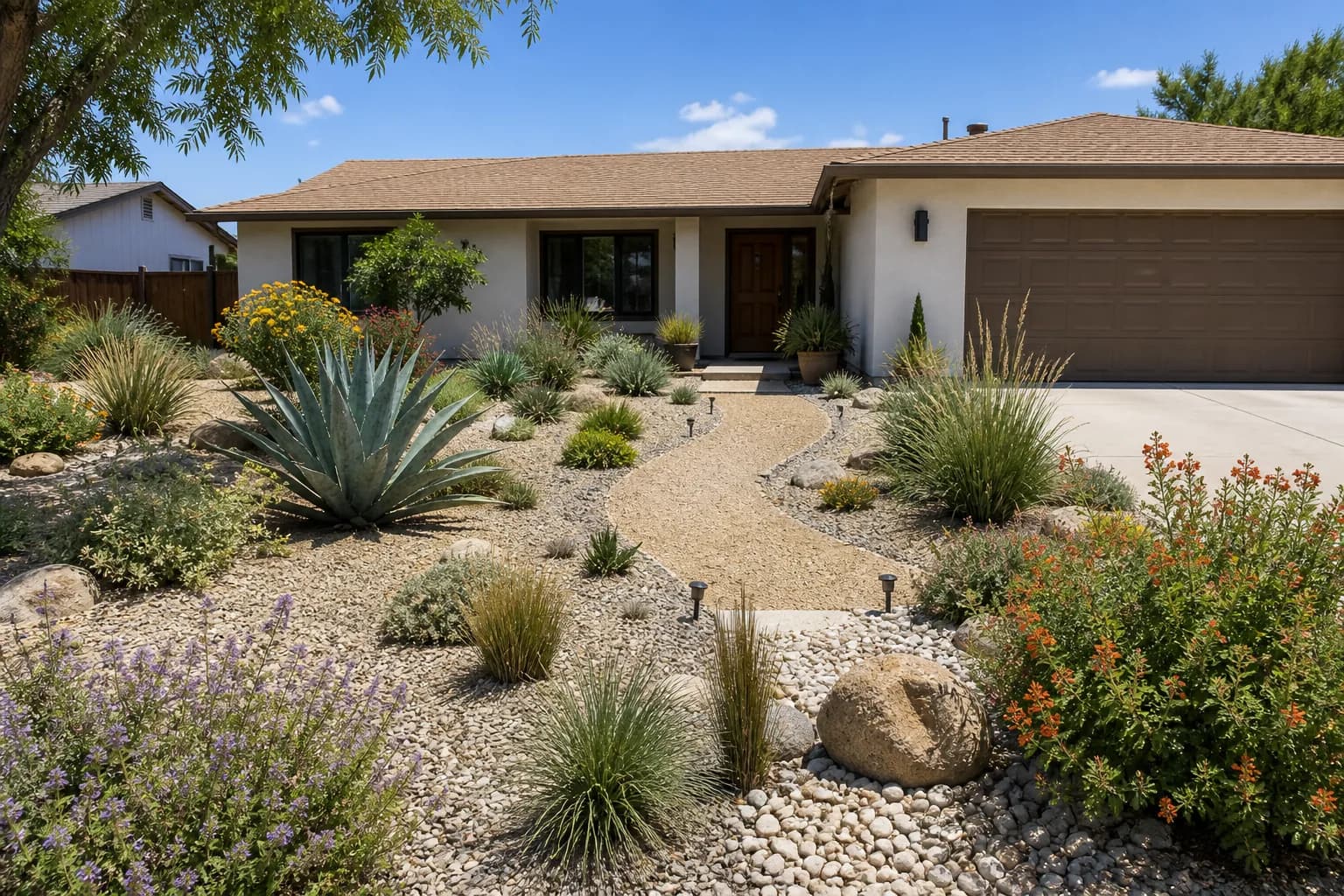
10. Residential-scale xeriscape
Combine gravel, a few accent stones, and repeated drought-tolerant plants instead of copying a resort landscape. Account for stone heat, infiltration, and the lifespan of weed barriers.
11. Permeable planting strips beside the driveway
Soften paving with low plants while preserving legal driveway width, car doors, bins, and snow storage. Never block the driver's view of the street.
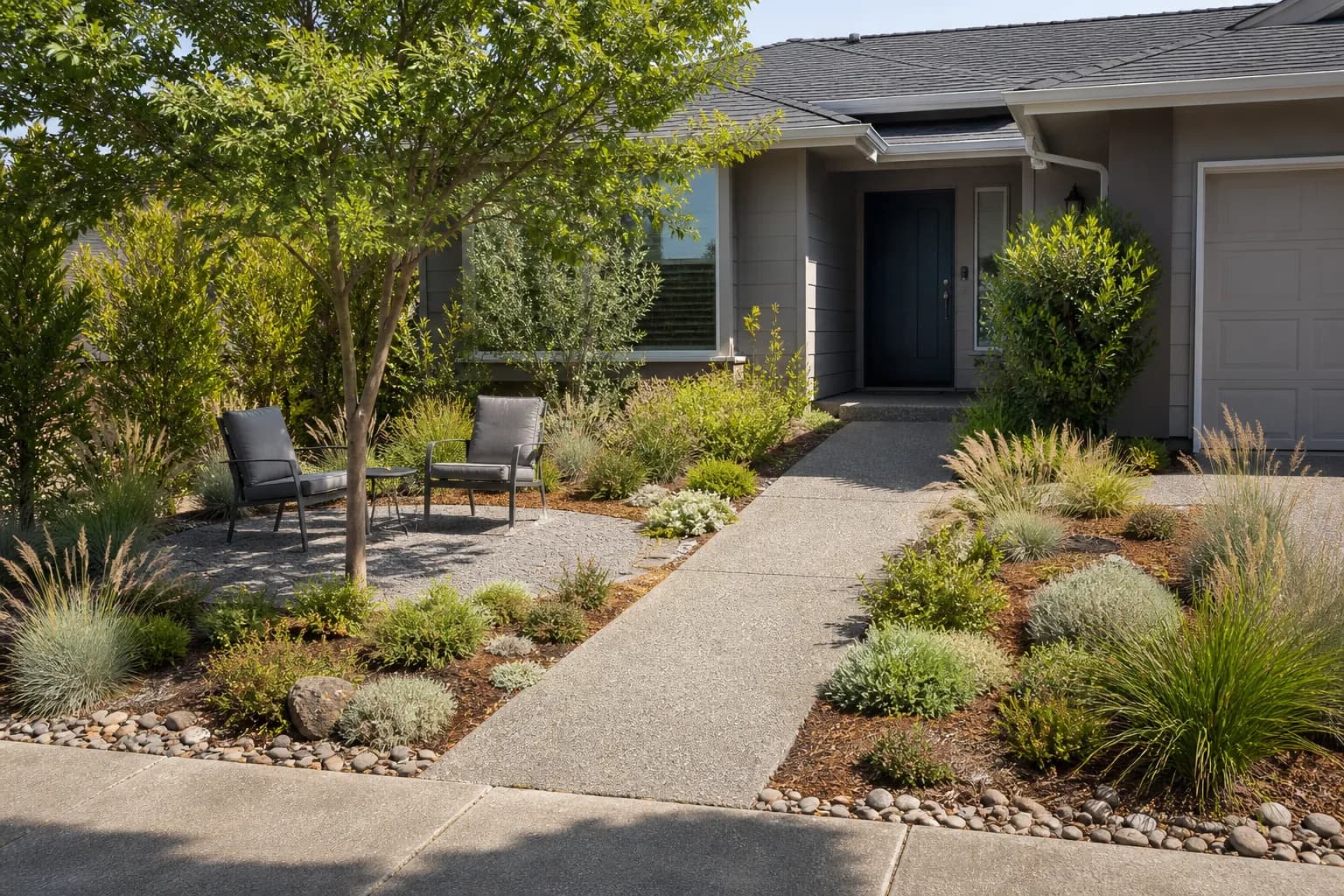
12. A two-person sitting nook near the entry
Two chairs on a compact permeable pad can make the front yard social. Check privacy, lighting, package delivery, and the main route so furniture never becomes an obstacle.
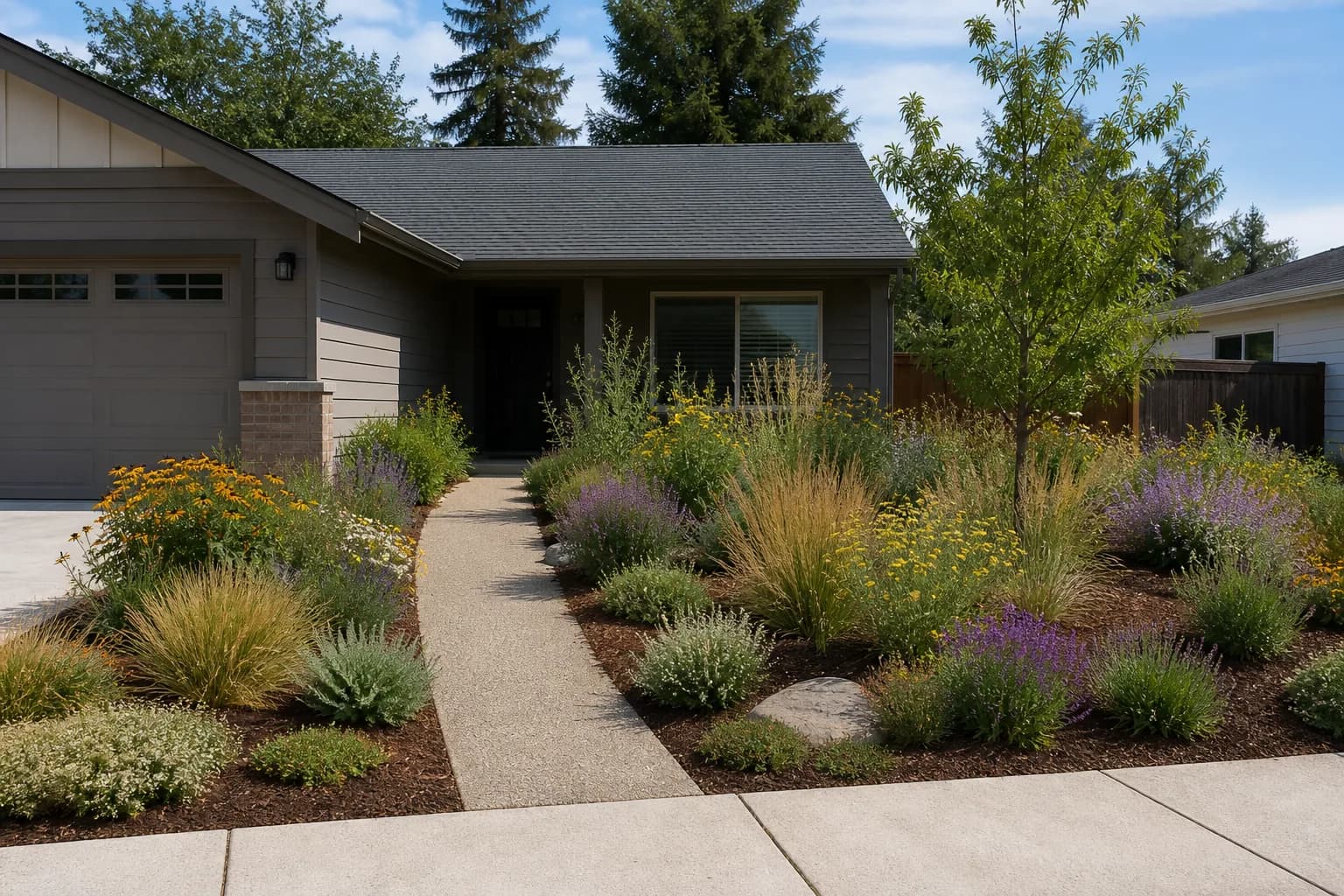
13. A managed native meadow
A crisp edge, direct path, and repeated seasonal drifts communicate intention. Expect intensive weed control and infill during establishment and check fire and vegetation-height rules.
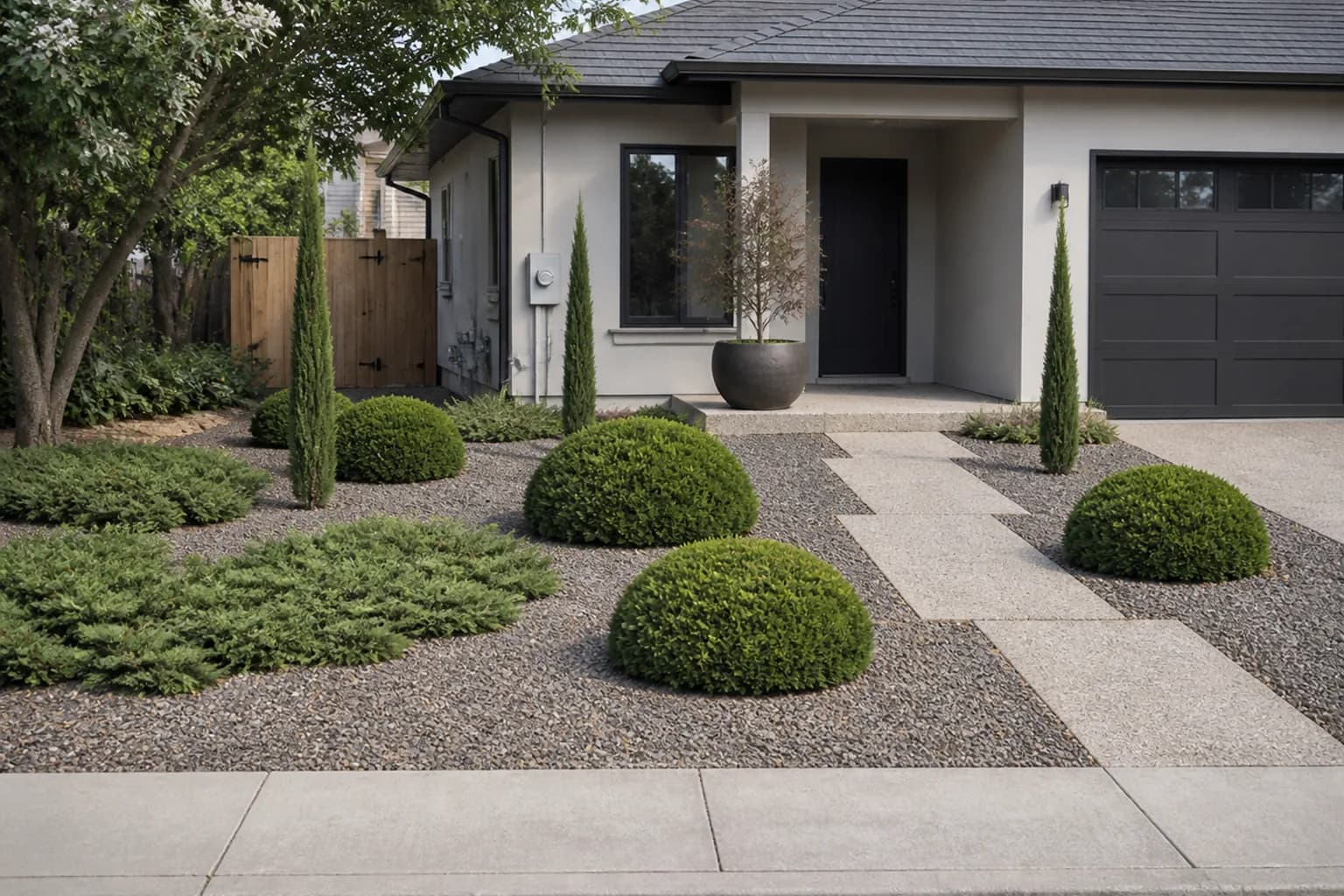
14. Minimal evergreen structure
Use three repeated plant forms, generous negative space, and one entry focal point. Select for mature dimensions and pruning needs instead of turning every shrub into a clipped hedge.
15. Stone, containers, and a reversible makeover
Useful for rentals, trials, or phased budgets. Containers need stability, drainage, and irrigation, and they must stay clear of accessible routes and buried services.
No grass does not mean no maintenance
- Gravel and paving need leaf removal, weed control, and edge repair.
- Native plants still need watering and weeding during establishment.
- Groundcovers need containment and mulch needs renewal.
- Rain gardens need correct sizing, overflow, and a safe outlet.
- Mature plant dimensions matter more than nursery-day density.
Move from inspiration to a responsible plan
- Photograph the street view, entry, driveway, and problem area.
- Record sun, pooling, utilities, and everything that must remain.
- Generate two or three visual directions around one main goal.
- Draw paths, planting, and service access from real measurements.
- Use local plant references and obtain paving, drainage, and construction quotes.
Frequently asked questions
Is a no-grass front yard really lower maintenance?
It can be, but gravel, paving, groundcovers, and planted beds all have distinct maintenance tasks.
What is the cheapest lawn alternative?
Phased bed expansion or locally available mulch can start cheaply, but total cost depends on area, base work, irrigation, and labor.
Can I cover the entire front yard with gravel?
Check heat, glare, runoff, weeds, streetscape, and local lot-coverage rules before using one material across the whole frontage.
Will a lawn-free yard hurt curb appeal?
A clear entry, repeated plants, year-round structure, and maintained edges often matter more than whether turf is present.
Can AI choose the exact plants?
Use AI for a planting direction, then verify every species by ecoregion, sun, soil, moisture, mature size, and local availability.
A successful lawn-free front yard does not merely remove turf. It turns entry, water, planting, and maintenance into one clear system. Choose the two or three directions that fit the site, then finish the design with local facts.