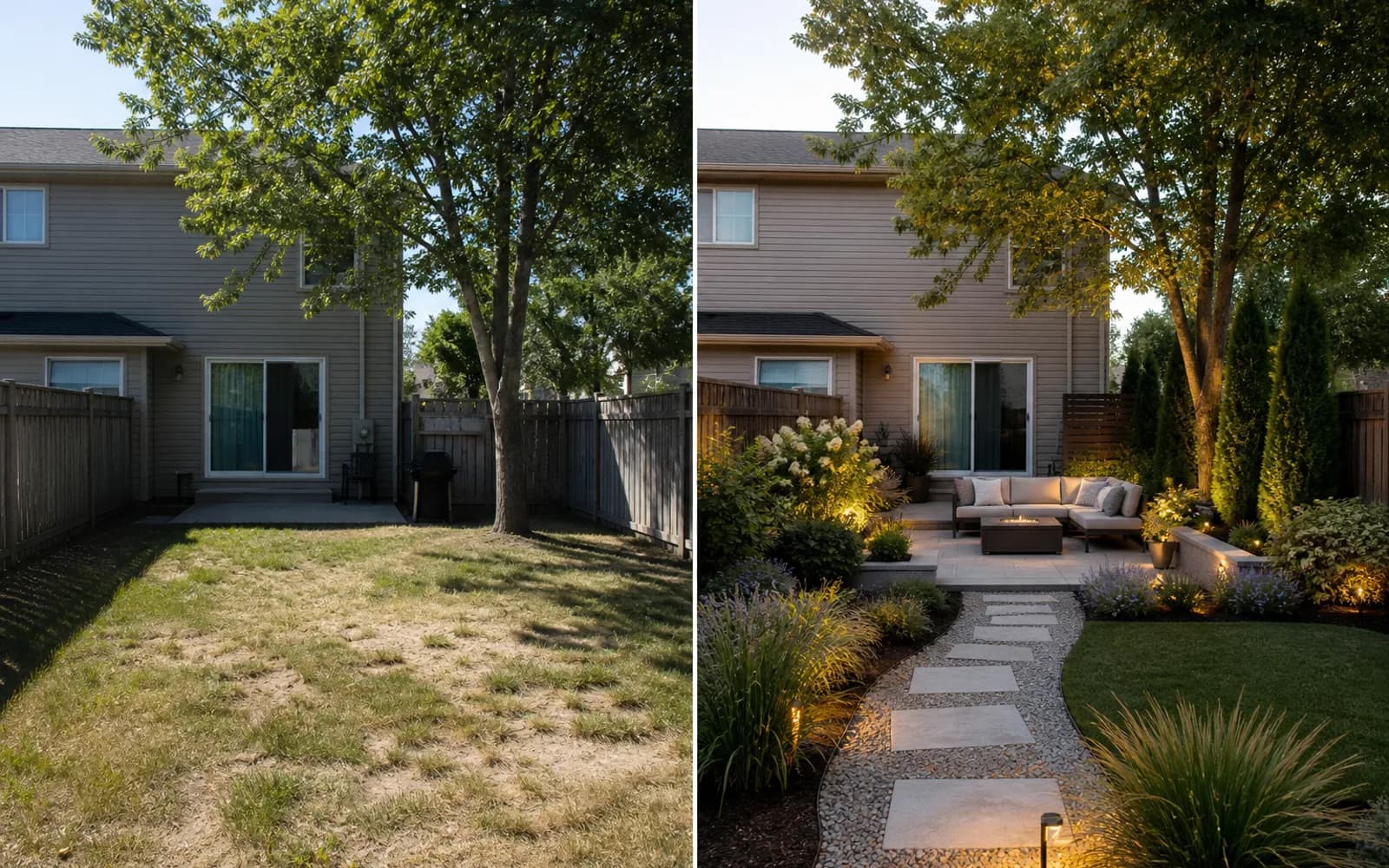
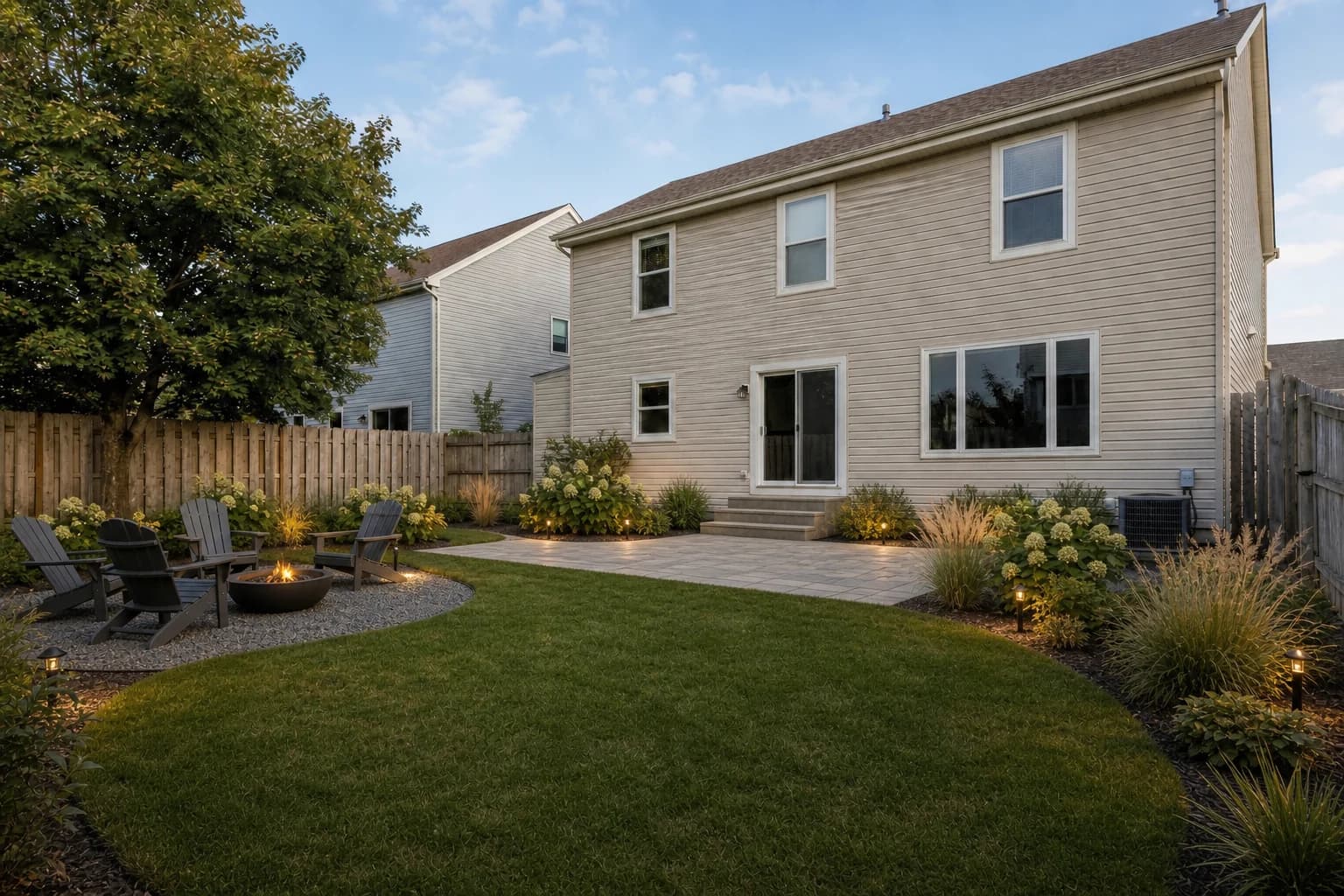
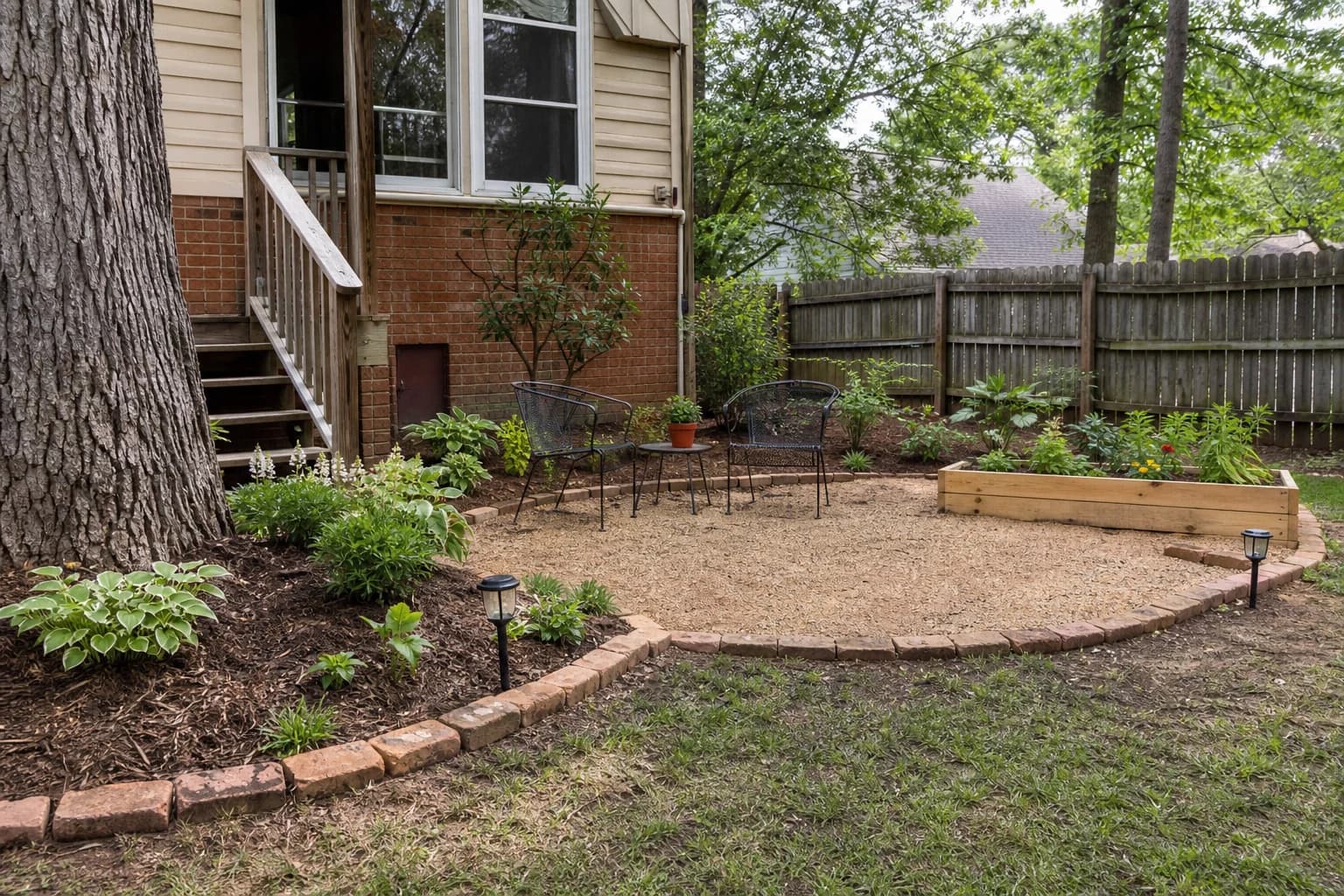
A useful AI landscape design prompt is not a pile of adjectives. It tells the model which site it is looking at, what must stay, which problem matters most, and what it must not invent.
These 25 examples cover front yards, patios, privacy, families, difficult sites, and water-wise design. They are concept inputs—not scaled plans. Verify plants, drainage, structure, utilities, and permits before building.
Start with this seven-part landscape prompt formula
Describe the site, photo reference, keep list, one primary job, design direction, real-world constraints, and required output. Solving one main job per generation is more reliable than stacking every wish into one image.
Part
What to include
Example
Site
Type, size, orientation, region
9 × 12 m south-facing backyard in Zone 6b
Photo reference
Keep the same property and viewpoint
Use my uploaded photo as the only site reference
Keep list
Elements that cannot move
Keep patio, two doors, fence, and mature oak
Primary job
The one problem to solve
Reduce views from a second-story window
Direction
Style, materials, maintenance
Natural modern, low maintenance, limited paving
Constraints
Budget, children, pets, access
Keep a 36-inch service path; no water feature
Output
What the model should return
Daylight photoreal concept plus a list of facts to measure
Weak prompt versus strong prompt
25 copy-ready prompts for real yard situations
Replace the bracketed site facts before copying. The pre-build check after every prompt matters more than extra style adjectives.
Front yards and entries
1. Curb-appeal front yard
2. Front yard around a mature tree
3. More accessible entry
4. Pollinator front yard
5. Simple layers for a narrow frontage
Backyards and patios
6. Four-person patio dining
7. Low-budget backyard refresh
8. Small multipurpose backyard
9. Fire-pit conversation area
10. Compact outdoor kitchen direction
Privacy and family use
11. Pool-edge refresh
12. Vegetable garden plus seating
13. Screen a second-story view
14. Visible children’s play zone
15. Dog-friendly backyard
Difficult sites
16. Quiet reading corner
17. Low-glare night use
18. Narrow side-yard passage
19. Sloped backyard
20. Standing-water low point
Water-wise design and corrections
21. Irregular triangular lot
22. Water-wise front yard
23. Four-season low-maintenance border
24. Correct invented architecture
25. Correct scale and overdesign
When the result is wrong, do not rewrite everything
Name one visible error, such as “restore the original left door.”
Repeat the keep list and fixed boundaries.
Change only one function or material per revision.
Ask for one conservative and one exploratory version.
Compare the result beside the source photo, not only on visual appeal.
No prompt can verify these facts for you
Exact dimensions, boundaries, and underground utilities
Drainage, slope, retaining structures, and structural safety
Plant identity, mature size, invasiveness, and local suitability
HOA, permit, fire, pool, and accessibility requirements
Material quantities, labor rates, and contractor quotes
Frequently asked questions
Can ChatGPT design my yard?
It can organize a brief, suggest directions, and generate concepts, but it cannot independently verify dimensions, drainage, plants, or construction requirements.
How long should a landscape prompt be?
Length is not the goal. Seven useful parts, one main job, and an explicit keep list usually outperform a paragraph of style adjectives.
How do I stop AI from changing my house?
Use a clear photo, list every door, window, roofline, fence, and tree that must remain, and repeat those constraints in each revision.
Can I give the image directly to a contractor?
Use it to communicate direction, not as a substitute for measured plans, drainage or structural design, permits, or a final quote.
How many directions should I generate?
Compare two to four meaningfully different directions, then revise the closest one a single issue at a time.
The best AI landscape prompt behaves like a short design brief: it protects the real site, prioritizes one problem, and identifies every decision that still belongs in the field.
From privacy and low maintenance to family, pet, and evening layouts, each of these 12 directions includes an image and a prompt you can test on your yard.