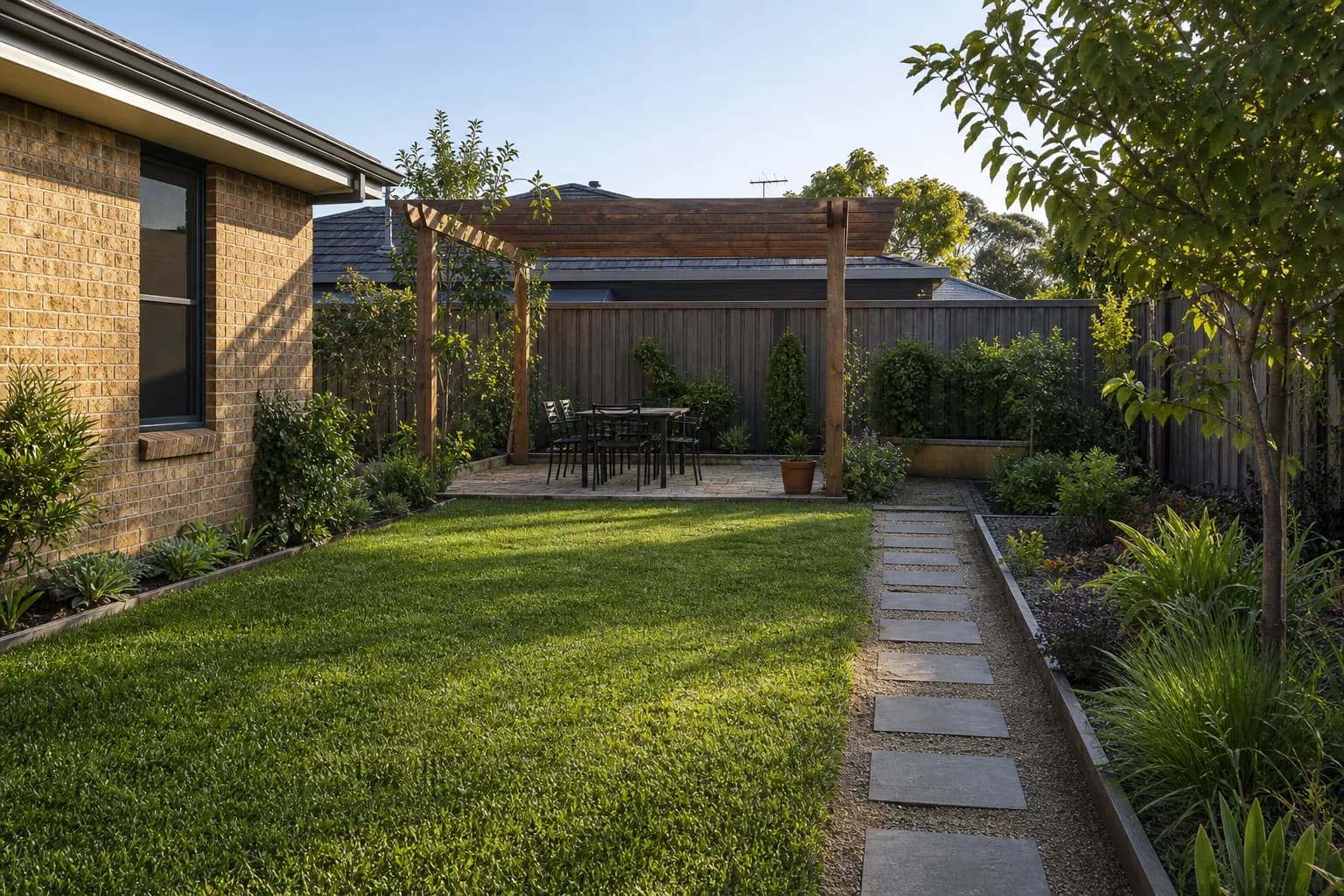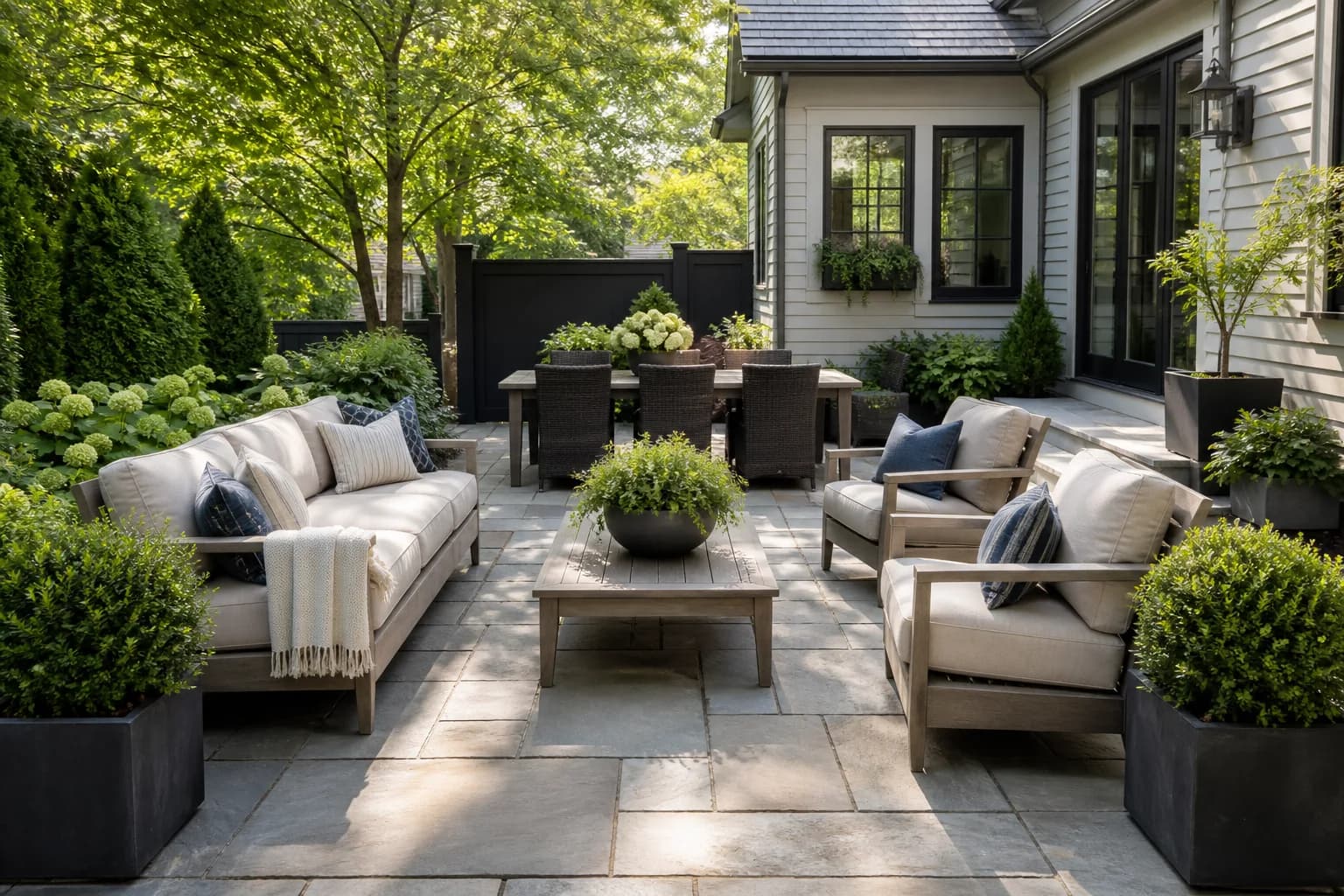
Many yard makeover plans start with “clear everything.” On a real lot, healthy trees, established edges, and well-draining paving are often the assets you should protect first.
A stronger approach is a keep-first strategy: mark non-negotiable keepers, then decide what truly needs updating. You spend less and keep more character.
Why full teardowns get expensive fast
Teardowns stack haul-away cost, rebuild cost, and the years needed for new plants to catch up. Keeping proven structure inherits shade, edges, and circulation that already work.
- Money: less digging, hauling, and repaving.
- Time: less waiting for canopy and materials.
- Risk: fewer surprises in drainage and grade.
5 existing elements worth keeping
1. Healthy mature trees in the right place
Canopy trees deliver shade, scale, and seasonal change that new plants cannot match quickly. Check health, root conflicts, and clearance before deciding.
2. Established fences and edges
If the frame is sound, treat fences, low walls, and hedges as the room boundary. Many “new looks” only need repair, paint, or a better opening.
3. Hardscape that still drains and walks well
Steps, main paths, and pads without major settlement or pooling often need patching, not full replacement.
4. Proven drainage and grade relationships
Where water goes and which level changes do useful work matter more than surface fashion. Moving grade casually can create long-term pooling.
5. Daily-use utilities and support zones
Hose bibs, working outlets, storage corners, and pet or laundry routes should not disappear for a cleaner render.
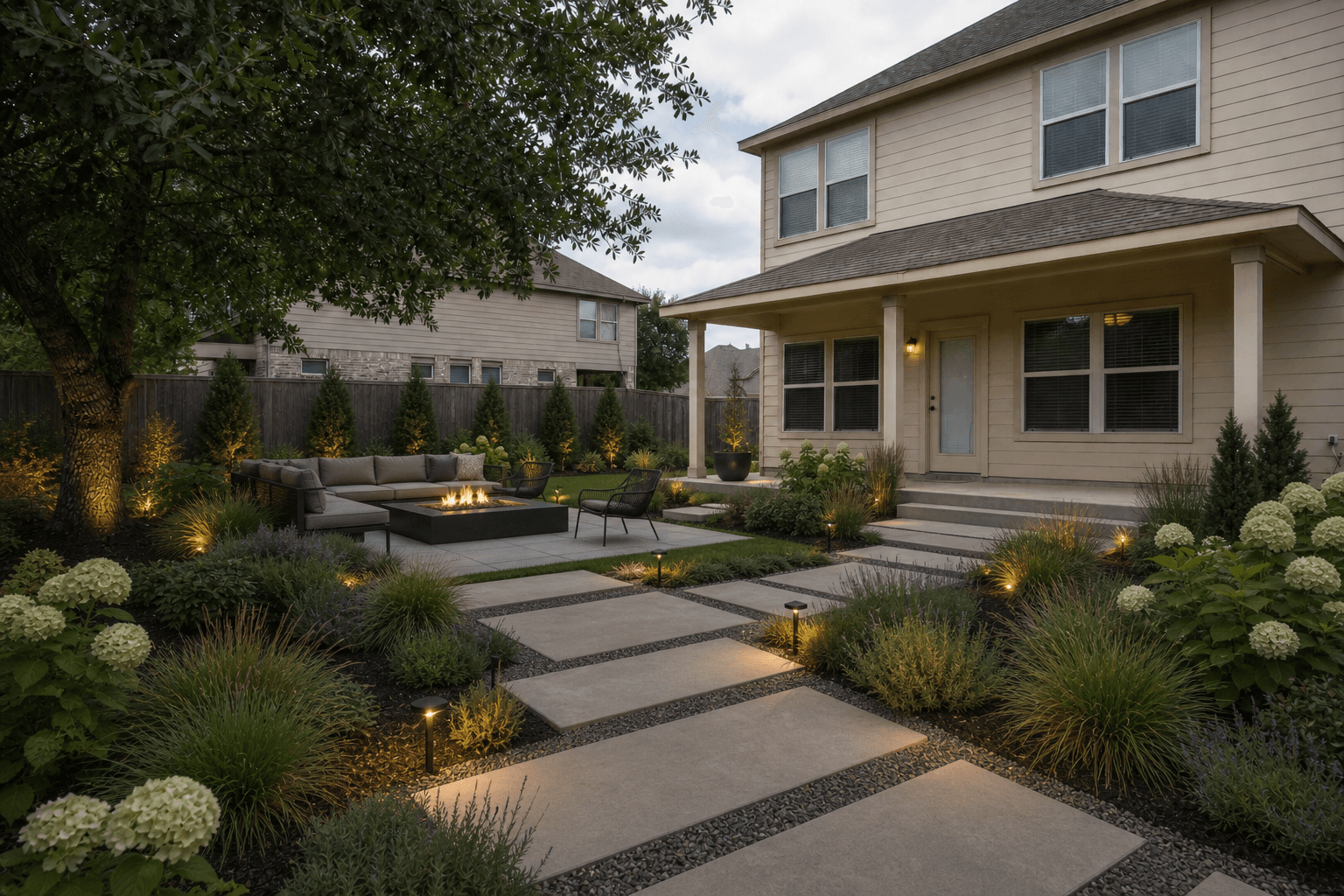
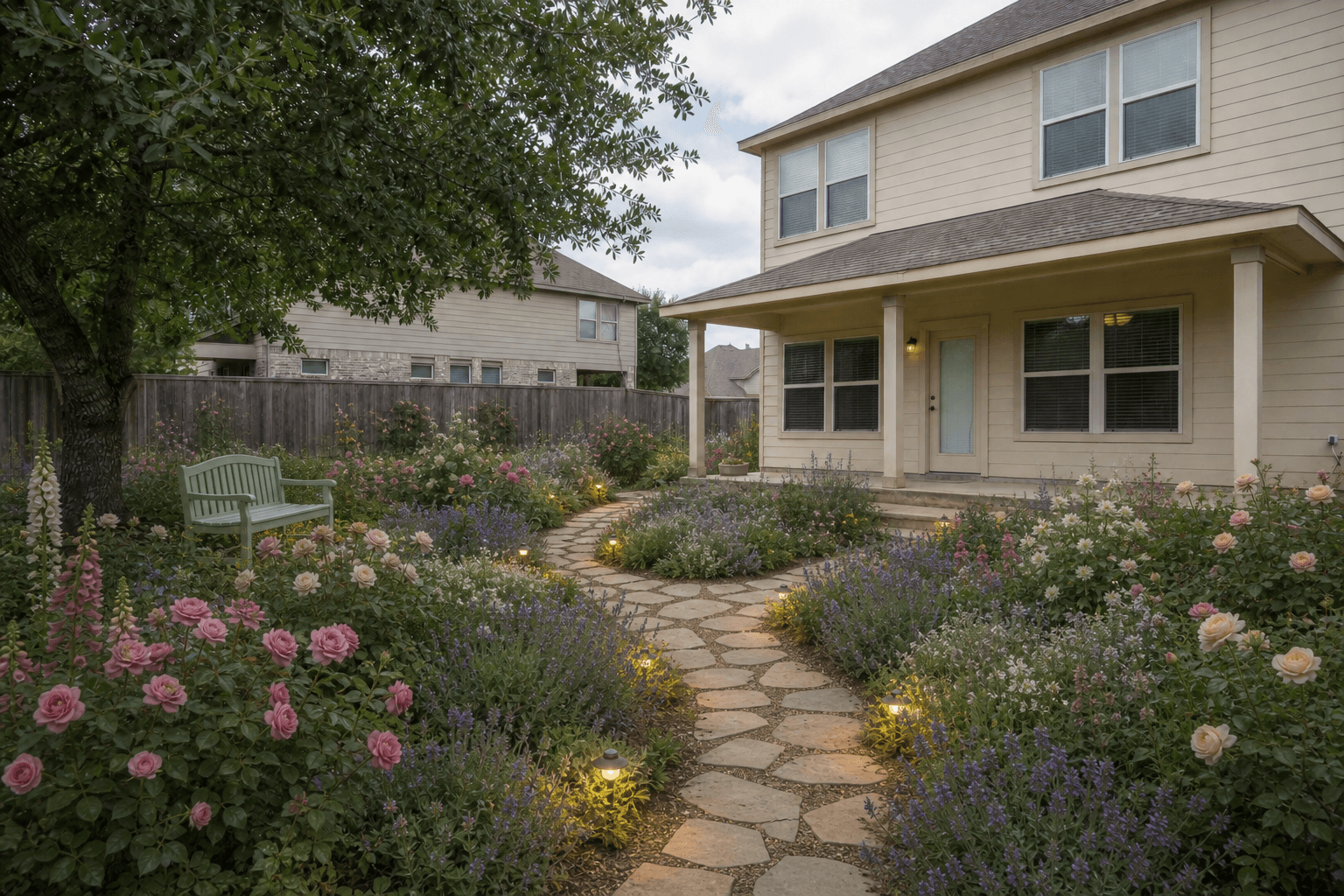
Use a keep matrix before you redesign
| Condition | Action | Example |
|---|---|---|
| Safe and useful | Keep and design around it | Healthy main tree, solid primary path |
| Serviceable but dated | Keep structure, refresh surface | Sound fence frame, worn boards |
| Unsafe or failed | Replace or remove first | Loose steps, chronic wet paving |
| Pretty but blocks use | Resize or relocate | Planter that steals circulation |
Run keep-plus-upgrade in GardenGPT
- Photograph keepers in detail: trees, edges, hardscape.
- Write the keep list before generating options in the workspace.
- Browse templates that refresh layers instead of erasing the site.
- Pair with planning a yard makeover from photos so constraints are captured early.
Keeping what works is not timid design. It is mature budgeting: protect verified structure, then spend on the parts that actually fail.
Frequently asked questions
The tree looks average. Should it stay?
Start with health and safety. If structure is sound and shade is useful, prune and keep before defaulting to removal.
Does damaged paving always mean full replacement?
No. Check base and drainage first. Many jobs only need selective slab or paver replacement.
Will keeping elements limit style?
It adds constraints, and constraints usually produce more grounded results. Materials and plants can still change.
How do I tell AI what to keep?
List keepers in plain language and photograph them clearly. Vague notes get ignored in concepts.
Can I change a shared fence?
Check ownership first. Interior upgrades and repairs are often safer than unilateral removal.
Does keep-first help small yards?
Even more. Small sites punish teardown mistakes quickly, especially on edges and paths.
Before the next yard makeover, write a keep list: trees, edges, hardscape, drainage, daily utilities. Upload photos, mark those keepers, and compare keep-plus-upgrade options instead of starting from zero.