If you keep reseeding the same bare patch beneath a tree, the lawn may be asking for a different job. Limited light, competing roots, foot traffic, and soil conditions can make turf difficult to sustain. Adding more seed or water without finding the cause often repeats the problem.
The most useful shady backyard ideas start with what you want to do there: sit outside, walk across the yard, or enjoy planting from the house. You can replace only the struggling section, retain lawn where it performs well, and keep the mature canopy that makes the space comfortable.
Check the shade before replacing the grass
Photograph the same area in the morning, around midday, and in the afternoon on a clear day. Repeat when trees are in leaf if your first observations were in winter. A bright spring corner can become deep shade in summer; sun that reaches the fence may never reach the ground.
Then separate shade from other problems. Dry soil beneath a dense canopy calls for a different response from a low spot that stays wet after rain. Compacted shortcuts, roof runoff, and heavy use can also leave bare patches. A shade-tolerant grass still needs adequate light and suitable growing conditions.
- Record direct sunlight at ground level and whether the shade comes from trees, buildings, or both.
- Check soil moisture in more than one spot, both after rain and during a dry spell.
- Mark surface roots, doors, drains, utilities, and the route people already take.
- Keep your local climate and water restrictions in view; a hardiness zone describes winter cold, not every growing condition.
What the reference image gets right about a shaded yard
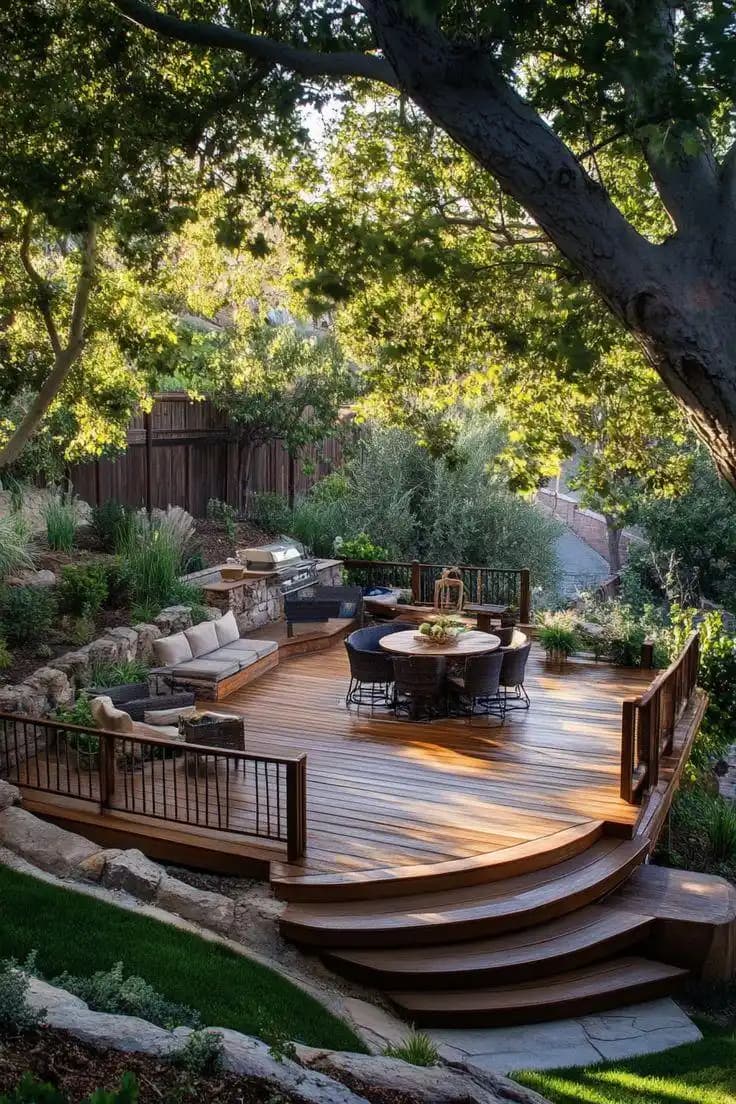
In the supplied reference image, a timber platform gives dining and lounging one clear home beneath a large canopy. Seating follows the edge, the central table has its own zone, and planting softens the transition to the surrounding garden. Small lawn areas remain outside the main platform, showing that a shade-focused redesign does not need to remove every blade of grass.
Borrow that relationship between canopy, a usable destination, and planted edges. The curved deck and broad steps are only one way to achieve it. A modest sitting area at existing ground level may serve your yard better and involve less work.
Three no-grass layouts for a shady backyard
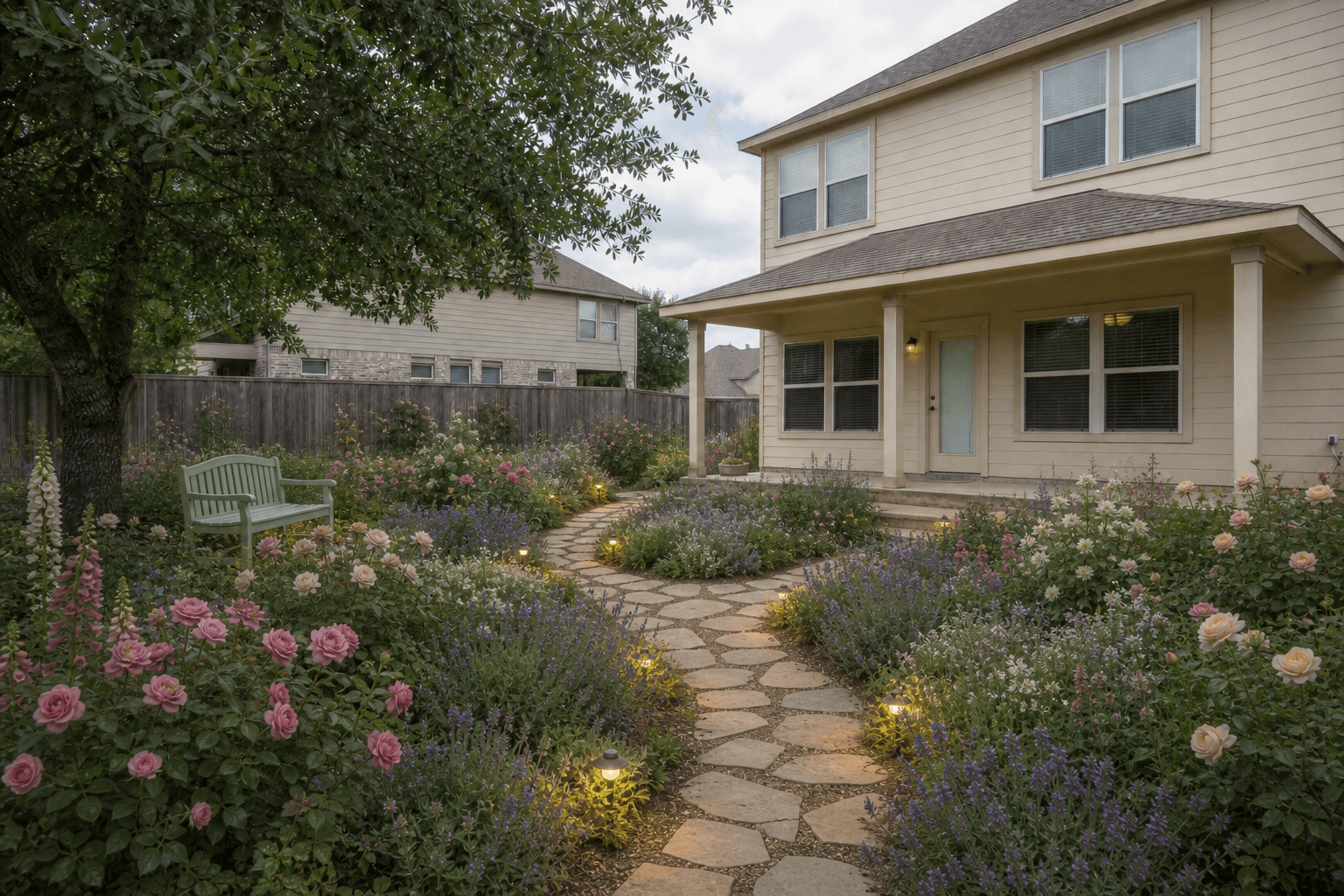
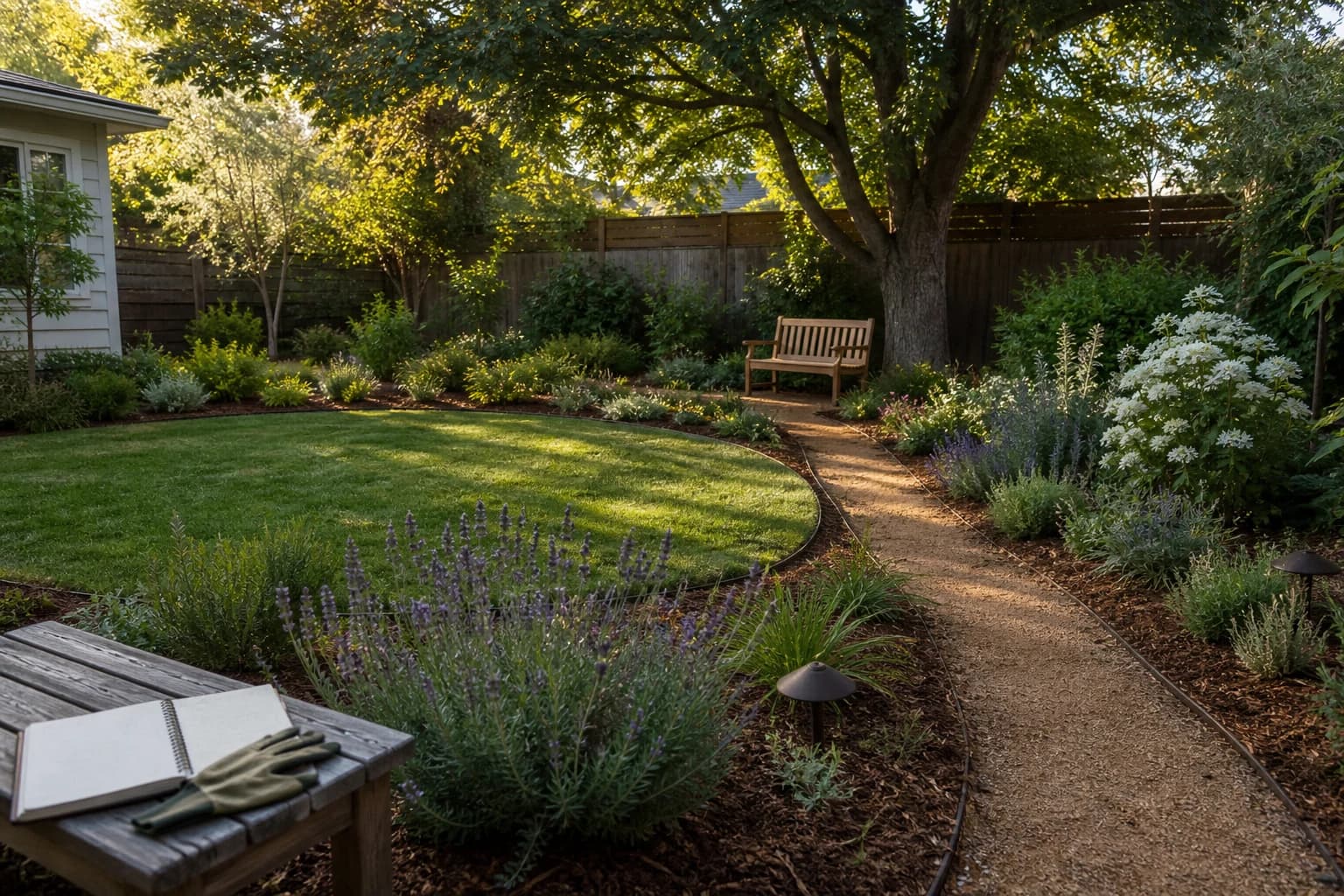
1. A woodland garden with one clear path
Choose this direction when your main goal is a greener view and access rather than a large gathering area. Group shade-adapted plants in beds, retain leaf litter or suitable organic mulch where appropriate, and give people one defined route instead of letting footsteps spread across the planting.
Keep new planting small around established roots and avoid cutting roots to fit a path. Groundcover is living planting, not a walking surface: it needs establishment care and may fail under repeated foot traffic. Place a bench at an existing clear edge if there is room.
2. A shaded sitting area with planted borders
Choose this direction when you would actually use the shade for coffee, reading, or dining. Test the footprint with movable chairs before committing to a surface. Include the space needed to pull chairs out and reach the door; keep the main route outside the furniture arrangement.
An existing sound patio may need only cleaning and a better layout. New paving or a deck needs site-specific design, especially near tree roots. A raised deck is not automatically tree-friendly: footings and construction access can still damage roots, and shaded boards need regular cleaning to manage slippery buildup.
3. A practical path with a small pause point
Choose this direction for a narrow yard, a side gate connection, or a place used mainly to reach storage. Give the route priority, then use the remaining edges for shade planting. One compact bench or pair of chairs can create a destination without filling the whole area.
Select a stable surface for the people who use it. Loose gravel can migrate and can be difficult for wheelchairs, strollers, and walking aids. Pavers are not automatically permeable; water movement depends on the whole assembly and the soil below.
| Layout | Best fit | Ongoing care | Check first |
|---|---|---|---|
| Woodland garden | A green view with occasional access | Weeding, leaf management, establishment watering | Moisture, root competition, local plant suitability |
| Sitting area | Regular lounging or dining | Surface cleaning and furniture care | Root protection, dimensions, drainage, structural needs |
| Path and pause point | Narrow spaces and frequent passage | Keeping the route clear and stable | Accessible surface, edges, runoff, service access |
Match plants to dry shade or moist shade
Start with moisture and light rather than a shopping list of plants labeled “shade.” Under a mature tree, roots and intercepted rainfall can produce dry soil. Beside a downspout, the same amount of shade may come with prolonged wetness. A fern suitable for one site may struggle in the other.
For a US yard, use your state Cooperative Extension or a local native-plant organization to narrow the choices. Ask for plants suited to your summer heat, winter cold, soil, moisture, and mature space. Check invasive-species guidance and pet toxicity before buying. Repeat a small palette rather than crowding many species into the root zone.
Do not assume moss or artificial turf solves every shady patch. Moss needs suitable conditions and limited disturbance. Artificial turf still requires cleaning and a suitable base, and its installation can affect roots and drainage. Neither option fixes the reason water stands on the site.
Protect mature trees and deal with water first
Keep the trunk flare exposed and avoid piling soil or mulch against the trunk. Do not cut surface roots, raise the soil level, or compact the root area to make a rendering easier to build. Before excavating, installing footings, or changing grade near a valuable tree, ask a qualified arborist to define protection measures.
If the area stays wet, investigate the source before choosing a finish. Covering damp ground with gravel or a deck can hide a drainage problem without resolving it. Check roof runoff, existing slopes, and lawful discharge routes; avoid sending water onto neighboring property. Structural work, major grading, and permanent electrical work need appropriate local review.
Start with a small, reversible improvement
If budget is tight, concentrate on one useful destination and a clear route. Save decorative lighting, elaborate curves, and extra furniture for later. Low maintenance means a routine you can sustain, including leaves, weeds, surface cleaning, and seasonal plant care.
- Mark the bare patch, the route you need, and the tree area to protect; leave healthy lawn alone for now.
- Try the intended use with furniture on an existing stable surface and temporary layout markers. Observe comfort, access, and views for several days.
- Compare the work required: a planted bed, an adapted existing patio, and a new deck have very different installation and maintenance needs.
- Get local advice and itemized quotes before committing to excavation, drainage changes, or structures. Phase planting only after the site conditions are understood.
Compare shade garden concepts using your own photo
Upload clear views of the same space to GardenGPT and describe what the photos cannot show: ground-level sunlight, dry or wet soil, approximate measured dimensions, climate, and how you want to use the yard. List the tree, boundaries, doors, and access routes that must remain.
Compare the three layout directions one at a time using the same constraints. Look for preserved trees and architecture, a legible route, believable furniture space, and planting that does not fill every gap. Available generations depend on your current credits; an AI concept does not verify species, measurements, drainage, or permission to build.
Frequently asked questions
What can I put in a shady backyard instead of grass?
Consider shade-adapted planting, a suitable mulched bed, a stable walking route, or a sitting area. Choose by sunlight, moisture, roots, foot traffic, and the job the space needs to do. You can replace only the part of the lawn that struggles.
Will shade-tolerant grass grow under a large tree?
Sometimes, if there is enough light and suitable soil, moisture, and use. Shade tolerance does not mean no light is needed. Ask your local Extension service about turf for your region before reseeding the same patch again.
How do I landscape dry shade beneath mature trees?
Protect roots and soil levels, identify plants adapted to local dry-shade conditions, and plan establishment watering. Avoid digging large planting holes among roots. An arborist can advise where work is appropriate around a valuable tree.
Is gravel a good solution for a shaded, muddy backyard?
Only if the site and assembly suit it. Gravel does not fix standing water, and a loose surface may be difficult to walk or roll across. Identify the water source and protect tree roots before installing any new base or surface.
Can I build a deck around an existing tree?
It may be possible, but footings, root disturbance, trunk growth, ventilation, drainage, and local structural requirements need professional assessment. Do not copy the reference image as a construction plan.
Can AI choose the right shade plants for my yard?
AI can suggest a visual arrangement, but a photo cannot establish climate, soil, seasonal light, or plant suitability. Confirm the actual species, mature sizes, invasive status, and pet safety with reliable local resources before buying.
Start with the difficult patch rather than a complete yard teardown. Keep useful shade, understand the soil and water, and give the space one clear purpose. A woodland bed, a simple sitting area, or a well-placed path can be a better fit than another attempt to force lawn into the same conditions.