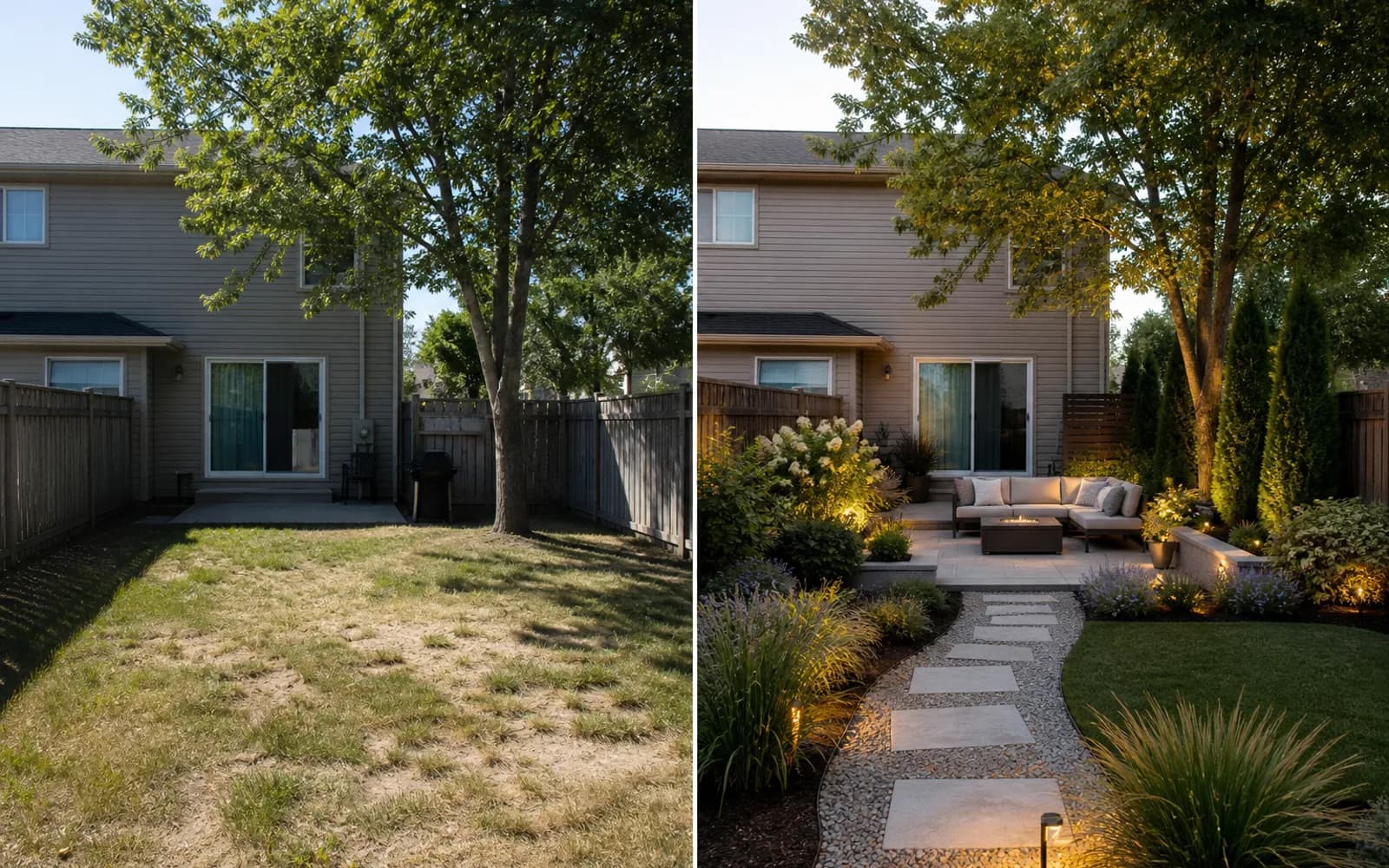
The most dangerous AI landscape result is not obviously absurd. It is almost right: a path too narrow to use, a tree too close to the foundation, or a downspout erased beneath attractive paving.
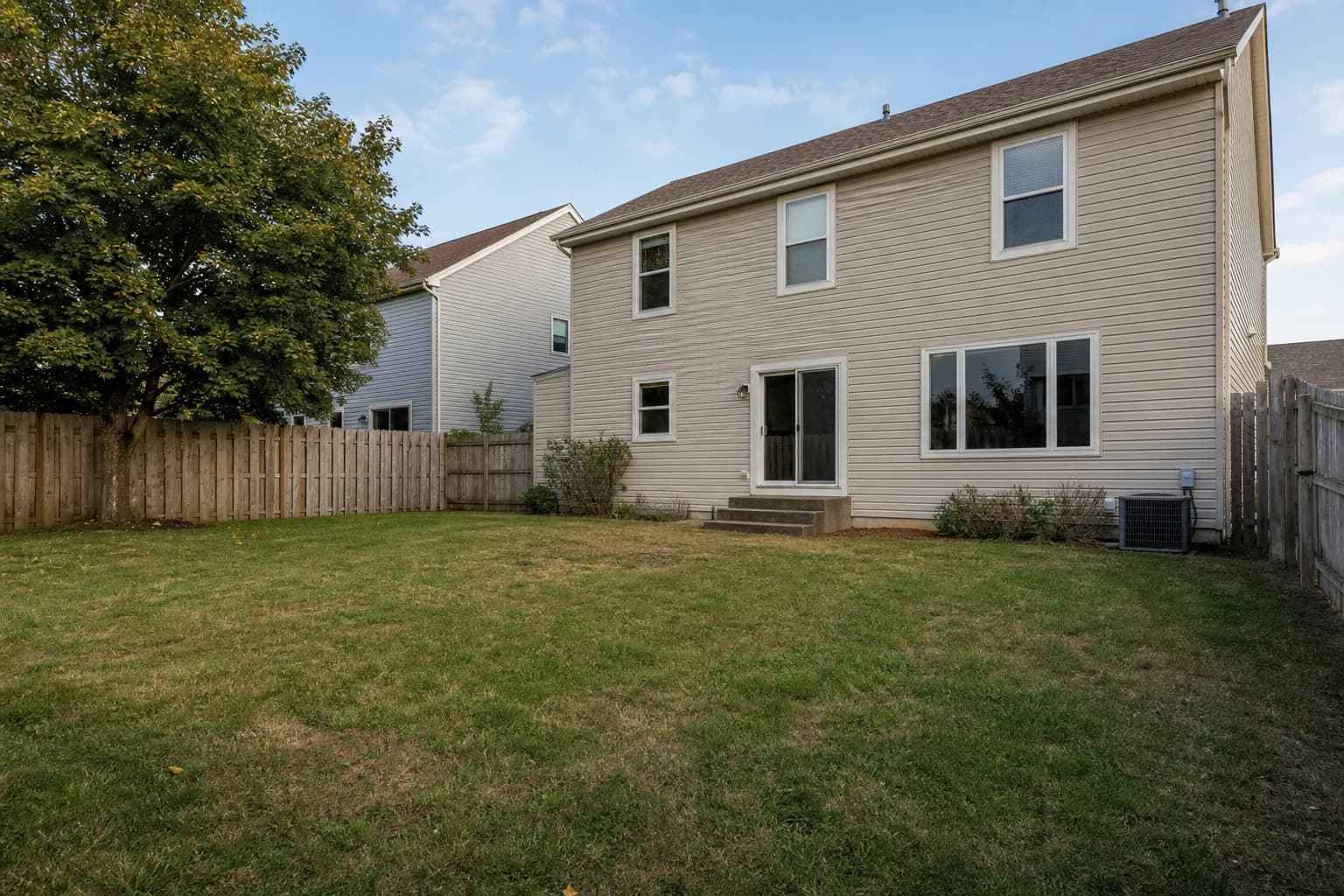
This checklist translates familiar landscaping mistakes into an AI-image review. Place the concept beside the source photo, then mark each check pass, revise, or professional review.
Run this 60-second rejection test first
If any item clearly fails, do not move to material buying or contractor pricing.
| Quick question | Pass | If it fails |
|---|---|---|
| Is it still the same property? | Architecture, boundaries, openings, and mature trees match | Correct structural drift first |
| Can people use it? | Doors open, paths work, equipment remains accessible | Replan with real dimensions |
| Where does water go? | Drainage is not blocked or directed at the house | Stop and investigate drainage |
| Can the plants live and fit? | Climate fit and mature space are plausible | Verify against local plant sources |
| Is this a concept or a build document? | It is explicitly labeled a concept | Add measured, engineering, and permit documents |
Nine mistakes AI landscape designs commonly make
1. It changes the house, openings, or boundary
- What AI often shows:A new window appears, a door moves, the roof or fence changes, or the camera pulls back to create extra space.
- How to test it:Compare source and result from roof to ground. Treat any change to a fixed element as a failed concept.
- Next step:Lock the keep list in the next prompt. Evaluate real structural work and permits separately.
2. Furniture, paths, and beds are out of scale
- What AI often shows:The dining set fits only because chairs cannot pull out; paths, fire pits, steps, or beds are visually miniaturized.
- How to test it:Use a known door, paver, or real product as a scale reference and sketch the critical dimensions.
- Next step:Measure openings, routes, furniture, and turning space, then ask AI to remove functions rather than compress them.
3. Daily circulation and service access disappear
- What AI often shows:Trash bins, HVAC, meters, mowing routes, pool equipment, storage, or egress become blocked.
- How to test it:Trace a continuous route from every door to the driveway, equipment, storage, and primary seating.
- Next step:Draw service routes before placing furniture and plants; do not guess maintenance clearance from the image.
4. Pretty paving hides drainage
- What AI often shows:Downspouts vanish, low points are filled, beds rise beside the foundation, or water is redirected to a neighbor.
- How to test it:Observe after rain and record downspouts, drains, slopes, and low points. A sunny photo cannot prove drainage.
- Next step:Use professional review for persistent water, slopes, retaining walls, and drainage near foundations.
5. The plants do not match the site
- What AI often shows:Plants conflict with hardiness, heat, sun, soil, water, or are unidentifiable green shapes.
- How to test it:Check botanical name, zone, sun, soil, moisture, invasiveness, and pet toxicity for every proposed plant.
- Next step:Treat the AI list as candidates and verify through local Extension, botanic garden, or reliable nursery sources.
6. It shows nursery size, not mature size
- What AI often shows:Trees sit too close to foundations, wires, and each other; shrubs will cover windows and walks.
- How to test it:Draw circles at mature spread on a measured sketch and check height, roots, and maintenance access.
- Next step:Reduce quantity based on mature size instead of relying on constant pruning to restrain the wrong plant.
7. Low maintenance becomes no maintenance
- What AI often shows:Rock, artificial turf, tight curves, narrow lawn strips, and many edging materials look neat but add cleaning, heat, and repair.
- How to test it:List weeding, pruning, irrigation, joint cleaning, cooling, and replacement work for every material and plant.
- Next step:Reduce palette and complexity to fit the hours you can maintain each month.
8. It ignores HOA, permits, fire, and safety
- What AI often shows:Screens are too high, fire is too close to structures, pool barriers are incomplete, or paving covers utilities.
- How to test it:List boundaries, setbacks, utilities, HOA, permits, pool, fire, lighting, and accessibility requirements.
- Next step:AI cannot prove compliance. Confirm with the authority, HOA, utility, or qualified professional before buying.
9. A concept image becomes a quantity and quote
- What AI often shows:The image looks complete but has no traceable area, thickness, quantity, sequence, waste, or labor basis.
- How to test it:Trace every number back to a site measurement. Exclude any quantity that cannot be explained.
- Next step:Complete a measured scope, then request local quotes and include contingency.
What you can do first—and when to escalate
| Task | AI/homeowner can start | Reality check |
|---|---|---|
| Style direction | Compare 2–4 concepts | House, use, and maintenance fit |
| Furniture and zones | Rough arrangement | Measurements, product specs, routes |
| Plant direction | Candidate list | Local references and mature size |
| Drainage, walls, structure | Mark problem locations | Qualified site design |
| Materials and budget | Break down scope | Takeoff, samples, and local quotes |
Frequently asked questions
Are AI landscape designs accurate?
They can communicate a style accurately, but they do not automatically guarantee scale, drainage, plant identity, structure, or compliance.
What should I check first?
Confirm it is still the same property: house, openings, roof, fences, boundaries, and mature trees have not changed.
Can AI tell which plants fit my yard?
It can suggest candidates when given good inputs, but verify each one with authoritative local sources.
When do I need a designer or engineer?
Escalate significant grade changes, retaining walls, persistent water, structures, pools, safety code, complex permits, or high-cost work.
Can I estimate a budget from the image?
Use it to identify scope categories. A reliable budget still needs measurements, specifications, quantities, labor, and local quotes.
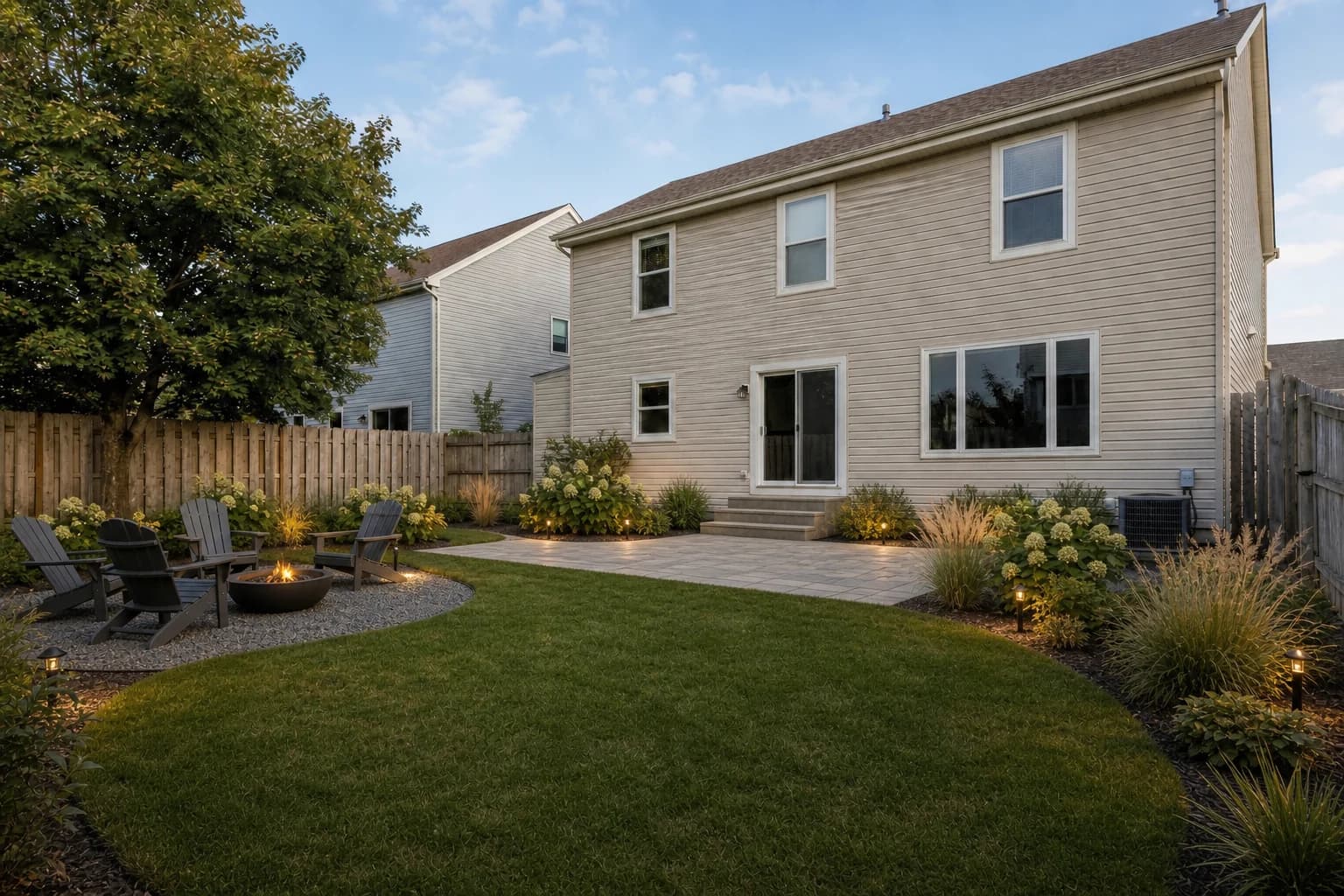
Treat an AI landscape image as a proposal that must survive review—not as proof that the real problems are solved. Reject structural drift first, then test scale, water, plants, maintenance, rules, and cost.