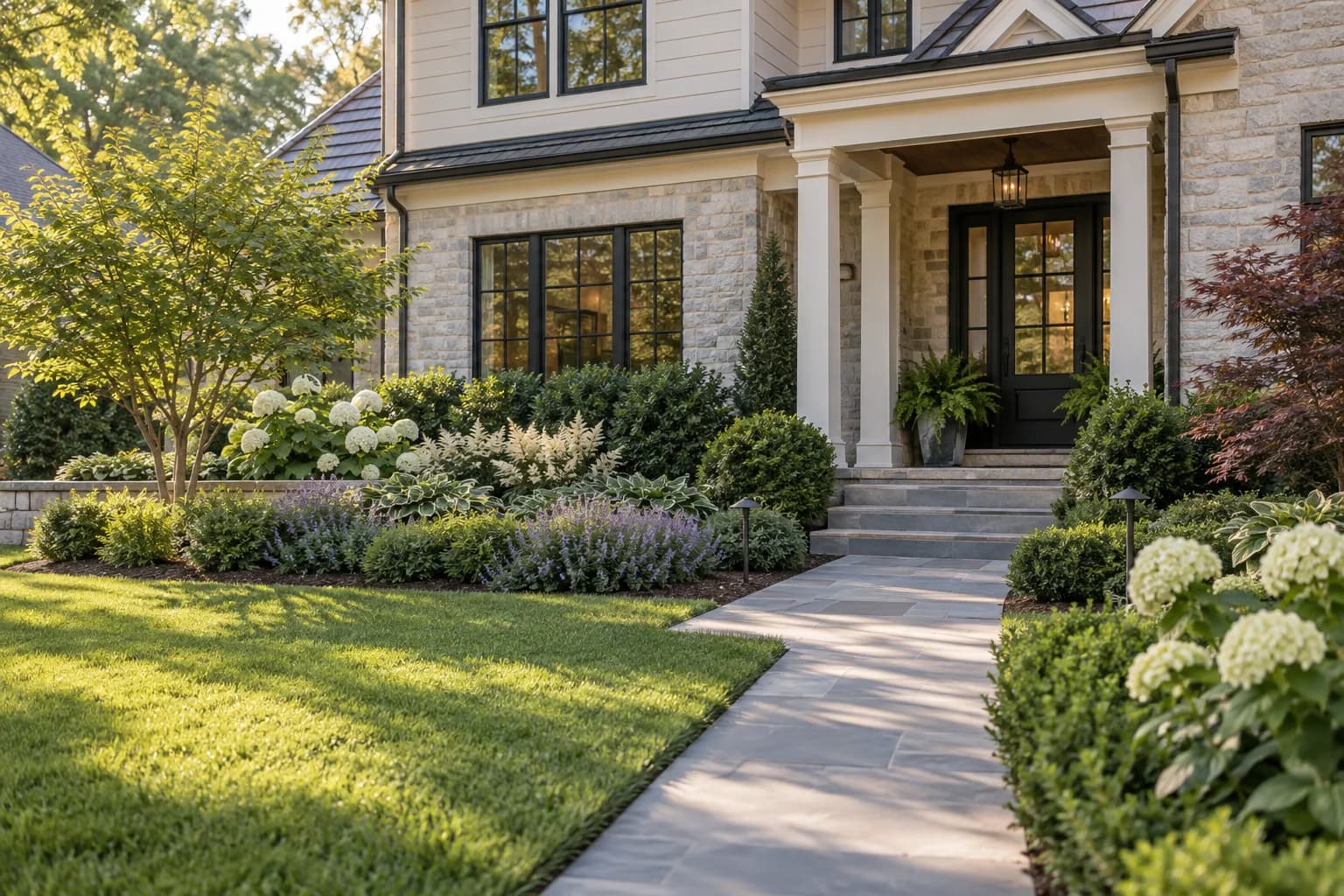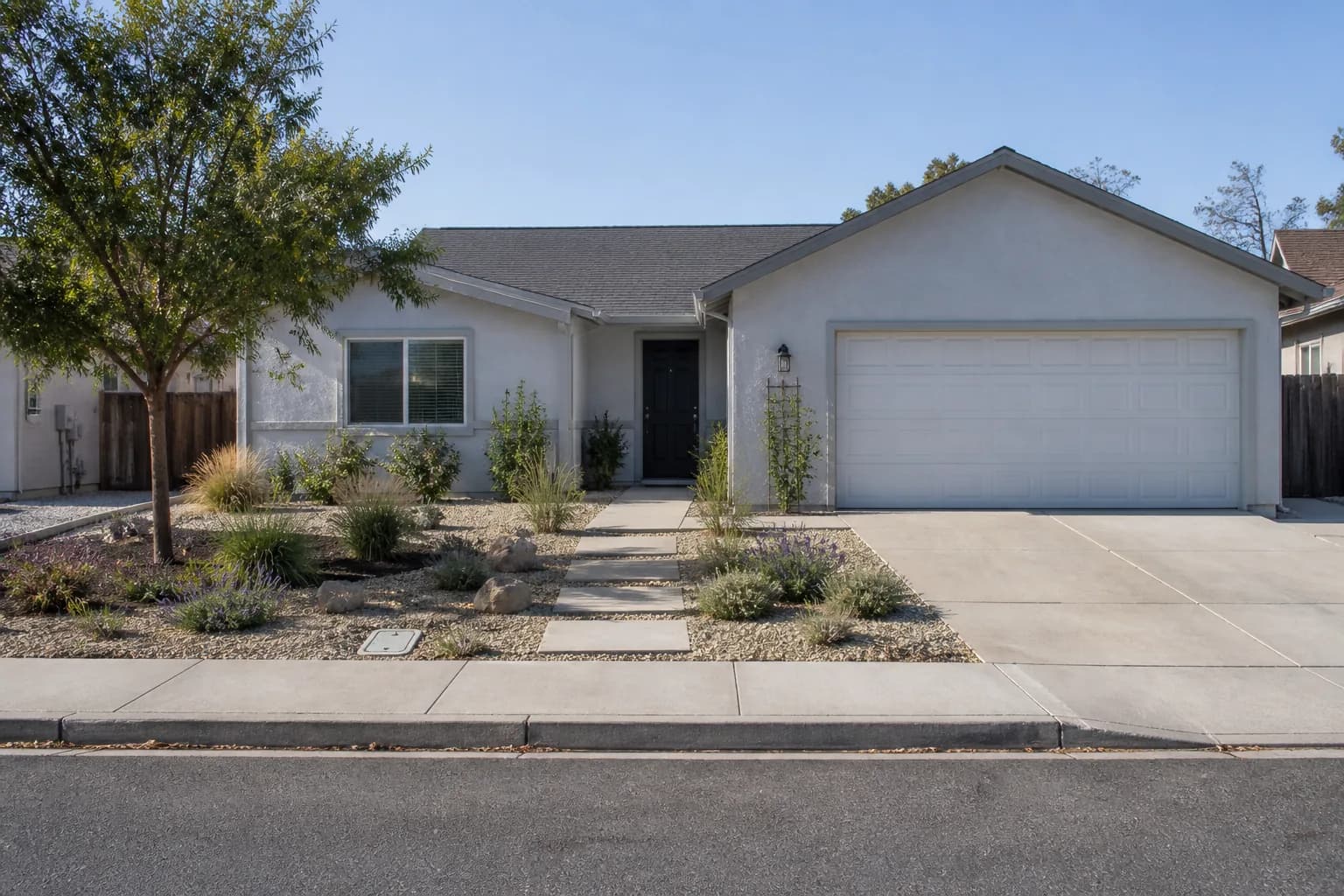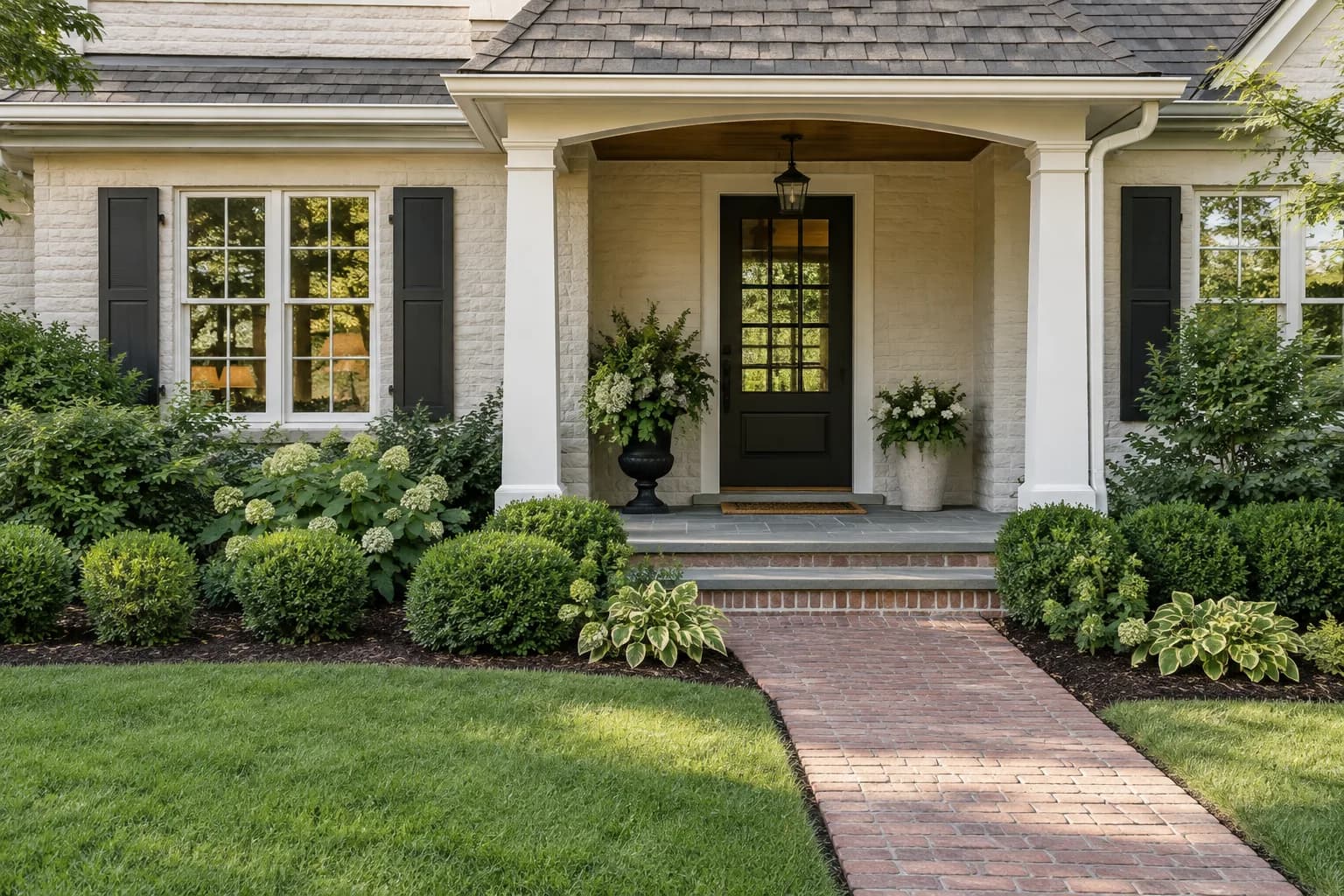
Front porch landscaping is less about decorating the door and more about choreographing the last 10 meters of arrival: path width, plant mass, step safety, night light, and a place to sit without blocking the house.
Competitor-style idea lists often jump straight to plants and pillows. This guide keeps that listicle energy, but every idea includes a practical check for clearance, drainage, codes, and maintenance—the parts that decide whether a porch still works in week twelve.
Key takeaways
- Make the walk to the door obvious before adding decor.
- Layer plants and containers without hiding windows, numbers, or vents.
- Treat steps, handrails, and lighting as landscape, not afterthoughts.
- Use GardenGPT to compare porch massing on photos before buying materials.
Choose the porch move that matches the problem
Start from the friction you feel at the door, not from a furniture catalog.
| Porch problem | Best first move | Watch-out |
|---|---|---|
| Guests cannot find the door | Clarify path and lighting hierarchy | Do not add more pots on a narrow walk |
| Porch feels bare or harsh | Layer foundation bed + unequal anchors | Keep windows and vents readable |
| No place to sit | Measure a real seating zone first | Preserve door swing and egress |
| Street feels too close | Soft screen without dark walls | Check height rules and sightlines |
Use GardenGPT for porch composition, not building approval
GardenGPT can compare path emphasis, plant massing, seating scale, and lighting hierarchy on 1–4 photos of the same porch approach. It cannot certify stair geometry, structural loads, electrical work, drainage design, HOA compliance, or species suitability.
12 front porch landscaping ideas
Each idea starts with arrival performance. Swap materials and plants only after measuring the real porch.
1. Define a clear arrival path to the door
Widen, straighten, or re-edge the main walk so guests can read the route from the sidewalk without guessing. A porch looks finished only when the approach is obvious in daylight and at night.
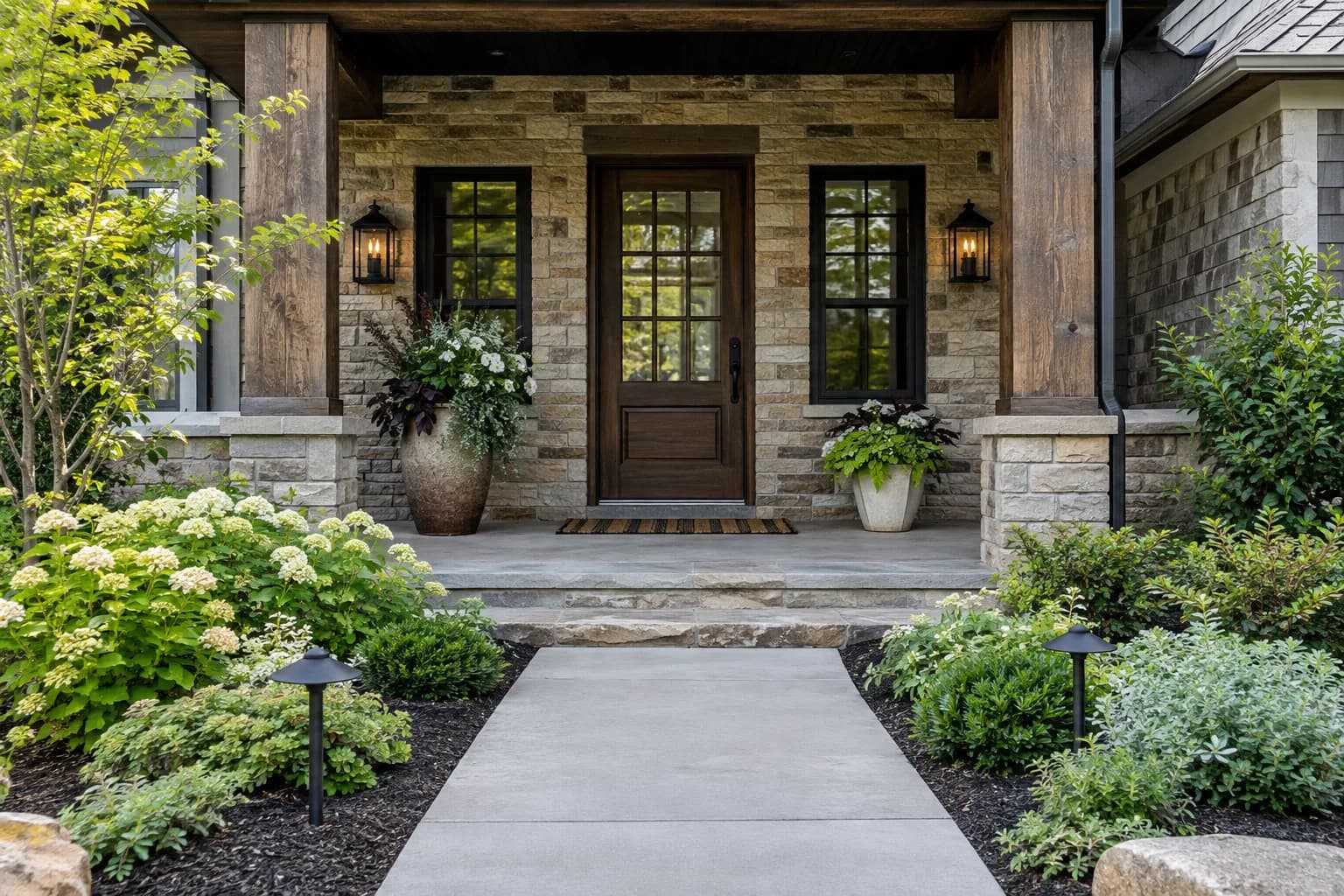
2. Frame the porch with two unequal plant anchors
Place a taller anchor on the emptier or heavier side of the facade and a lower companion opposite it. The asymmetry balances offset doors, railings, and garage masses without a stiff twin-planter look.
3. Add layered beds along the foundation line
A shallow front bed with low, mid, and occasional taller accents softens the porch base without hiding siding, vents, or windows. Layering makes a small porch feel intentional instead of bare.
4. Use containers for seasonal color and flexible height
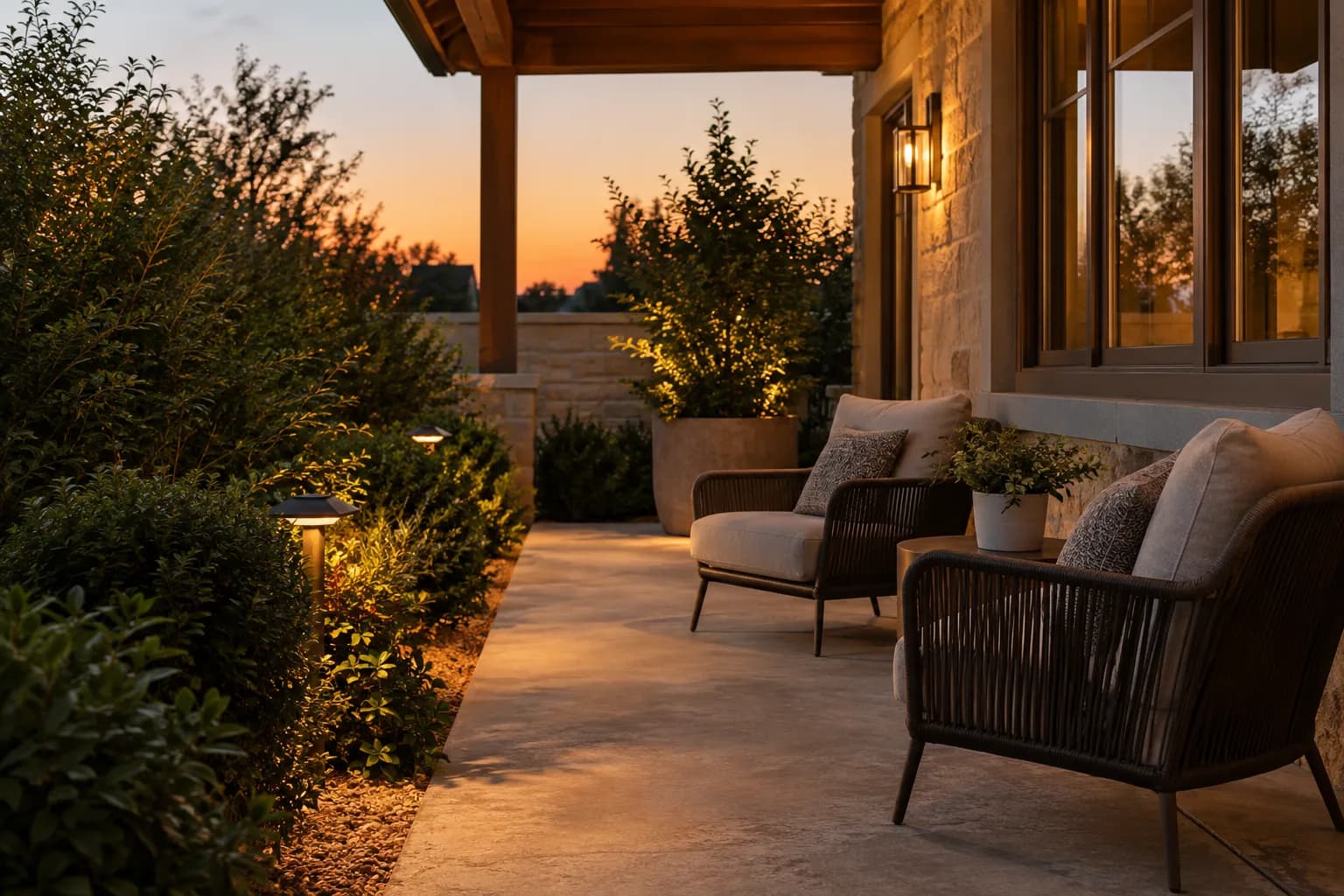
Flanking pots, a single oversized container, or a short run of matching planters can dress steps and landings without permanent beds. Containers are ideal when soil is shallow, HOA rules are tight, or renters need reversible changes.
5. Build a soft privacy screen without blocking light
Use layered shrubs, a slim trellis with vines, or staggered planters to shield the seating zone from the street while keeping the porch bright. Full solid walls often make a small porch feel smaller and darker.
6. Carve a real seating zone, not leftover space
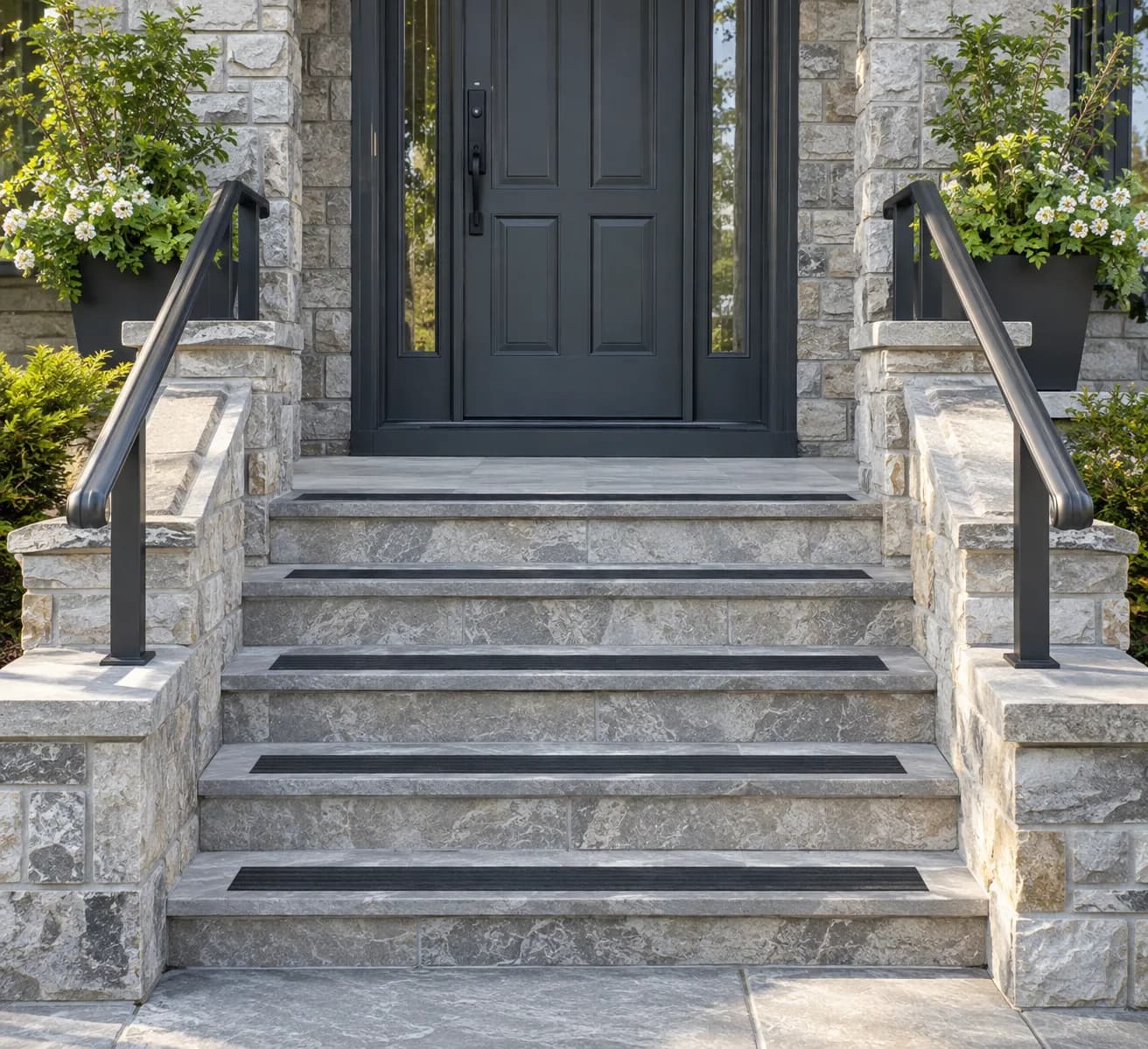
Measure chair depth, table overhang, and circulation before buying furniture. A two-person bench with a side table often fits better than a bulky sofa set on a shallow porch.
7. Upgrade steps, risers, and handrail comfort
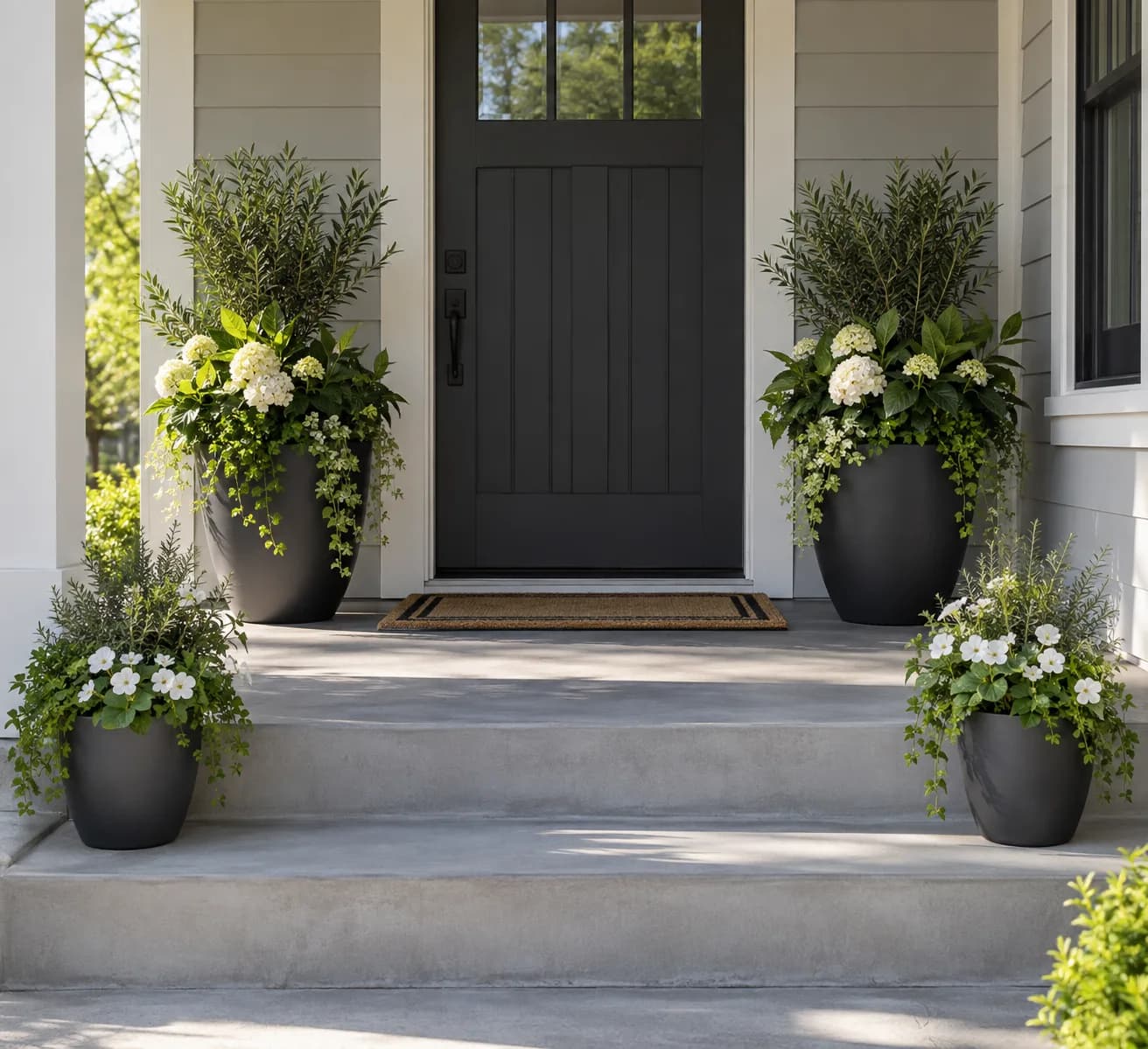
Even small repairs—level treads, consistent risers, grippy nosings, a continuous handrail—change how welcoming the porch feels. Structure and safety outrank decorative paint alone.
8. Light the path, door, and sitting area as a system
Combine a shielded entry light, low path markers, and one softer porch ambient source. Good lighting is a landscape move: it makes plants, steps, and address numbers readable after dark.
9. Hide storage inside the porch architecture
A bench with lift-up storage, a slim cabinet painted to match trim, or a recessed niche for packages keeps daily clutter off the landing. Visible bins and shoes quickly undo otherwise good landscaping.
10. Choose hardscape materials that match the house
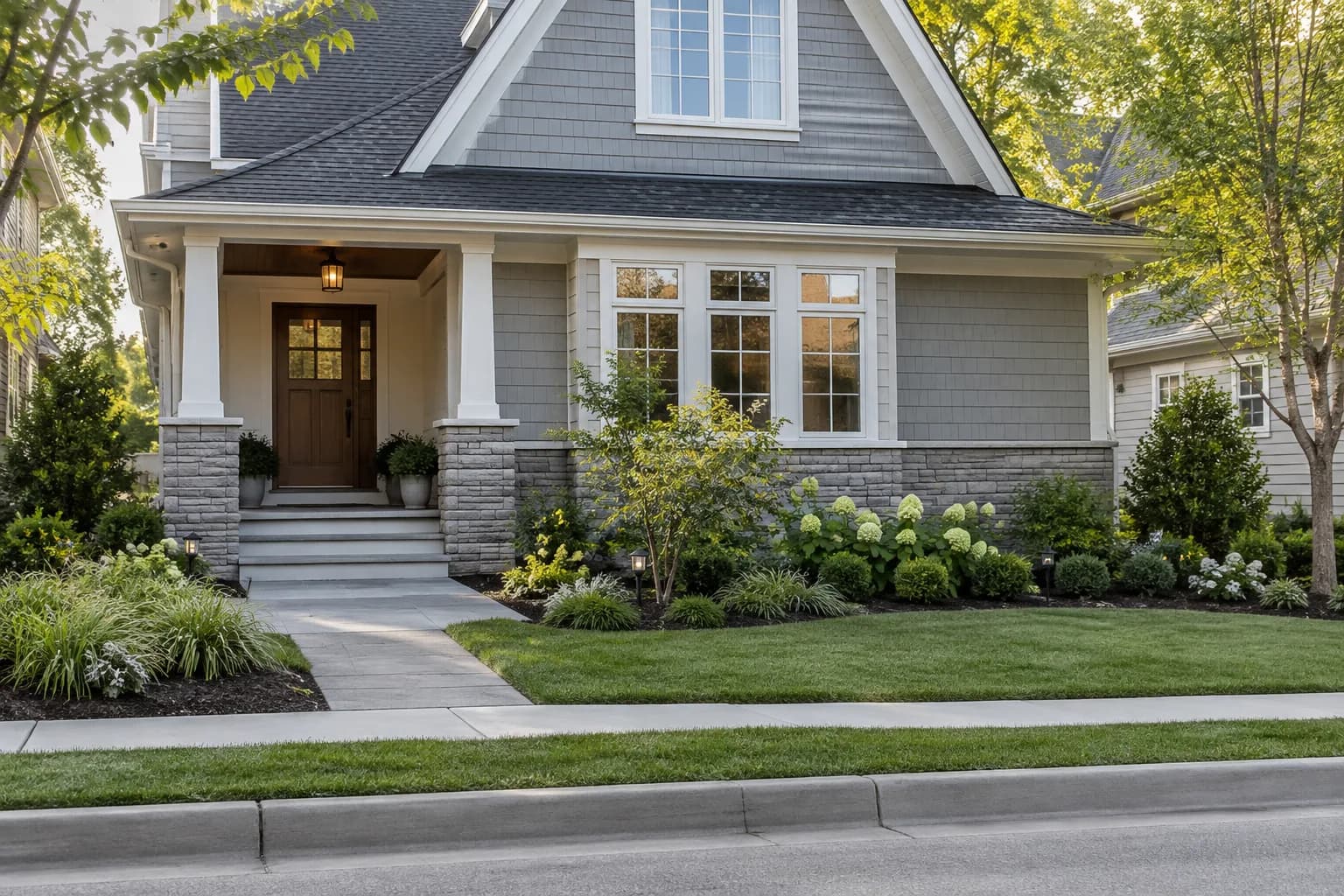
Repeat an existing brick, stone, or paint temperature in porch floors, step cheeks, or planter bases. Matching materials make new landscaping look original instead of bolted on.
11. Add a water-smart edge: gravel, mulch, or permeable jointing
A narrow gravel or mulch strip between walk and foundation reduces mud splash, simplifies edging, and can help water move away from the house when graded correctly.
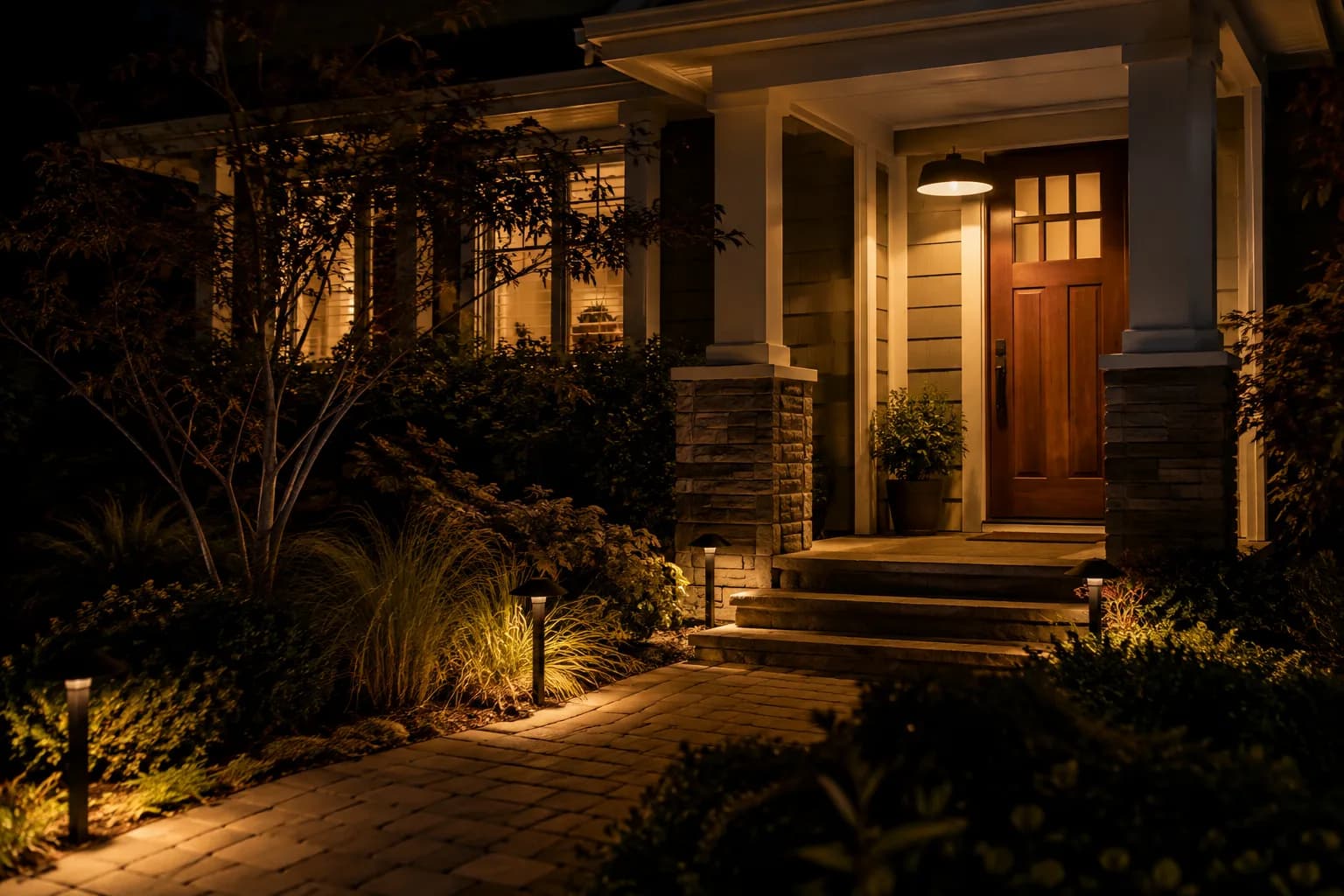
12. Coordinate porch style with the whole front garden
Treat the porch as the front-yard threshold: repeat plant forms, hardscape color, and lighting language from the street edge to the door. Isolated porch styling often looks unfinished beside an unrelated lawn or bed.
A front-porch workflow that starts with arrival
Photograph, measure, and sequence work so the door stays usable every day.
- Photograph the sidewalk approach, full facade, both sides of the porch, steps, and night conditions if possible.
- Measure walk width, step rise/run, door swing, rail height needs, bed depth, and utility clearances.
- Mark keep items: working plants, address light, drainage paths, and any HOA or code constraints.
- Compare at least three photo directions—path-first, planting-first, seating-first—before buying.
- Build in phases that leave a safe entrance overnight; verify materials, plants, and any structural work locally.
Sources reviewed
Reviewed September 13, 2026. Source names are plain text; local building, accessibility, and HOA rules take priority over inspiration galleries.
- University extension home landscape entry and foundation guidance
- United States Access Board outdoor accessible route concepts
- International Residential Code stair and handrail overview materials
- Illuminating Engineering Society residential outdoor lighting basics
- United States Environmental Protection Agency WaterSense landscaping guidance
- Local cooperative extension porch and container gardening publications
Frequently asked questions
What should I landscape first on a front porch?
Clarify the arrival path and safe steps first, then planting mass, then seating and decor. A beautiful door mat cannot fix a confusing or hazardous approach.
How wide should a porch walkway be?
Aim for two people to pass with packages or a stroller when space allows, and never shrink the route below what door swing and local accessibility needs require.
Can I use only containers for porch landscaping?
Yes when beds are impossible or rules are tight. Choose stable pots, honest mature plant sizes, and keep clearances for walking and egress.
How do I get porch privacy without darkening the entry?
Use layered plants, slim trellis, or staggered screens that block sightlines while preserving daylight and required views near driveways.
Are porch lights part of landscaping?
Yes. Entry, path, and ambient layers change safety and curb appeal after dark as much as plants do by day.
Can GardenGPT design my front porch?
It can compare visual directions from photos. Stair codes, structure, electrical work, drainage, and plant suitability still need local verification.
Front porch landscaping succeeds when arrival is readable, plants and furniture leave the architecture clear, and light makes the same route safe after dark. Compare directions on photos, then verify steps, drainage, and rules on site before you build.