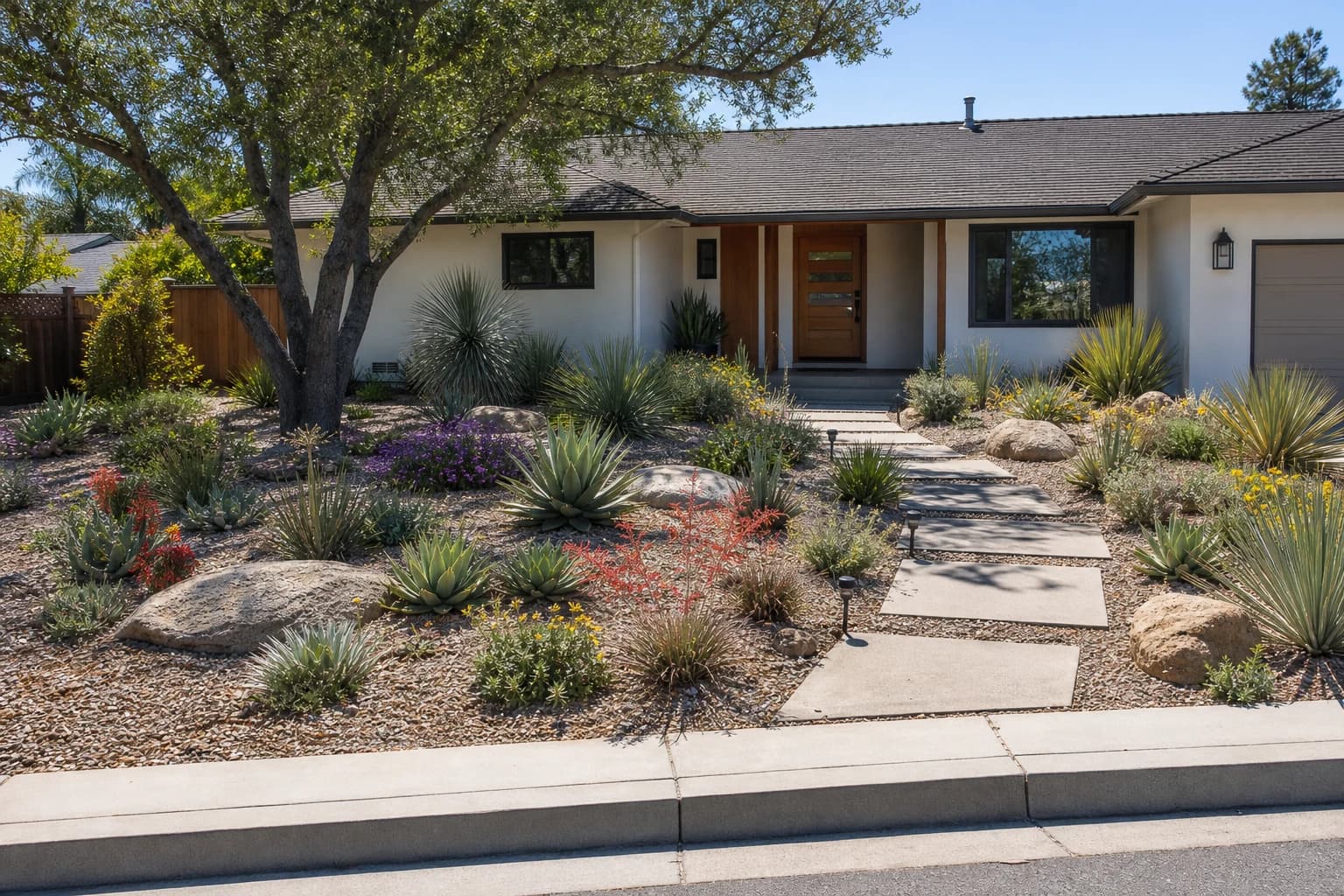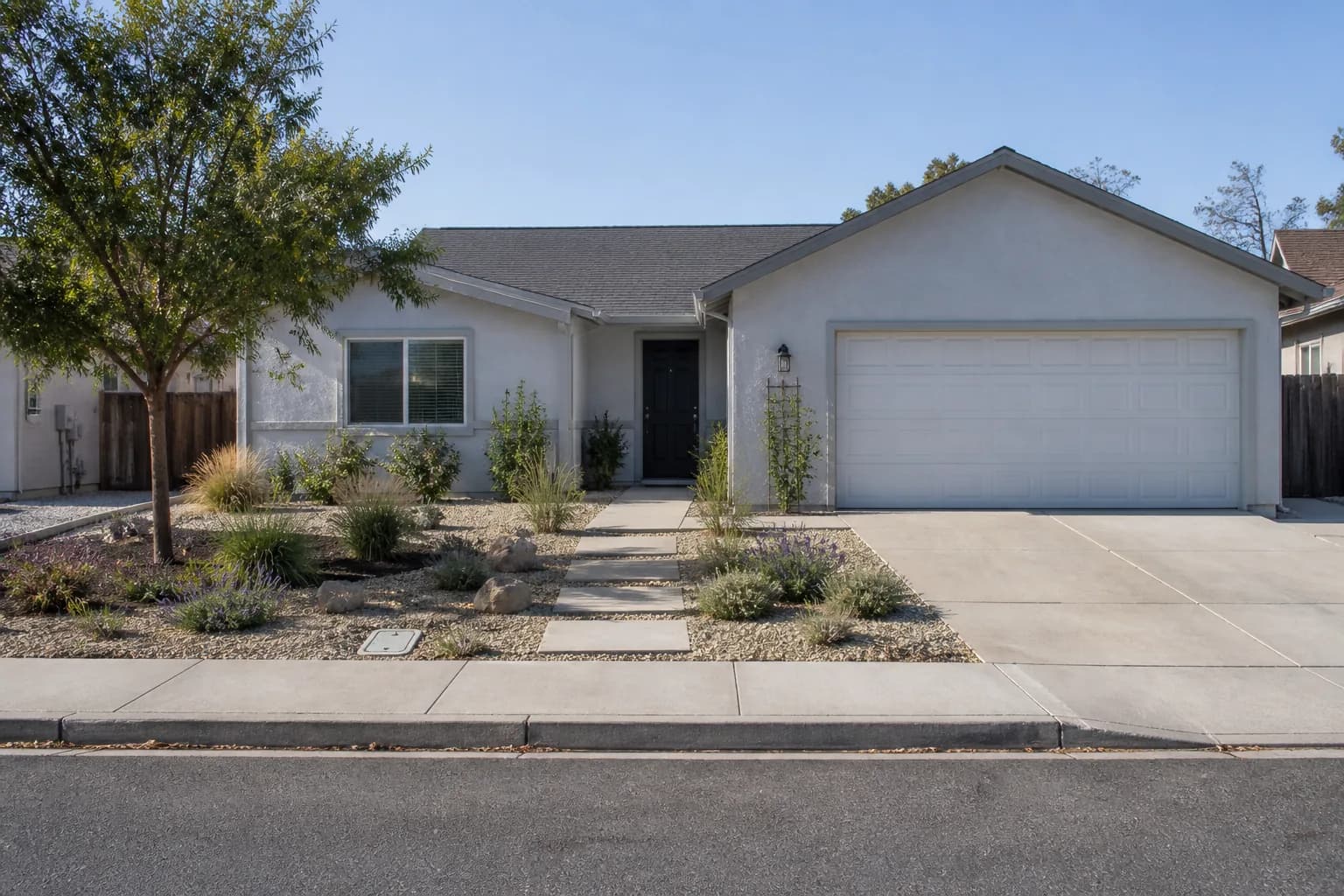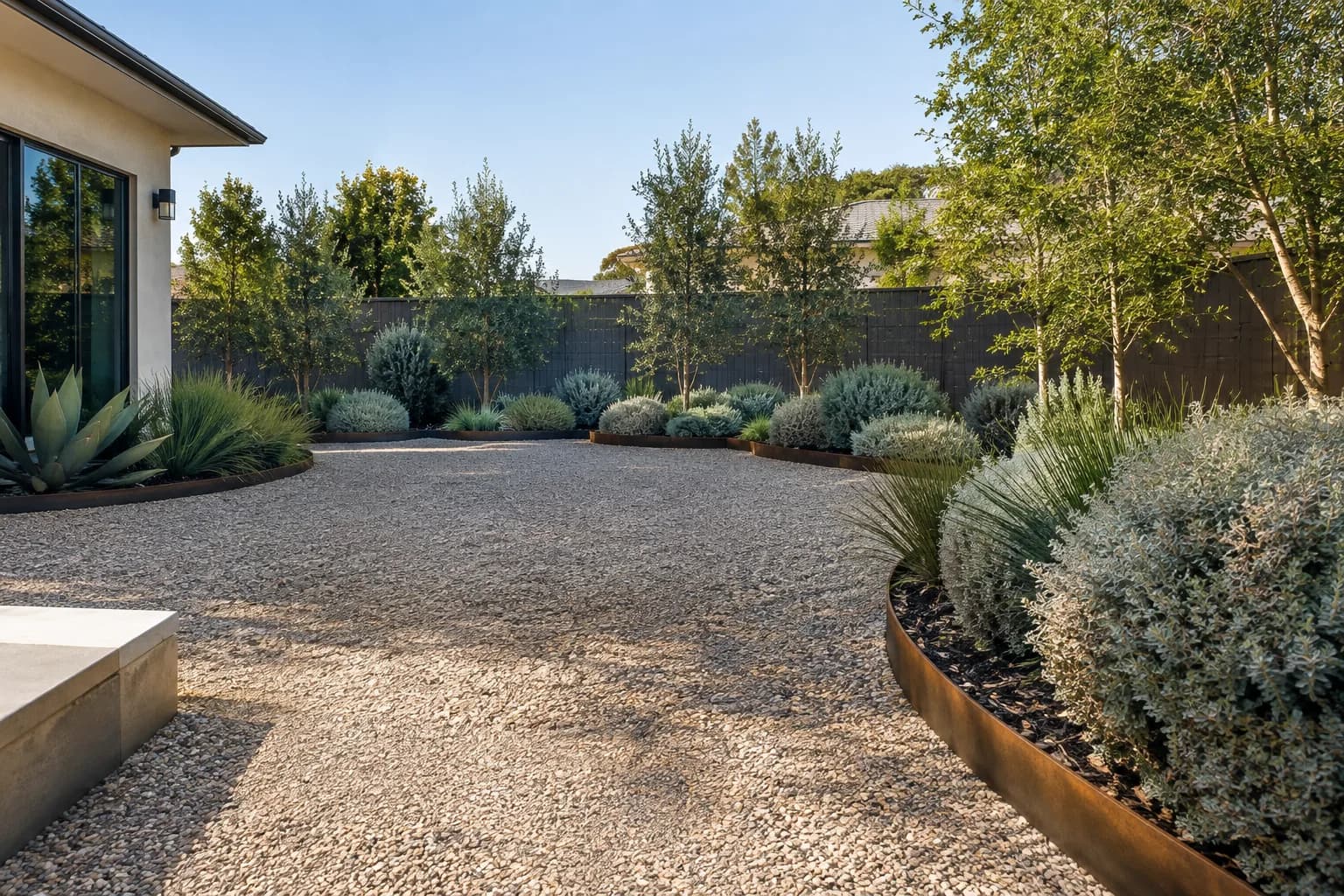
Gravel landscaping is popular in competitor guides because it can lower irrigation demand, define outdoor rooms, and finish a yard faster than large hardscape. The risk is treating stone as a dump-and-done surface.
This list follows the same idea-by-idea format, but every option includes a base, edge, drainage, or maintenance check so the gravel still looks intentional after the first storm season.
Key takeaways
- Engineer base, edge, and grade before choosing a pretty color.
- Match gravel type to use: walking, seating, mulch, or vehicles.
- Give stone fields scale with plant mass and one crisp edge.
- Use GardenGPT to test gravel versus planting hierarchy on photos.
Match gravel to the job
Color is secondary. Load, foot feel, drainage, and edges come first.
| Use case | Gravel approach | Critical check |
|---|---|---|
| Low-use sunny lawn replacement | Continuous field + plant masses | Edge restraint and positive drainage |
| Walking path | Compacted lifts + side restraint | Non-rolling size and comfortable grade |
| Dining or seating pad | Angular gravel on prepared base | Chair stability and tracking fines |
| Vehicle ribbon | Load-bearing base and confinement | Local surface rules and spill control |
Use GardenGPT for gravel composition, not civil design
GardenGPT can compare stone-field scale, planting contrast, path emphasis, and patio placement on 1–4 photos. It cannot size base courses, certify drainage, approve driveway loads, or guarantee weed-barrier performance.
10 gravel landscaping ideas
Each idea starts with performance. Choose color and supplier only after the use case and edge details are fixed.
1. Use gravel as a full low-water ground plane
A continuous gravel field can replace thirsty lawn in sunny, low-use zones when edges, weed strategy, and grading are deliberate. The look works best with a clear border and repeated plant masses, not random rock scatter.
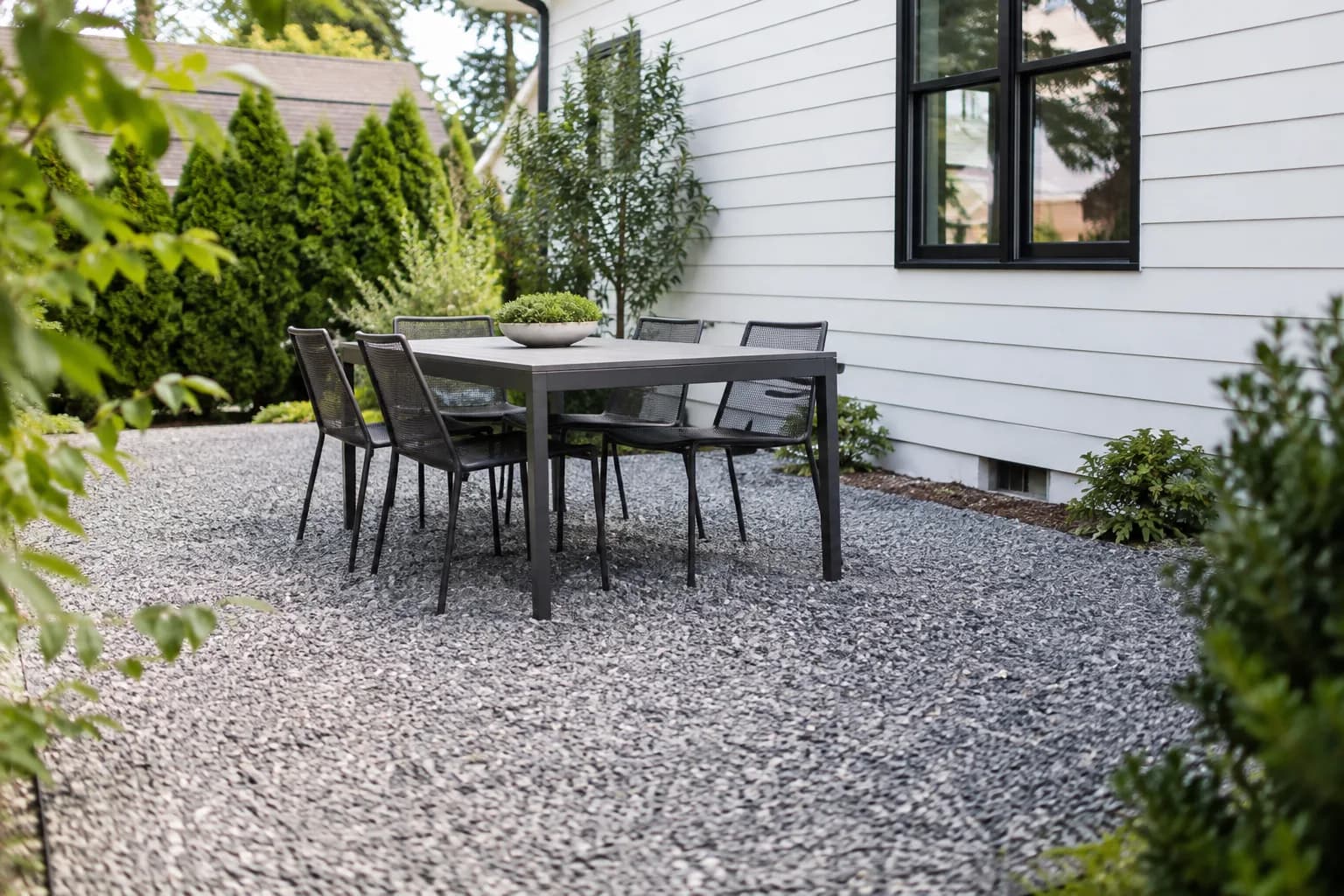
2. Build a permeable patio or dining pad
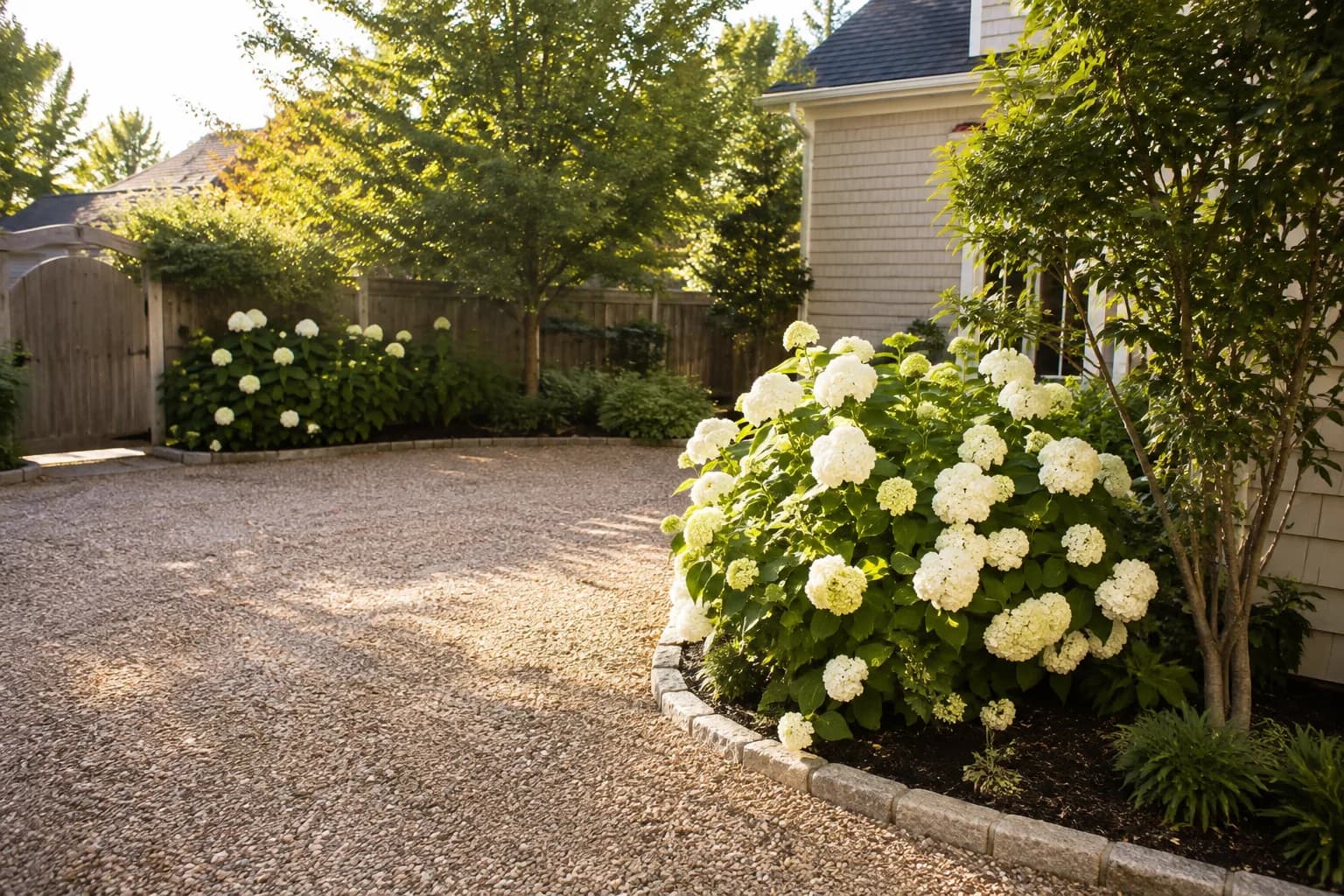
Angular gravel over a prepared base can support table legs and chairs better than rounded pea gravel alone. Keep the pad large enough for pull-out chairs and a clear path to the door.
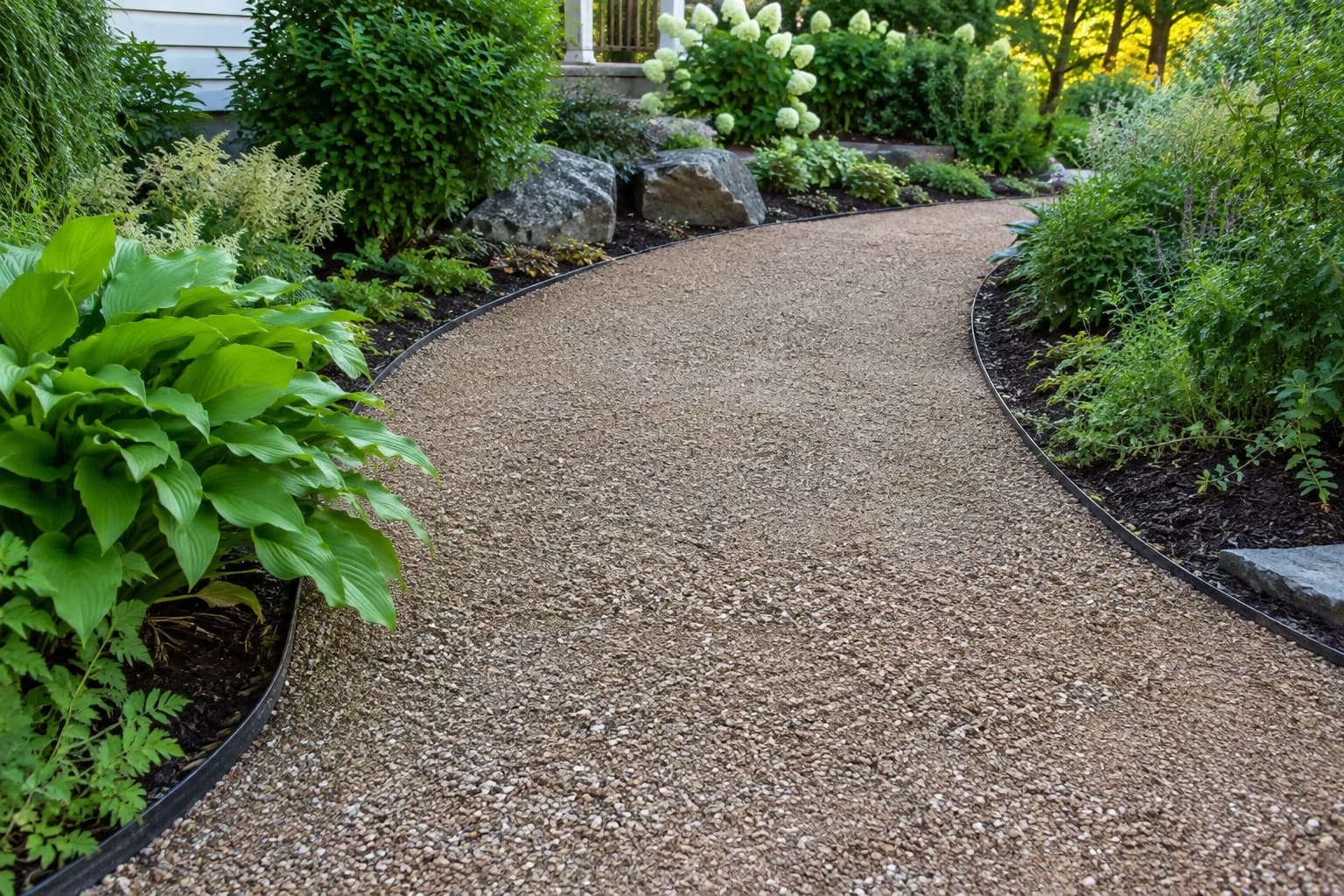
3. Make durable paths with compacted gravel lifts
A walking path needs a solid base, consistent depth, and side restraint more than a pretty top color. Compaction in lifts keeps the route from cupping into muddy ruts.
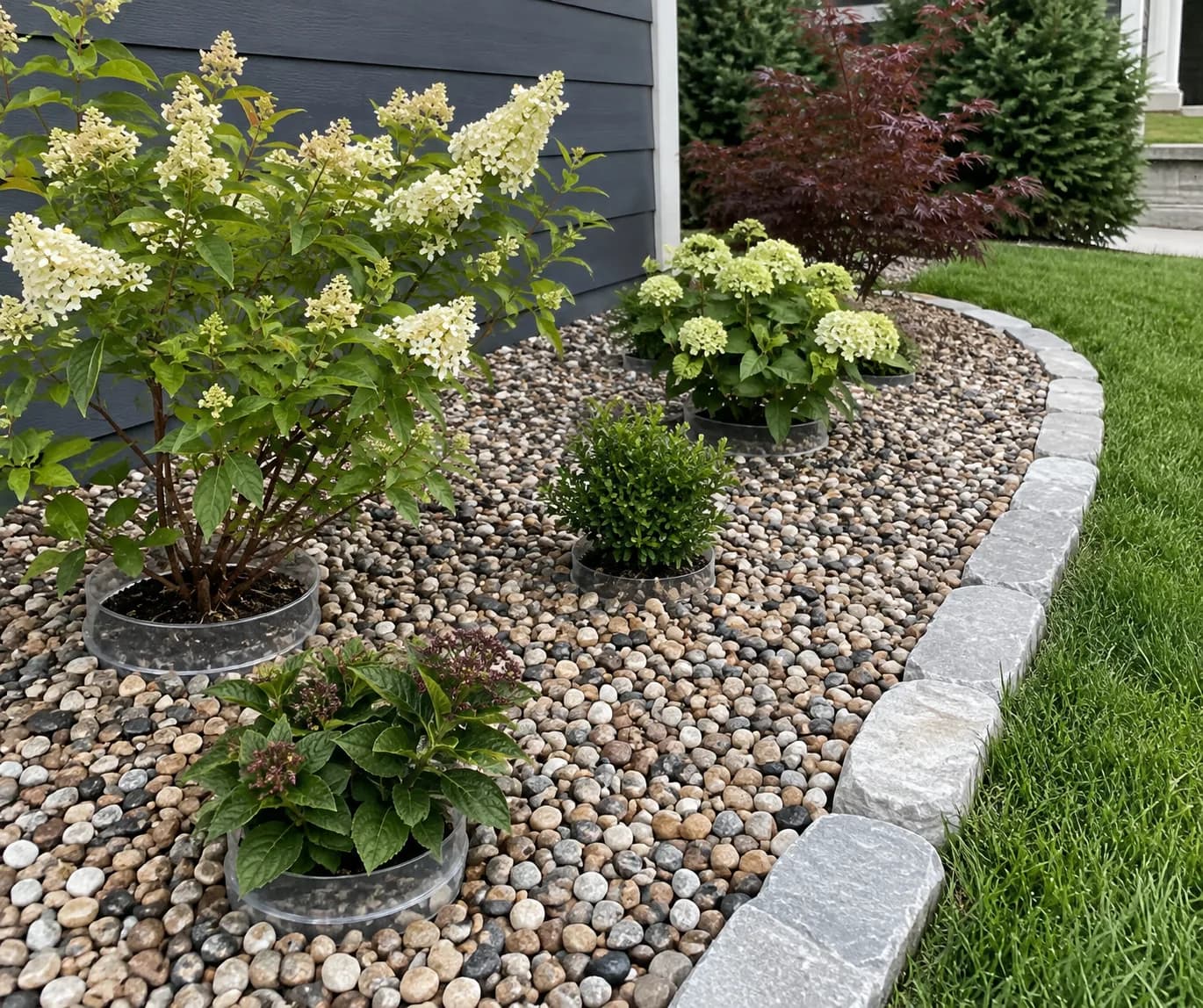
4. Create a clean gravel mulch under plantings
Small decorative gravel can suppress splash and define beds when plant spacing is honest about mature size. It is not a no-maintenance surface: fines, leaves, and weeds still need a plan.
5. Separate spaces with a gravel transition strip
A 300–600 mm gravel band can mark the edge between lawn, patio, and planting without a tall wall. Transitions reduce mud transfer and give mowers or edgers a clean stop line.
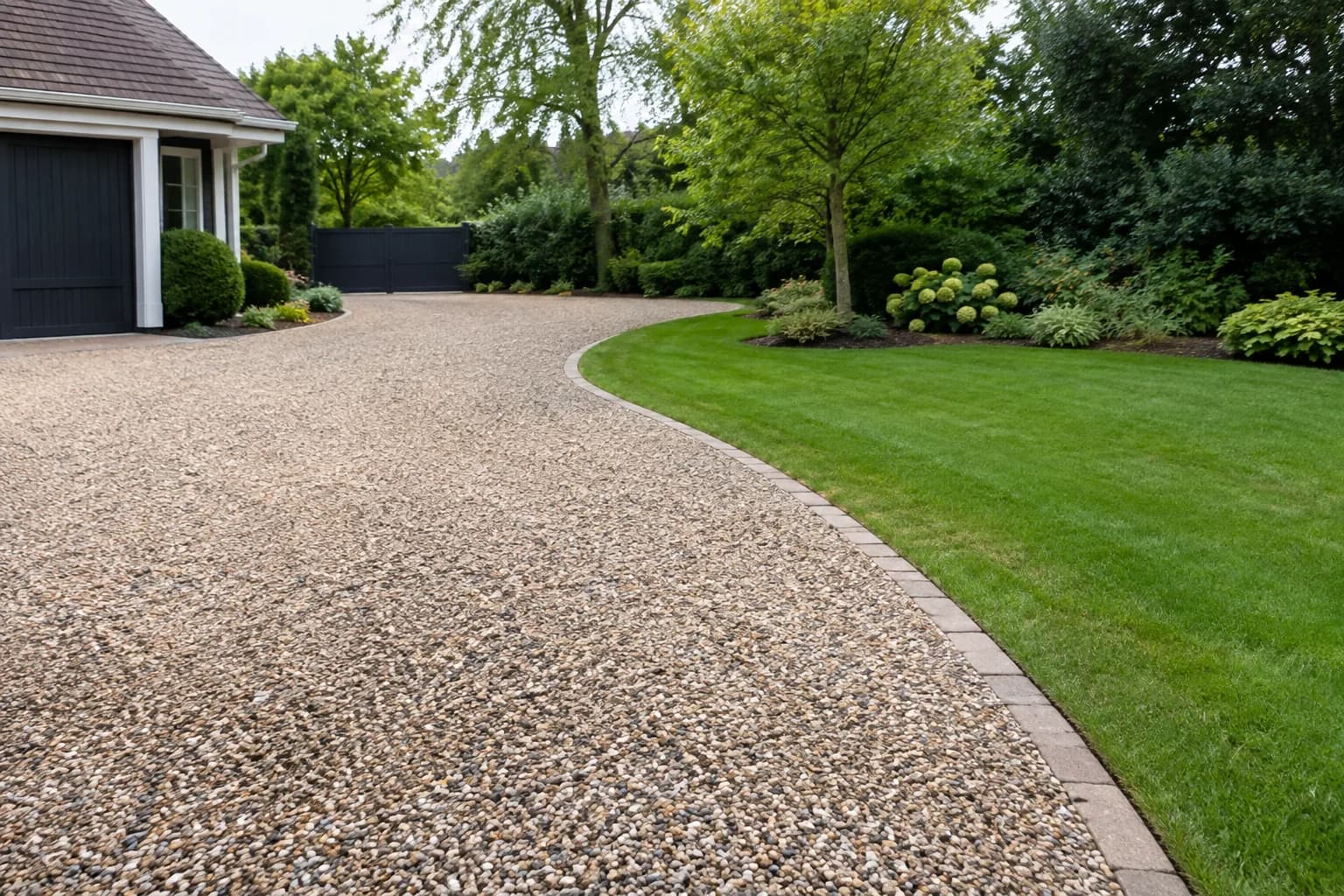
6. Stabilize gravel drive ribbons or parking bays
Vehicle areas need thicker base, geogrid or cellular confinement when required, and stone graded for load—not landscape pebble. Keep the design aligned with turning radii and door clearance.
7. Mix gravel sizes for texture without chaos
Pair one dominant field size with a narrower accent band or stepping pads. Too many colors and diameters reads as leftover construction debris rather than design.
8. Solve wet edges with gravel drainage bands
A gravel strip along a downspout landing, fence line, or patio edge can interrupt splash and give water a place to slow down before it reaches planting or foundations—when the whole system still slopes correctly.
9. Use gravel between pavers for a softer grid
Wide joints filled with fine angular gravel create a permeable patio look with less continuous hard surface. The pattern still needs a firm base so pads do not rock.
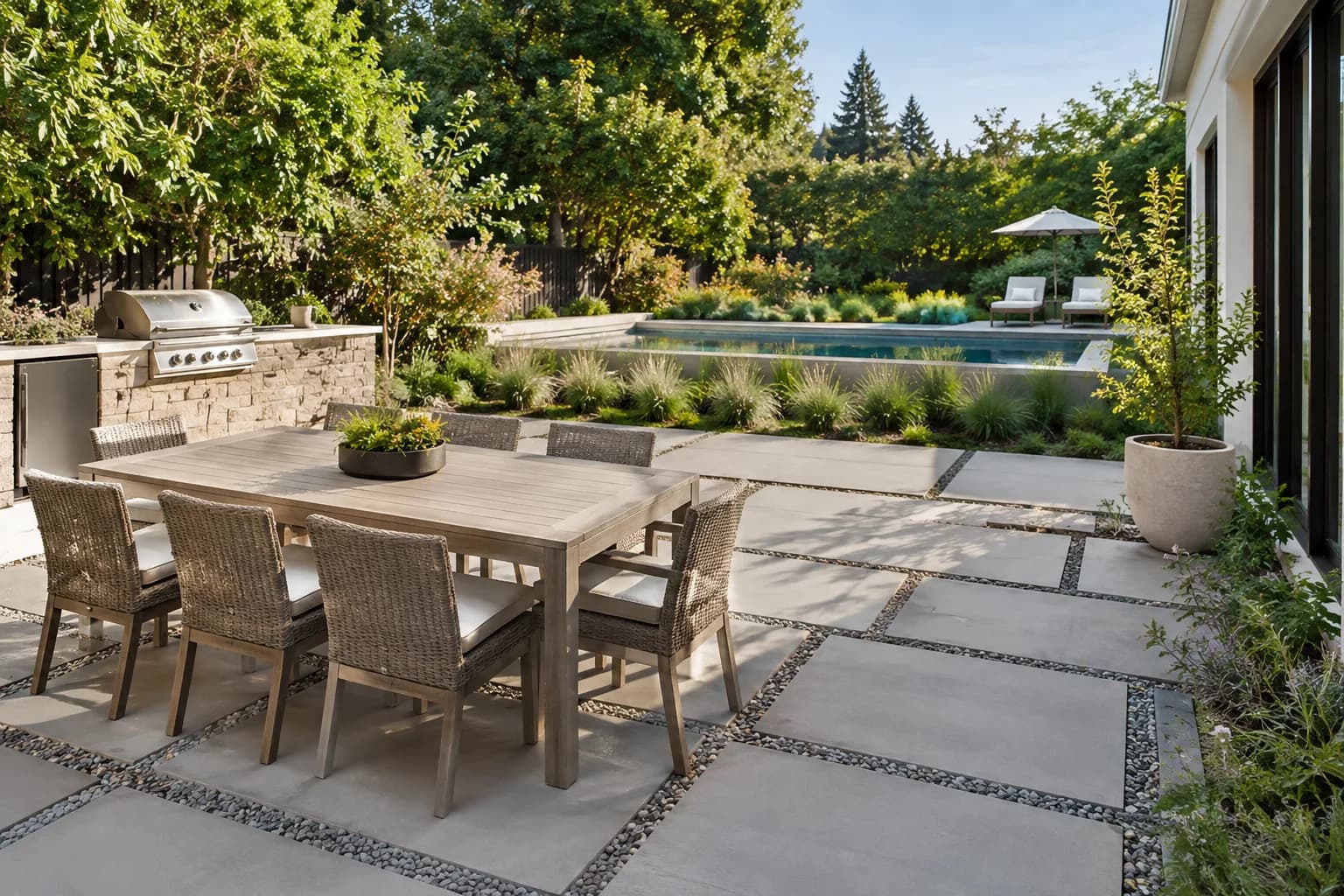
10. Contrast gravel with planting mass and one hard edge
Gravel reads as design when a crisp edge and living mass give it scale. Add one repeated plant form and a dark or light border so the stone field does not look unfinished.
A gravel workflow that starts with water and edges
Fix movement of water and people first, then place stone and plants.
- Photograph the yard, mark high/low spots after rain, and note where mud or tracking happens.
- Decide use zones: walk, sit, plant mulch, vehicle, or full ground plane.
- Specify base depth, edge restraint, gravel size, and drainage direction before ordering.
- Compare three photo directions so plant mass and stone area stay in balance.
- Install in lifts, compact, edge, then plant; verify local drainage and driveway rules where needed.
Sources reviewed
Reviewed September 13, 2026. Source names are plain text; local drainage, driveway, and stormwater rules take priority over gallery inspiration.
- University extension permeable hardscape and gravel path guidance
- United States Environmental Protection Agency green infrastructure and permeable pavement concepts
- Local cooperative extension xeriscape and mulch publications
- Transportation and residential driveway aggregate base overview materials
- Extension publications on landscape fabric limits and weed management
- Regional stormwater manuals for residential lot drainage
Frequently asked questions
Is gravel landscaping low maintenance?
It can reduce mowing and irrigation, but edges, weeds, leaves, and tracking still need a plan. Base and restraint quality decide long-term effort.
What gravel is best for walking paths?
Angular, interlocking sizes on a compacted base with side restraint. Very round pea gravel often rolls underfoot.
Can gravel replace a lawn?
Yes in sunny, low-use zones with correct grade and plant mass. High-play or high-traffic lawns may still need turf or a different surface.
Do I need landscape fabric under gravel?
Sometimes for separation, but fabric is not magic weed control and can complicate future planting. Match the product to the use case.
Will gravel hurt drainage?
Properly graded open gravel can help infiltration; poorly graded or compacted fines can block water. Always plan outflow away from structures.
Can GardenGPT choose my gravel type?
It can compare visual layouts. Stone grading, base design, loads, and drainage need local materials and site verification.
Gravel landscaping looks intentional when base, edges, water, and plant mass are designed together. Compare layouts on photos, then verify materials and drainage on site before you order stone.