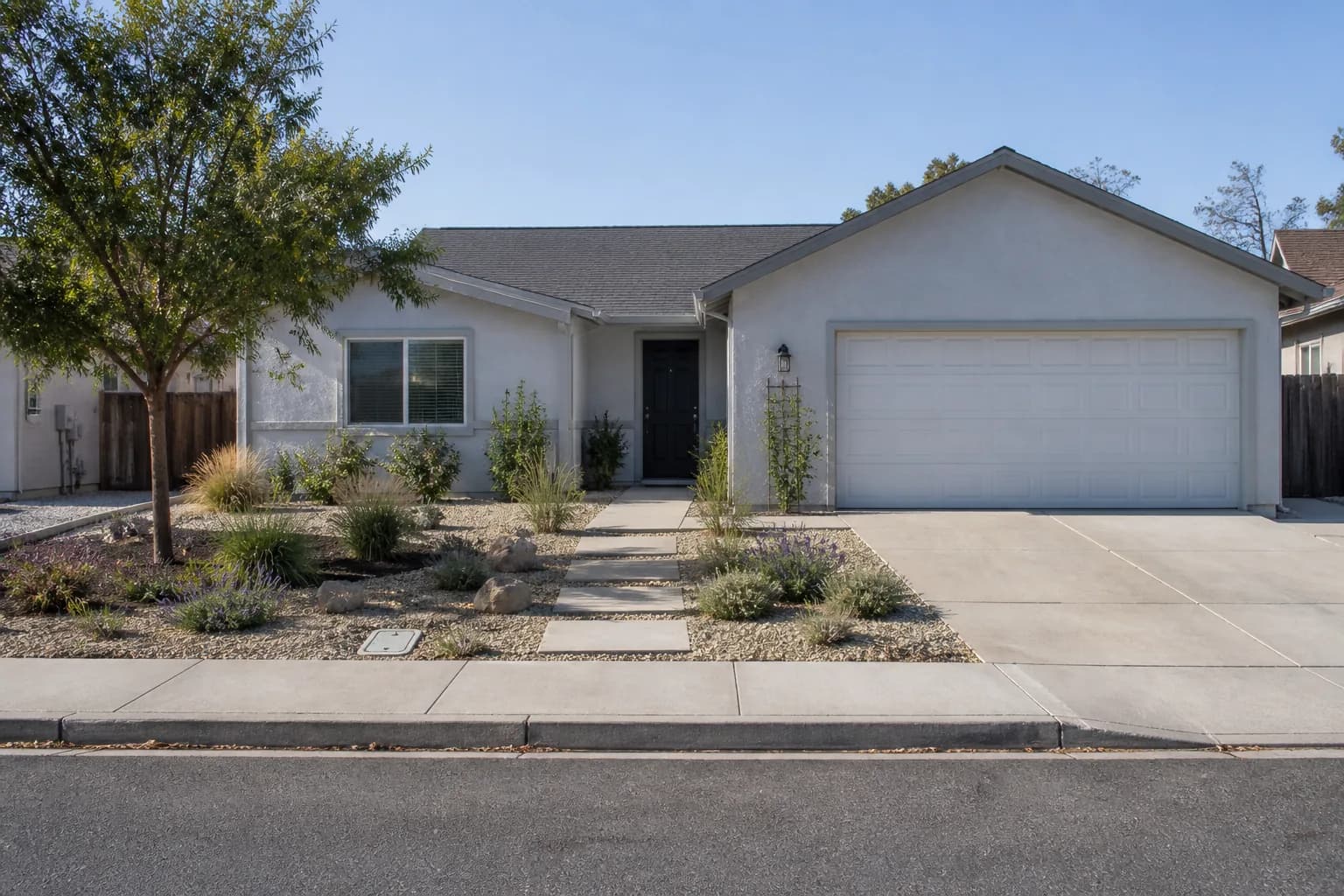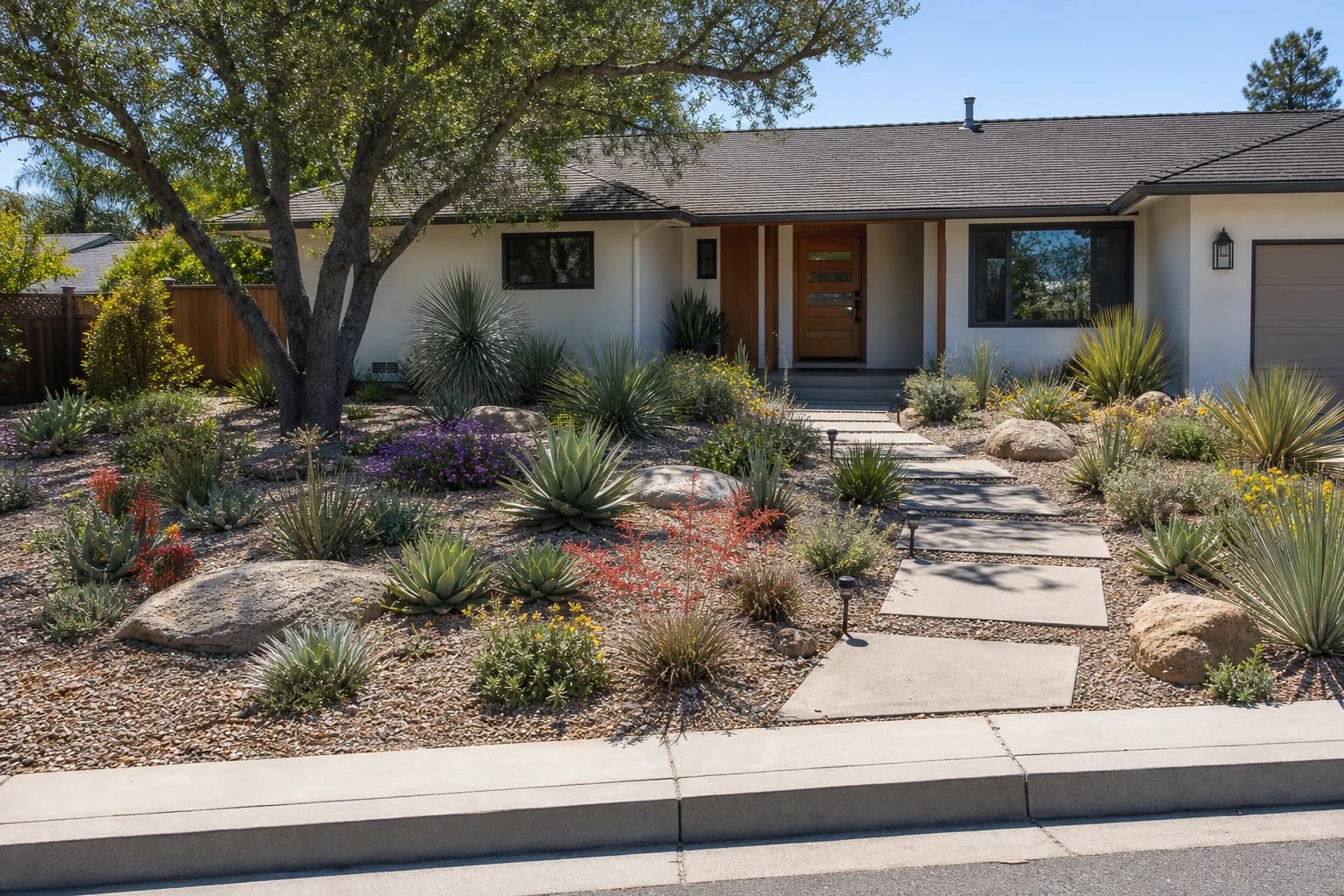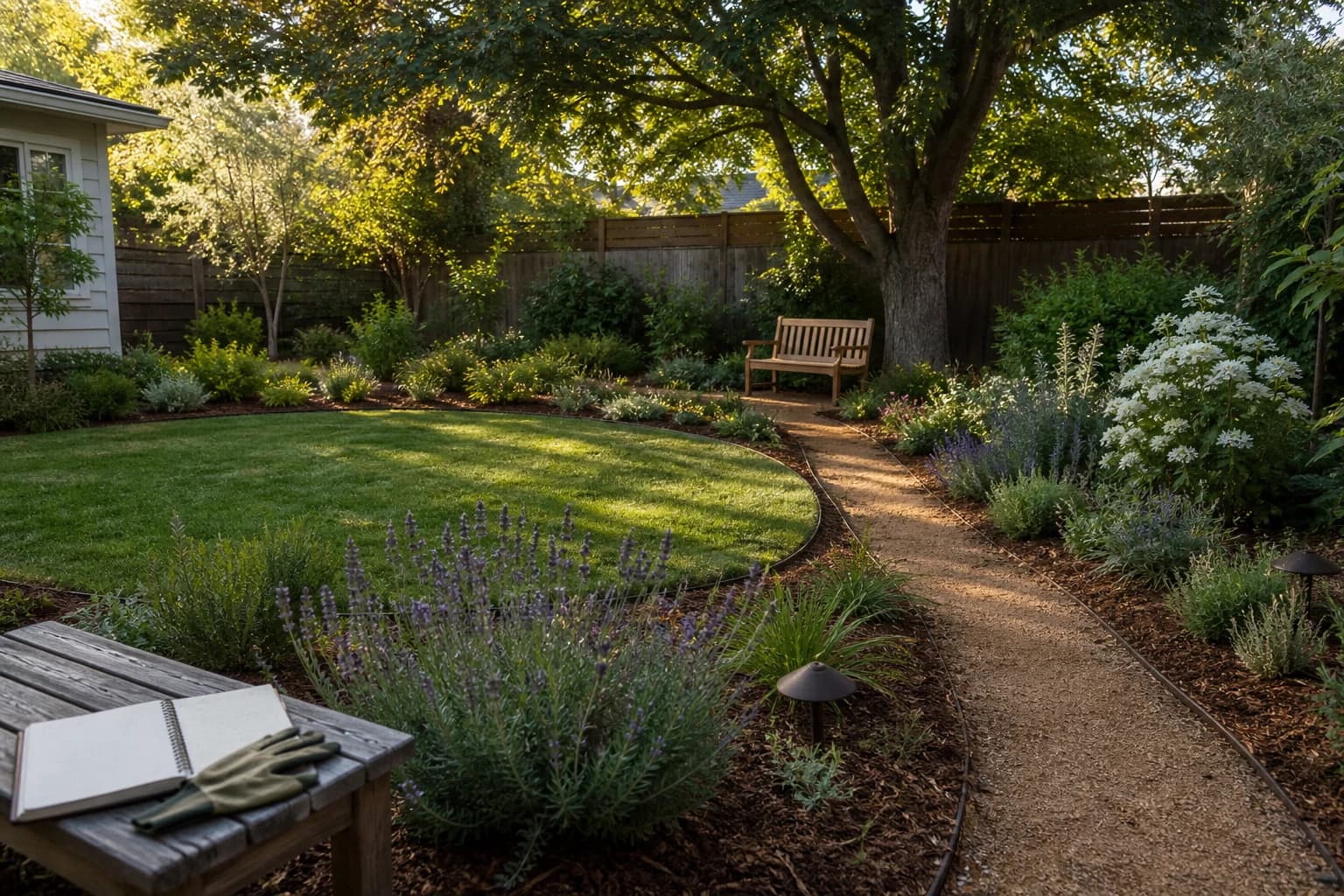
Low maintenance is not a look; it is workload design. A yard becomes easier when it reduces repetitive mowing, watering, weeding, edging, carrying, and cleanup while preserving the use you actually value.
No yard is maintenance-free. These seventeen moves reduce predictable work, but climate, plant suitability, drainage, and household routines still need local verification.
Count the work before choosing the look
| Work | Rhythm | Design response |
|---|---|---|
| Mowing and edging | Weekly/growing season | Simple lawn shape, fixed edge, less unused turf |
| Watering | Weekly to seasonal | Site-fit zones, mulch, drip, seasonal adjustment |
| Weeding | Monthly to seasonal | Appropriate density, mulch, legible edges |
| Pruning | Seasonal | Plant for mature size; fewer clipped forms |
| Cleanup and carrying | Weekly to seasonal | Short routes, reachable storage, sweepable surfaces |
Seventeen ways to cut recurring yard work
- Simplify lawn edges into one mowable shape.
- Use permanent edging to reduce trimming.
- Keep only the lawn area you actually use.
- Zone by sun, soil, and moisture—not flower color.
- Repeat a short palette of site-fit plants.
- Plant for mature width to avoid transplanting and hard pruning.
- Use an appropriate depth of organic mulch for weeds and moisture.
- Place frequent-care areas near the house or water source.
- Prefer drip or zoned watering and adjust it seasonally.
- Give leaves, bins, hoses, and tools an assigned place.
- Make the primary route slip-resistant and easy to sweep.
- Remove narrow strips machines cannot reach.
- Use movable furniture before oversized built-ins.
- Keep healthy mature trees and plan for leaves and roots.
- Screen the important sightline instead of every boundary.
- Choose materials that can be phased and locally repaired.
- Write down weekly, monthly, and seasonal work before deciding.
Do not turn low maintenance into all rock
An all-rock yard, synthetic turf, or extensive paving still collects leaves, grows weeds, stores heat, sheds water, and needs repair. It can also make future planting harder.
Compare maintenance strategies with GardenGPT
Photograph one yard from one to four angles and name the task you most want to reduce: mowing, watering, pruning, or cleanup. Compare three concepts that vary turf area, planting complexity, routes, and activity zones while preserving the house, mature trees, drains, and access.
The image compares workload relationships only. Verify plants by USDA zone, sun, soil, water, mature height and width, evergreen or deciduous habit, pet risk, and local invasive-species guidance.
Frequently asked questions
Does low maintenance mean maintenance-free?
No. It means reducing and simplifying recurring work, not pretending it disappears.
Is an all-rock yard easiest?
Not necessarily. Rock collects debris, grows weeds, stores heat, and affects drainage and future planting.
Which plants need the least work?
There is no universal list; match zone, sun, soil, water, mature size, and local risk.
Can GardenGPT calculate maintenance hours?
No. It compares visual directions; workload needs a separate material and plant assessment.
When should I get professional help?
Use site expertise for drainage, retaining, structure, utilities, fire zones, or complex tree work.
Lower work comes from a short, coherent system: fewer plant types, mature-size spacing, legible edges, reachable water and storage, and materials that can be repaired in sections.