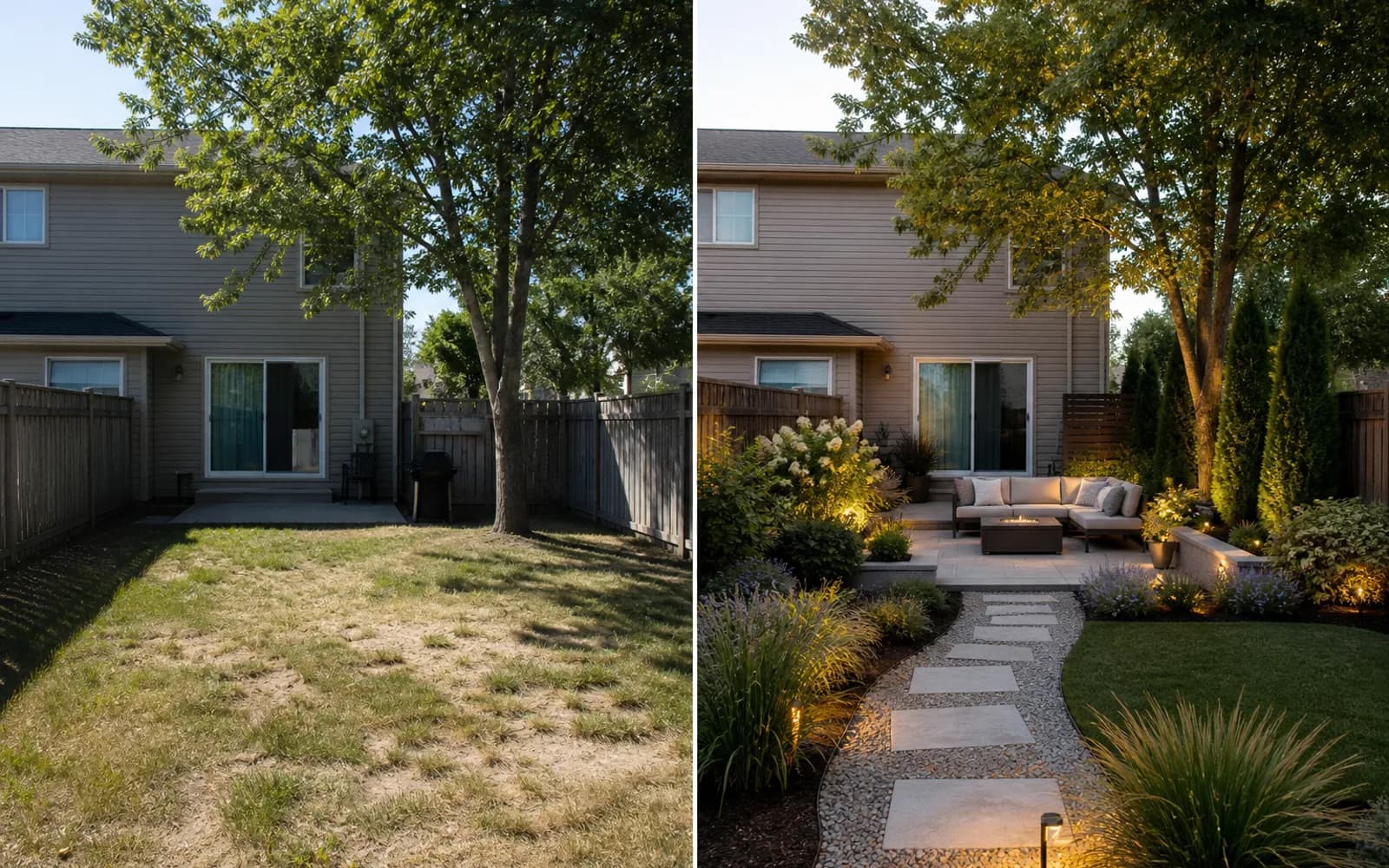
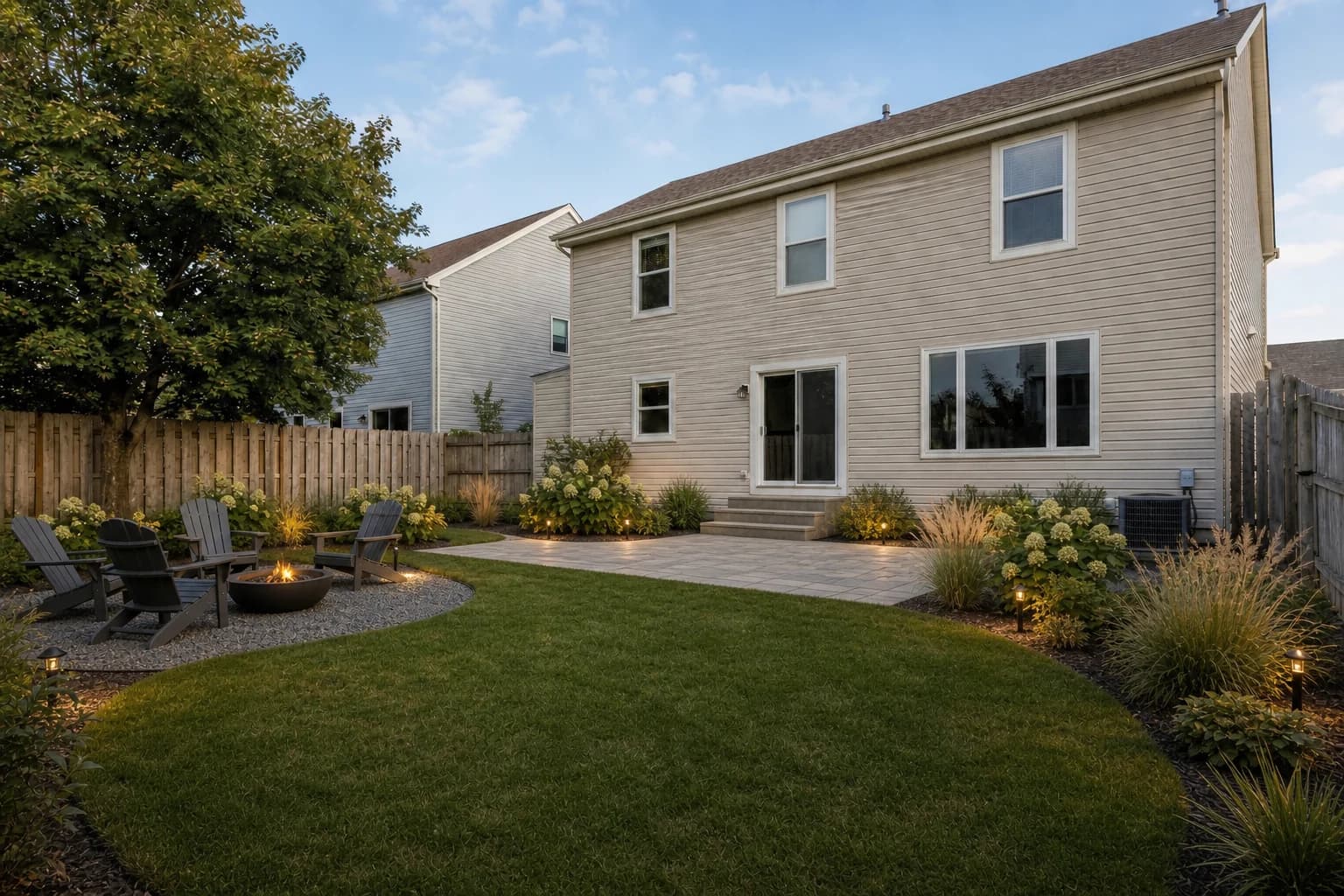
Modern backyard design is more than dark paving and straight beds. A useful concept preserves the house and mature trees, organizes dining, social space, and circulation, and keeps materials, plants, and lighting at a believable residential scale.
These eight visual tests use different ordinary residential source photos but one keep-list and review method. They demonstrate a prompt workflow—not a controlled image-quality benchmark or a ranking of AI products.
How we reviewed the eight prompt results
Every prompt protects the house, doors, windows, fence, mature trees, grade, and boundary before adding one main function. We then review preservation, functional clarity, scale, maintenance reality, and build boundaries.
- Preservation: doors, windows, fences, and trees should not move.
- Function: the primary use and route should be readable at a glance.
- Scale: furniture, fire features, paths, and beds must remain residential.
- Maintenance: low maintenance still includes irrigation, pruning, cleaning, and access.
- Build boundary: an image cannot verify dimensions, drainage, permits, or safety clearance.
| Dimension | Useful signal | Warning signal |
|---|---|---|
| Preservation | House, door, tree, and fence remain | New openings or moved boundaries |
| Function | One primary zone and a clear route | Every feature crowded into the center |
| Scale | Believable furniture and paths | Oversized fire pit or tiny circulation |
| Maintenance | Repeated plants and service access | Overplanting with no irrigation or cleanup |
| Reality | Presented as a concept | Treated as quantities or permit-ready design |
Eight modern backyard prompts and what to check
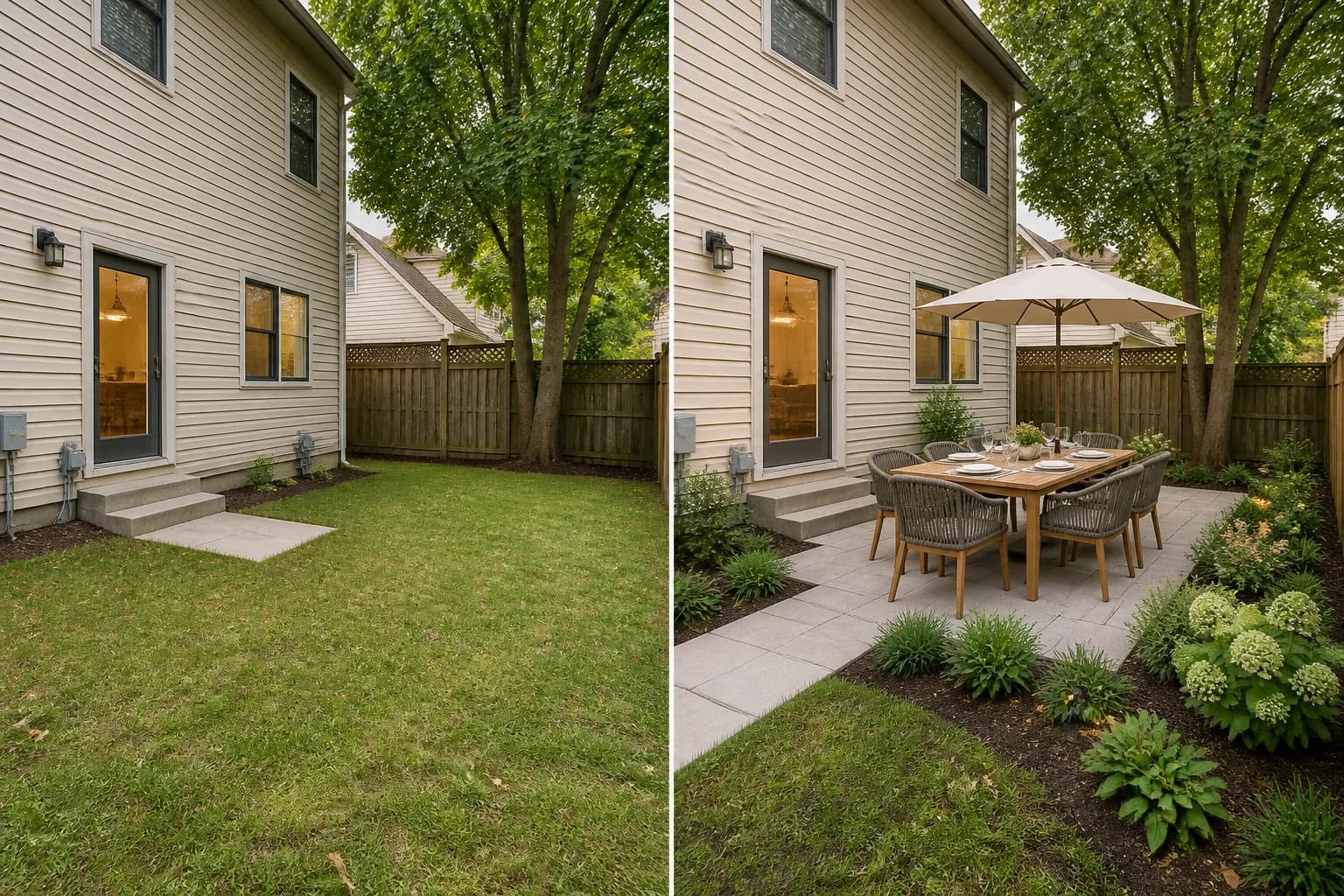
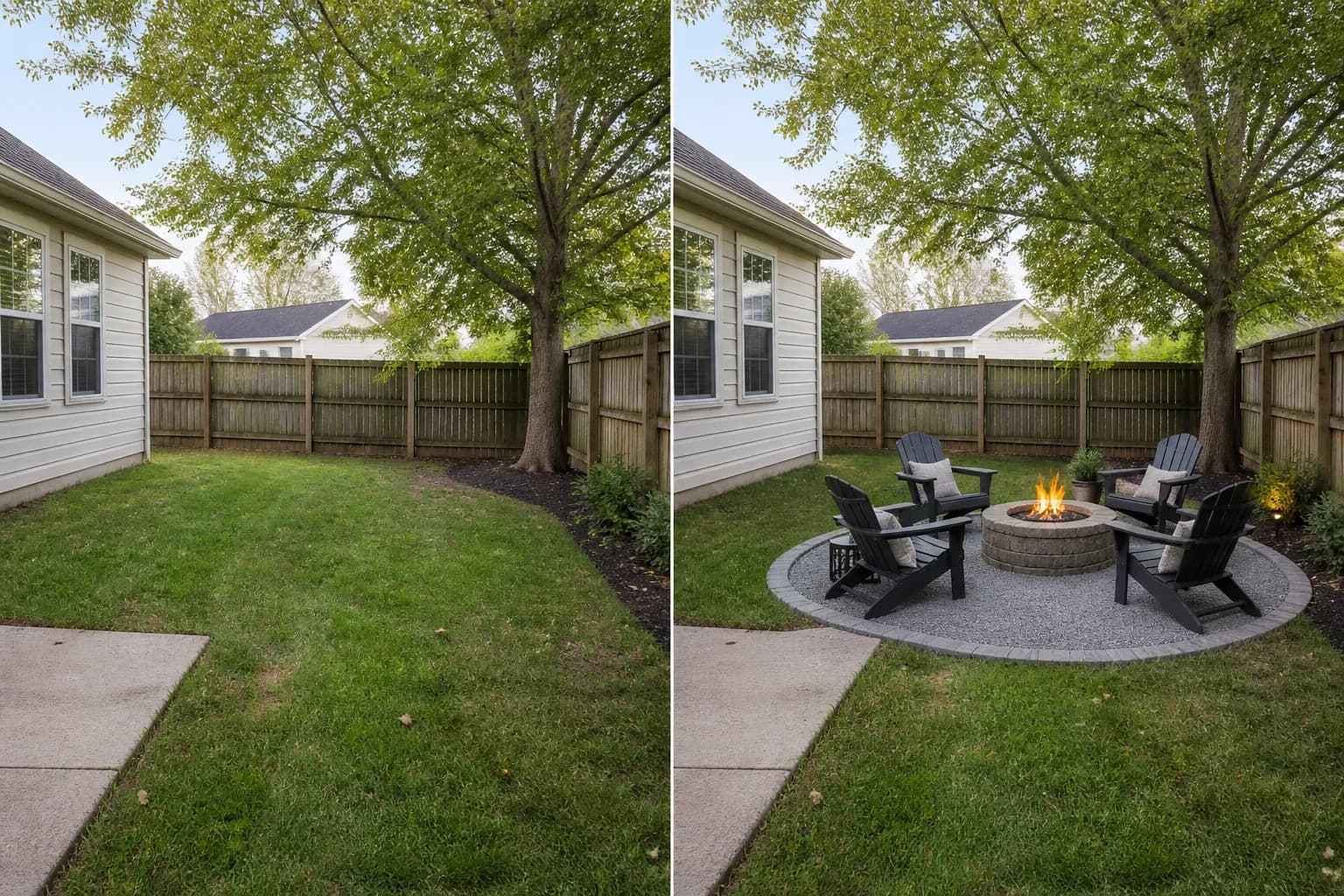
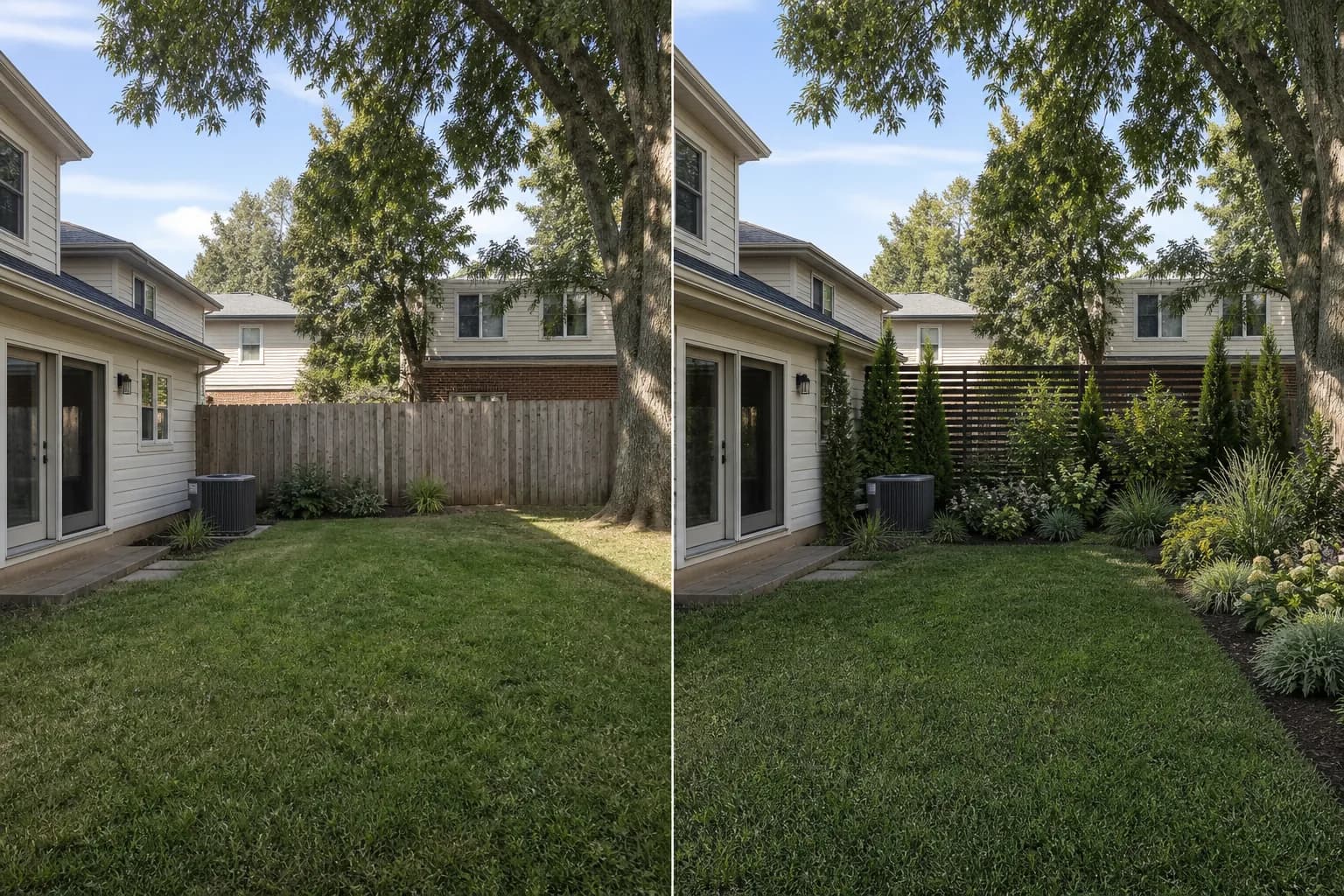
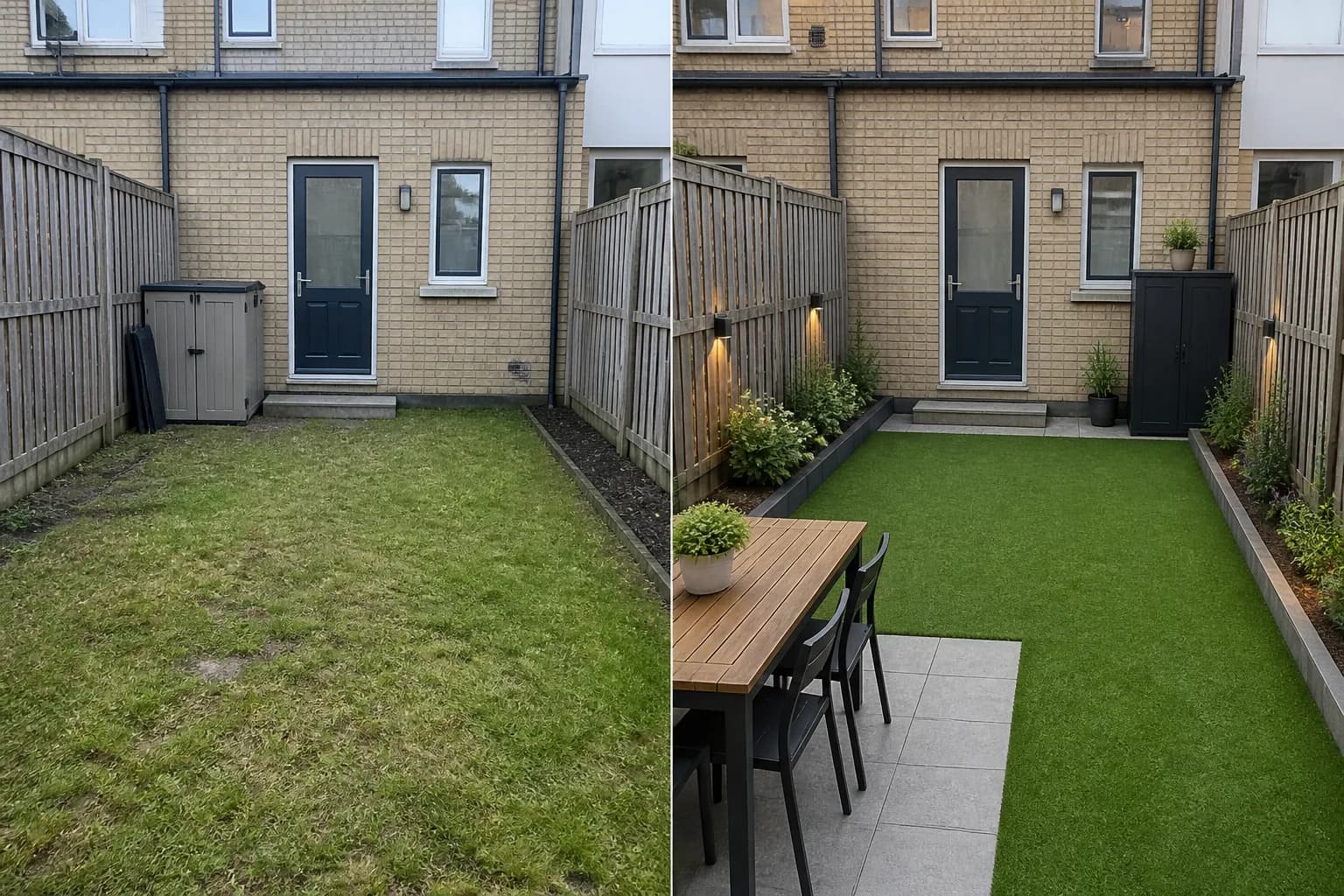
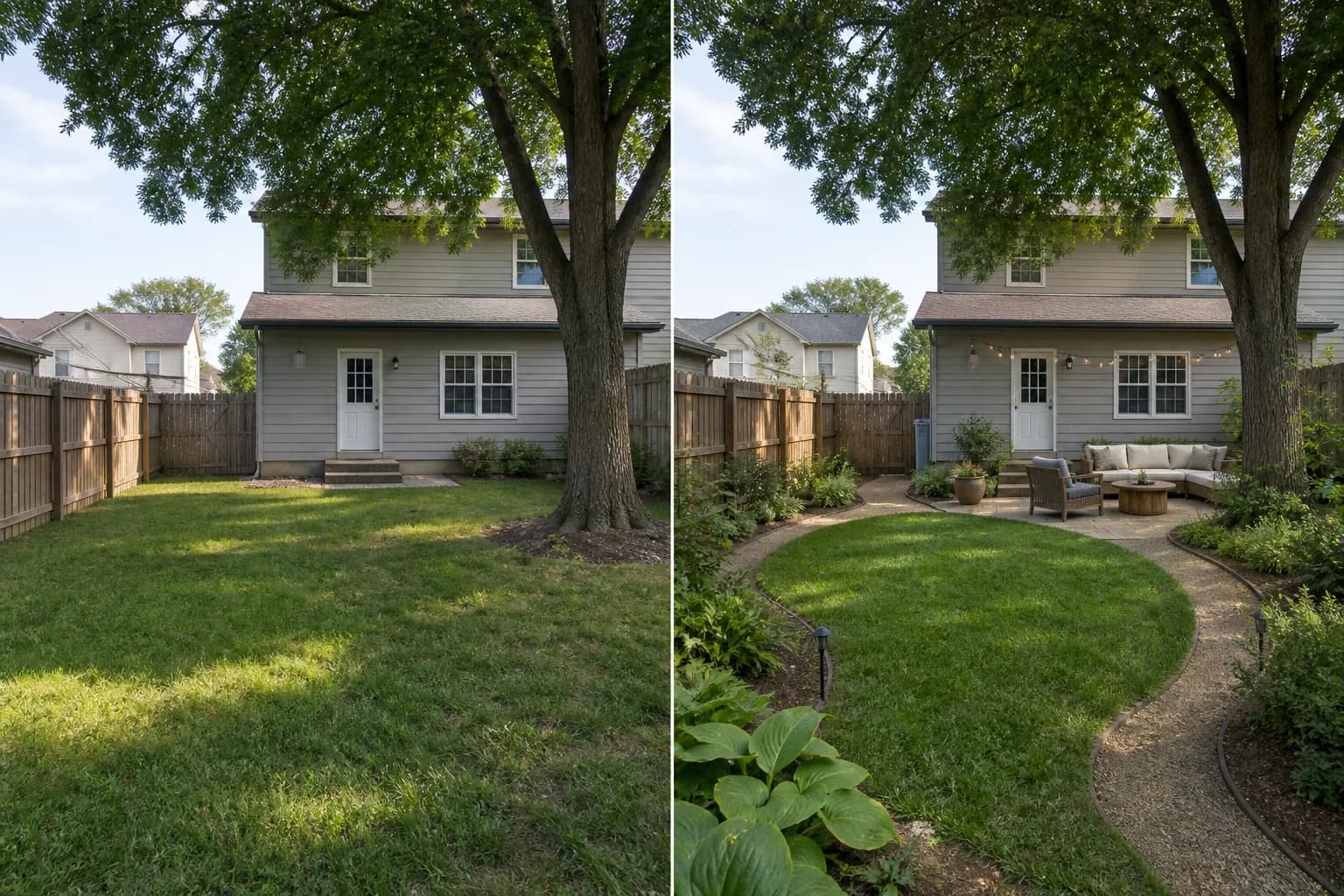
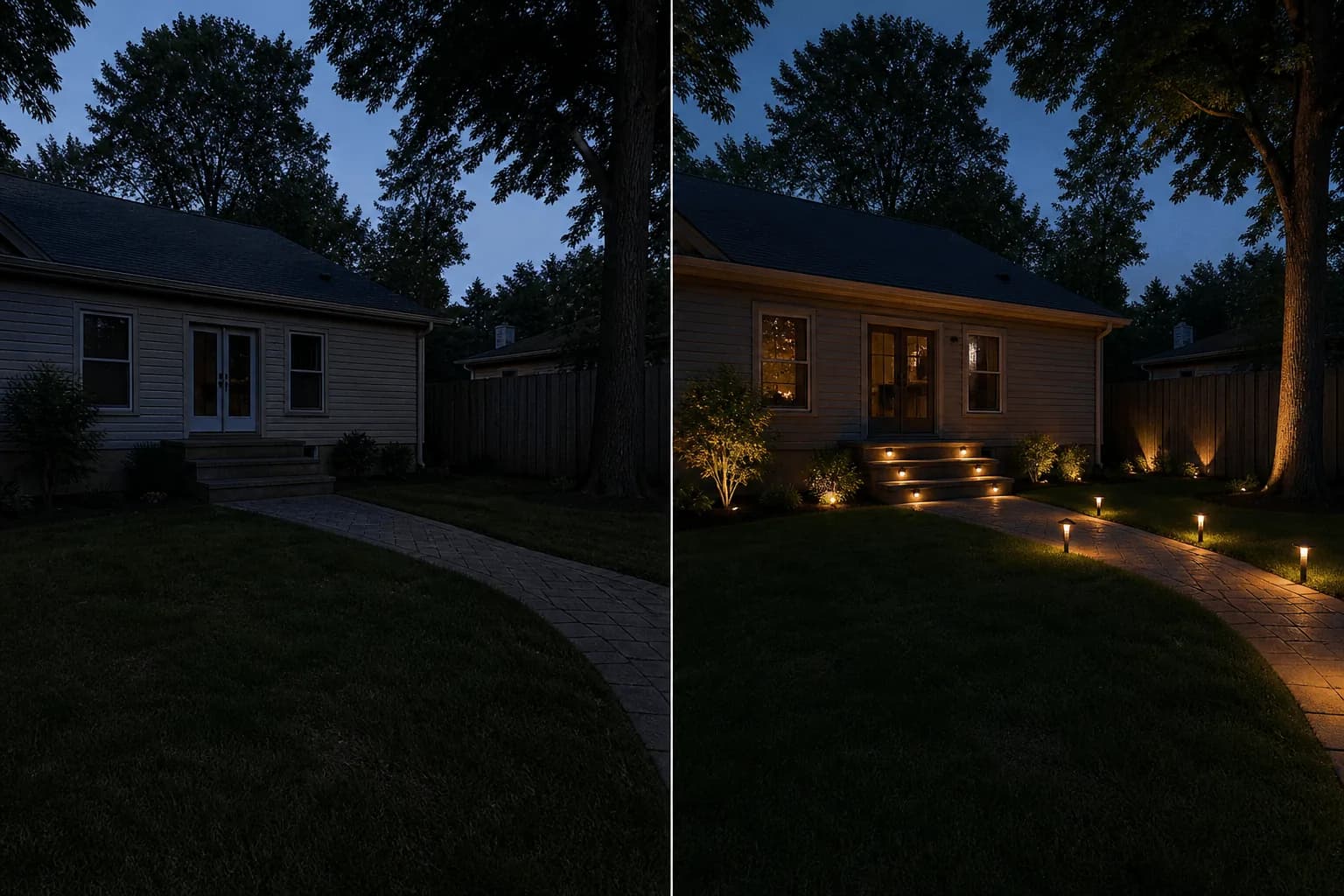
Each image places the ordinary yard on the left and a modern concept from the same fixed viewpoint and house geometry on the right. The result note explains whether the direction is clear; the check note lists facts the image cannot establish. Replace the keep-list, climate, and main goal before using any prompt on your yard.
1. A warm modern outdoor room
A compact patio, four-person seating, and layered planting create one strong destination; retaining the mature tree adds more value than inventing an expensive structure.
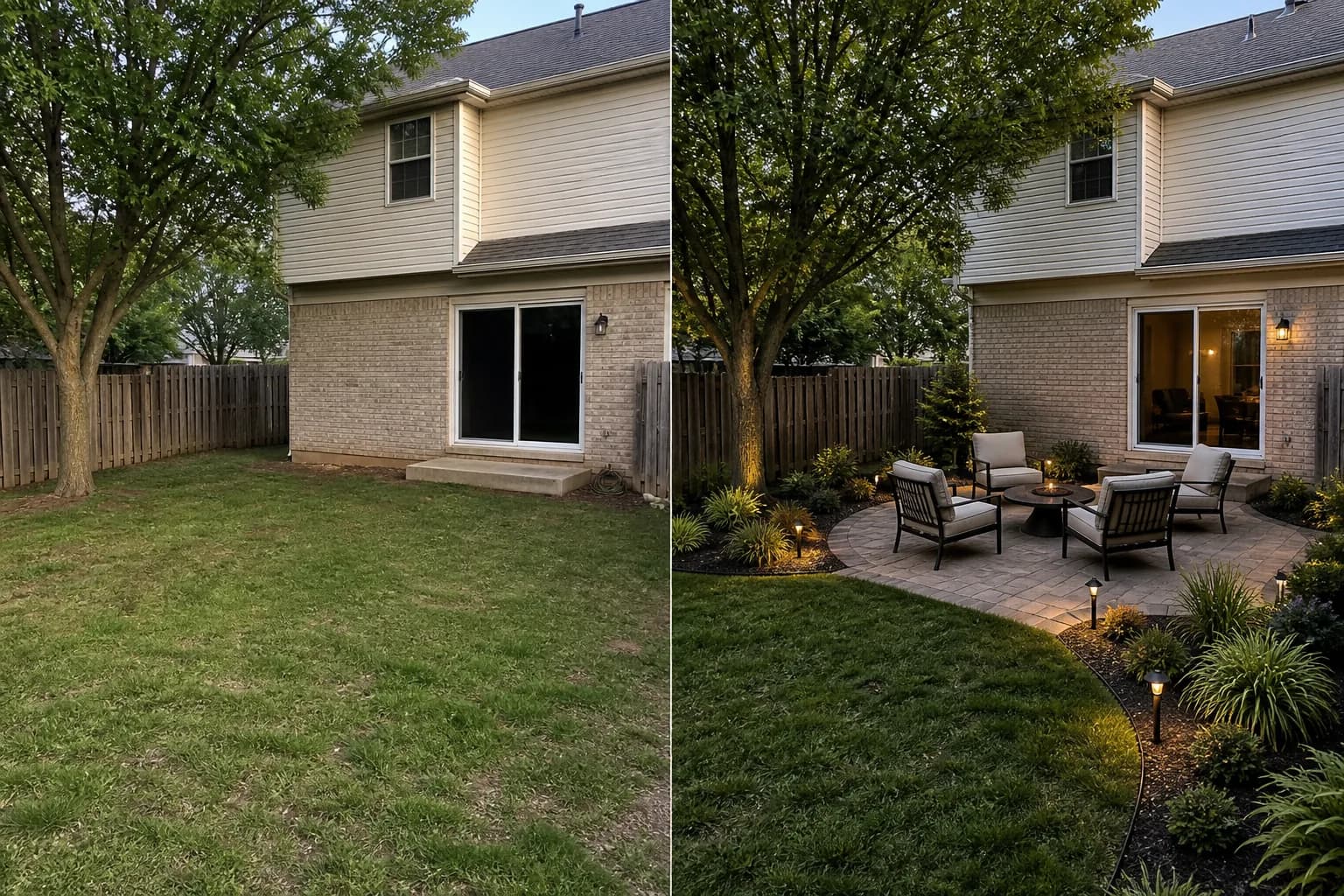
2. Low maintenance with less lawn
Repeated plants and one simple path read as more livable than a yard filled with gravel.
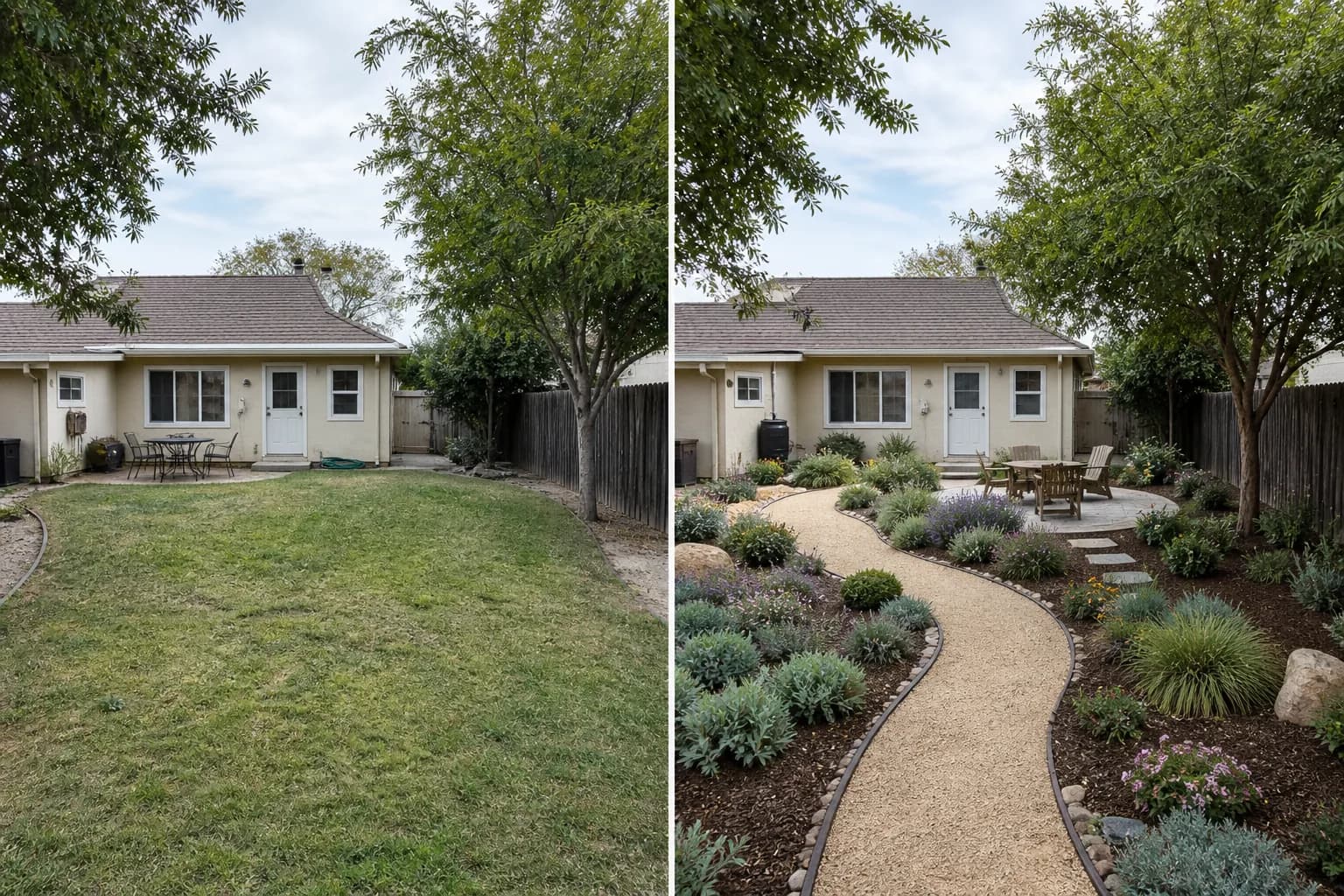
3. Six-person dining near the kitchen
Placing dining near the interior exit shortens service circulation, but AI often compresses chairs and paths.
4. A modern fire-pit conversation area
Circular or L-shaped seating creates a compelling image and also the highest risk of unsafe visual scale.
5. Layered privacy instead of a wall
A partial screen and plants at several heights block the main view without enclosing the whole yard.
6. A small multipurpose backyard
Moving storage, planting, and seating to the edge keeps the center calm and works better than many miniature features.
7. A family-friendly modern yard
Adult seating can overlook flexible play space while soft planting edges keep the composition calm; no giant play structure is required.
8. Low-glare evening lighting
A small amount of path, step, and planting light adds depth; broad floodlighting flattens the yard and affects neighbors.
Revise a weak result in this order
- Rewrite the keep-list before adding more style adjectives.
- Keep one main function per generation, such as dining or privacy.
- Add residential scale, clear circulation, and mature-size constraints.
- Explicitly forbid new doors, moved boundaries, or an invented pool.
- After selecting a direction, refine materials, planting character, and night use.
Test boundary
Frequently asked questions
Which words help create a modern backyard?
Start with function and preservation, then use concrete constraints such as restrained materials, repeated planting, clear circulation, and residential scale.
Why does AI make the backyard look larger?
Wide-angle photos and missing dimensions invite scale drift. Use a natural view and remeasure every element in the planning stage.
Can I use the plants shown in the result?
No without verification. Treat them as planting character, then select species by ecoregion, sun, soil, water, and mature size.
How do I stop AI from changing the house?
List the house outline, openings, roof, fence, and mature trees as fixed, and reject any result with obvious structural drift.
Can I send these images to a contractor?
Use them to discuss visual direction, not as a substitute for measurements, plans, materials, drainage, safety, permits, or a formal quote.
The best modern backyard prompt does not stack style adjectives. It protects fixed facts, solves one functional problem, and leaves every dimensional and construction decision for the next verified step.