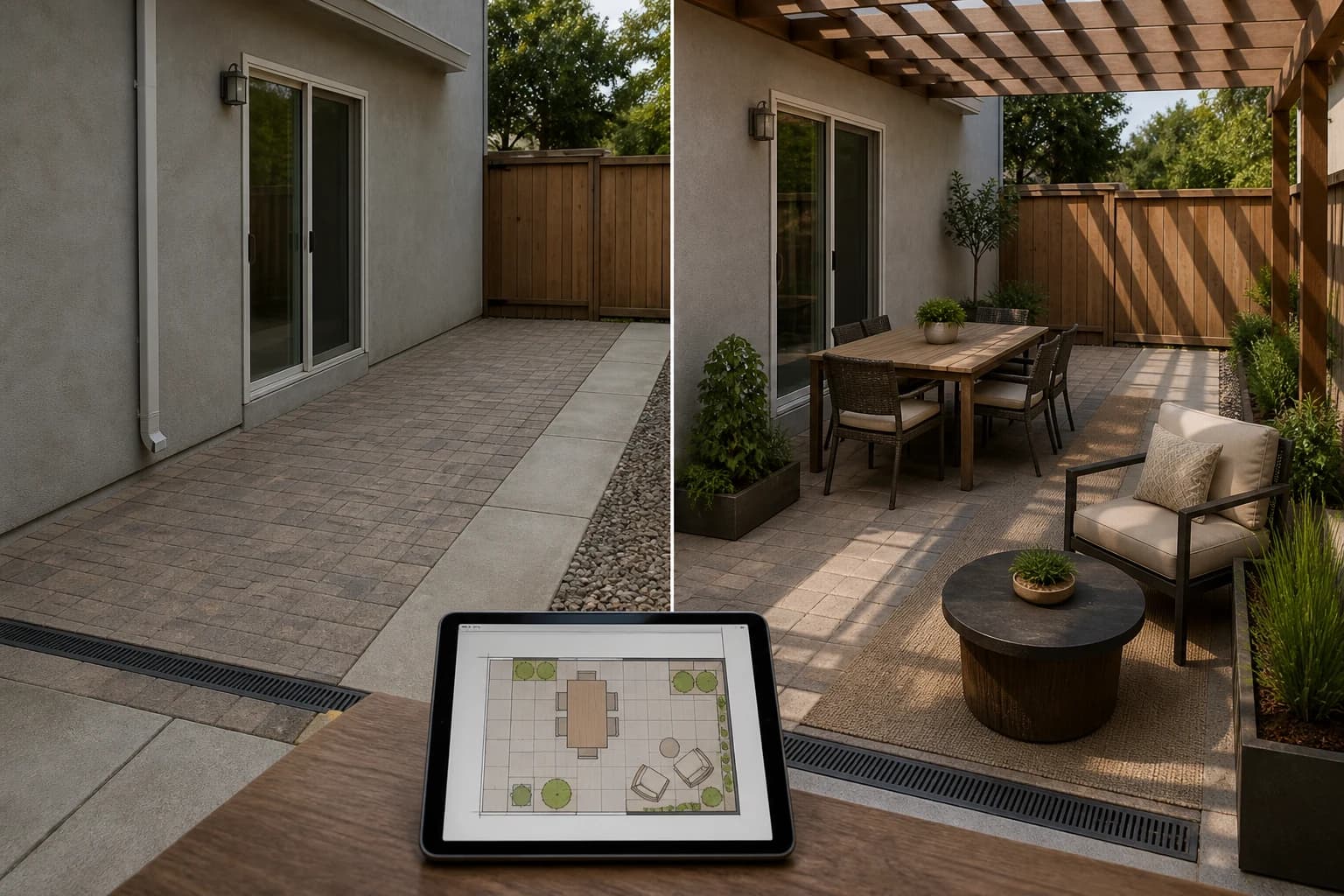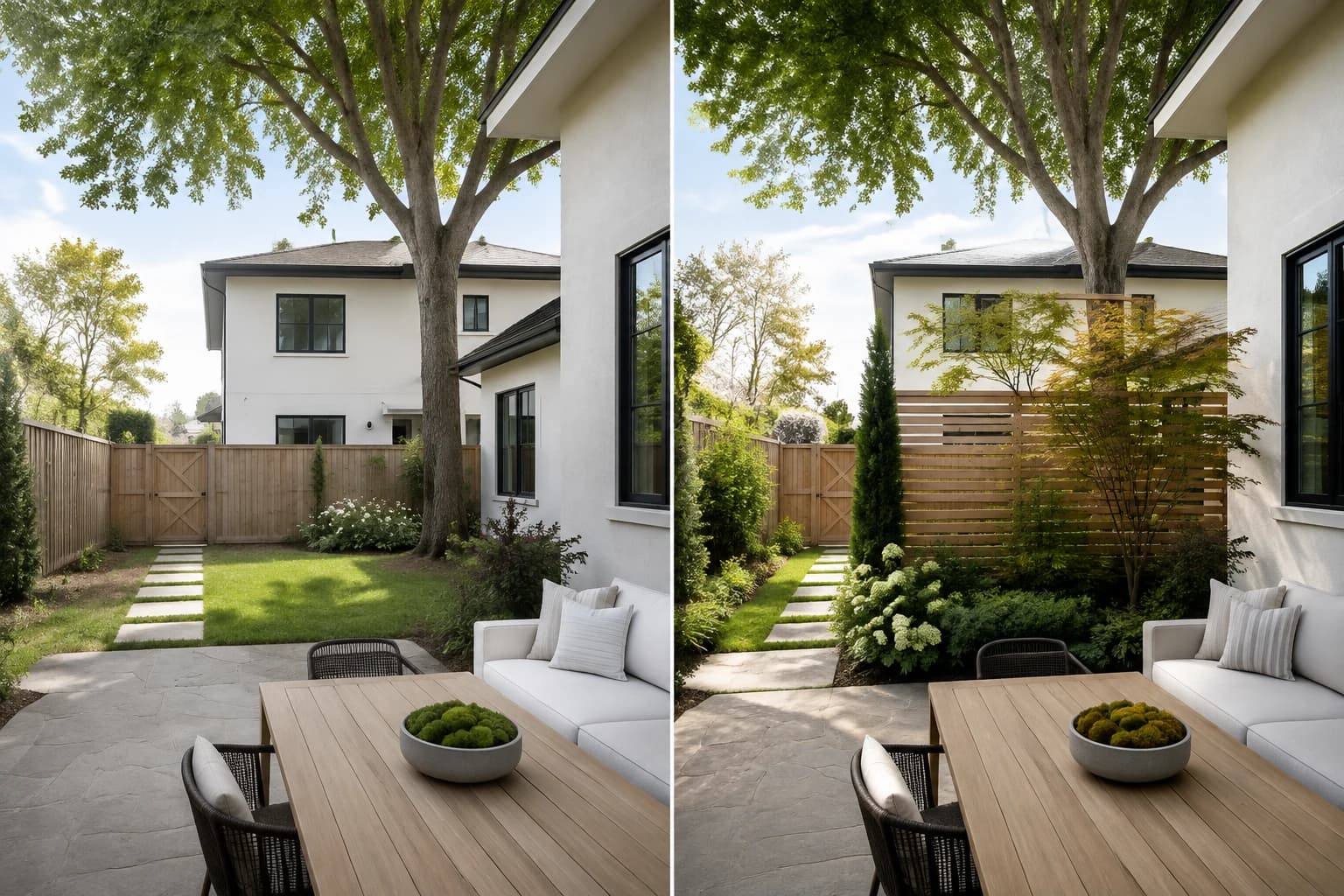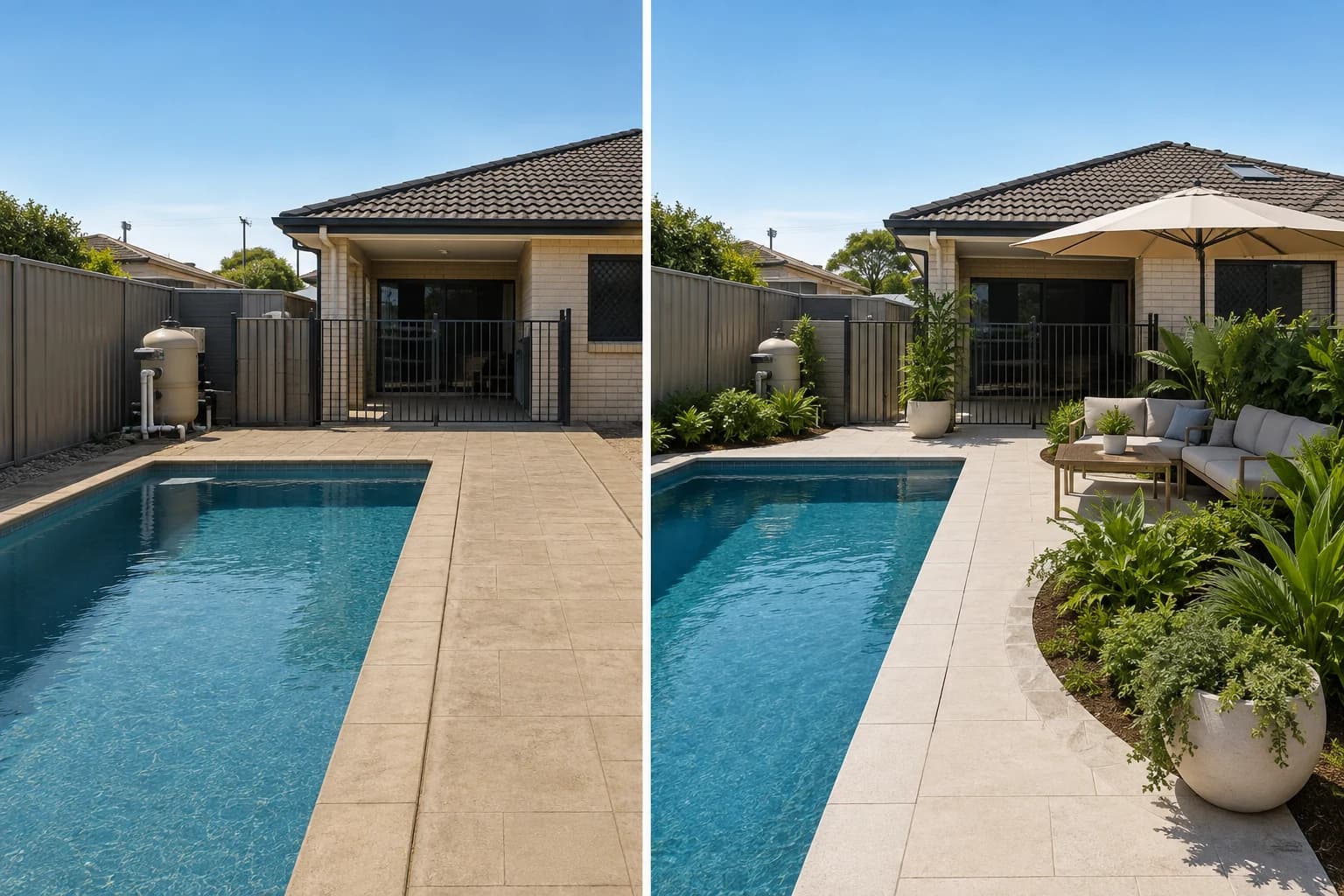
A pool can be beautifully shaped and still leave the backyard uncomfortable, exposed, cluttered, or hard to maintain. What surrounds the water controls supervision, walking, shade, debris, storage, equipment access, and the view from the house.
Start with the barrier and circulation decisions that styling must never conceal, then browse the 16 ideas by the part of the pool area they improve.
Key takeaways before you choose
- Barrier, gate, water visibility, and rescue access remain fixed before any landscape styling.
- Small yards, above-ground pools, and in-ground pools need different priorities; do not copy one gallery image literally.
- Planting and screens must preserve equipment ventilation, drainage, service access, and supervision.
Protect the pool before decorating it
CPSC recommends layers of protection, including barriers with self-closing, self-latching gates. Local pool, electrical, barrier, and accessibility rules govern the actual site.
| Zone | Keep clear | Design priority |
|---|---|---|
| Barrier and gate | Latch, swing, climbable objects | Unsupervised-access protection |
| Pool edge | Continuous walking and rescue access | Slip awareness and visibility |
| Observation | Unobstructed view of water | Shade without blind corners |
| Equipment | Service path, ventilation, drainage | Screen clutter without blocking work |
| Planting | Roots, thorns, debris, chemicals | Site-fit low-litter layers |
Start with the pool and yard type
Choose the row closest to your site before comparing individual ideas.
| Situation | Prioritize | Avoid |
|---|---|---|
| Small yard | One clear route, visible water, compact shade | Deep beds and oversized furniture |
| Above-ground pool | Controlled entry, stable deck, equipment access | Climbable objects beside the barrier |
| In-ground pool | Continuous edge, drainage, shade, service route | Blind corners and runoff toward water |
16 ways to design the half outside the water
Each idea must preserve the safety system and maintenance route.
Safety and circulation first
1. Keep one continuous walking edge
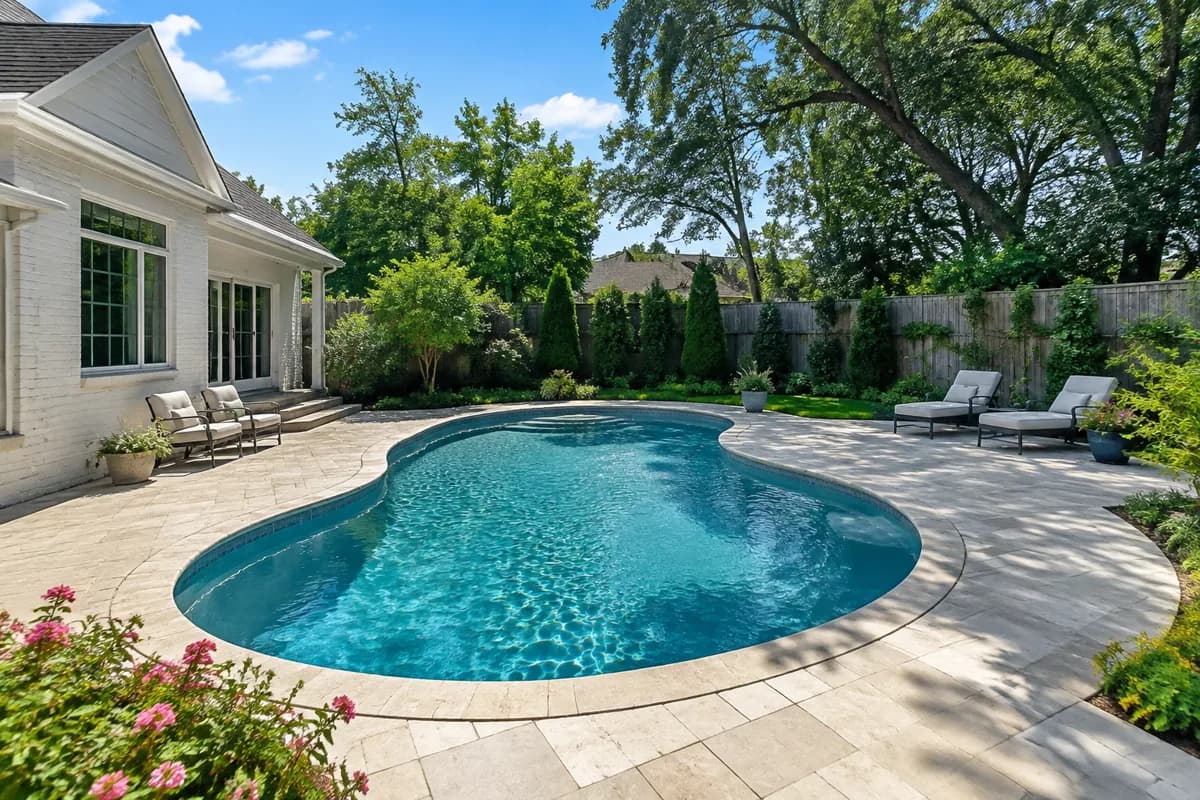
Keep a continuous, visible, slip-aware route; measure furniture and door clearances when the area is occupied.
2. Place shade where the water stays visible
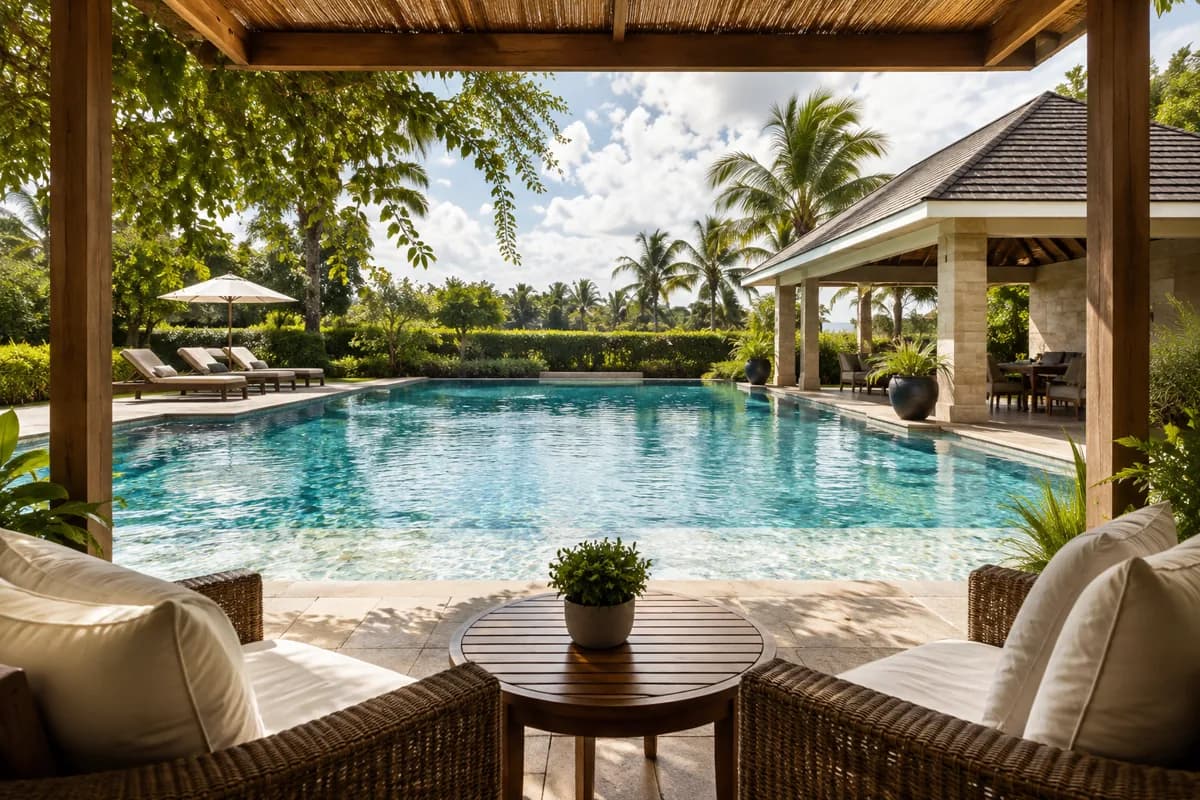
Shade and privacy must not hide the water or create blind corners from the responsible observation point.
3. Make the safety gate visually obvious
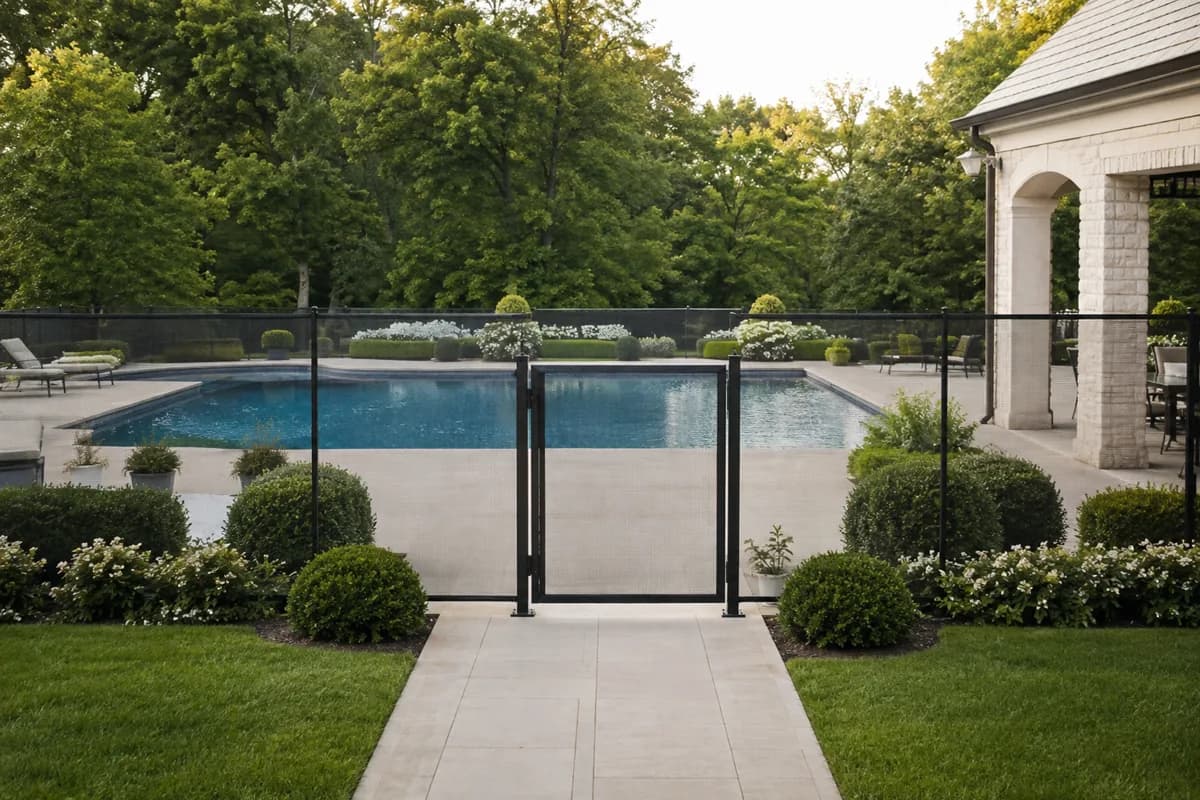
Never place climbable planters, furniture, or planting where they defeat a required barrier, gate, latch, or alarm.
Planting and surfaces around water
4. Use low-litter planting on the downwind side
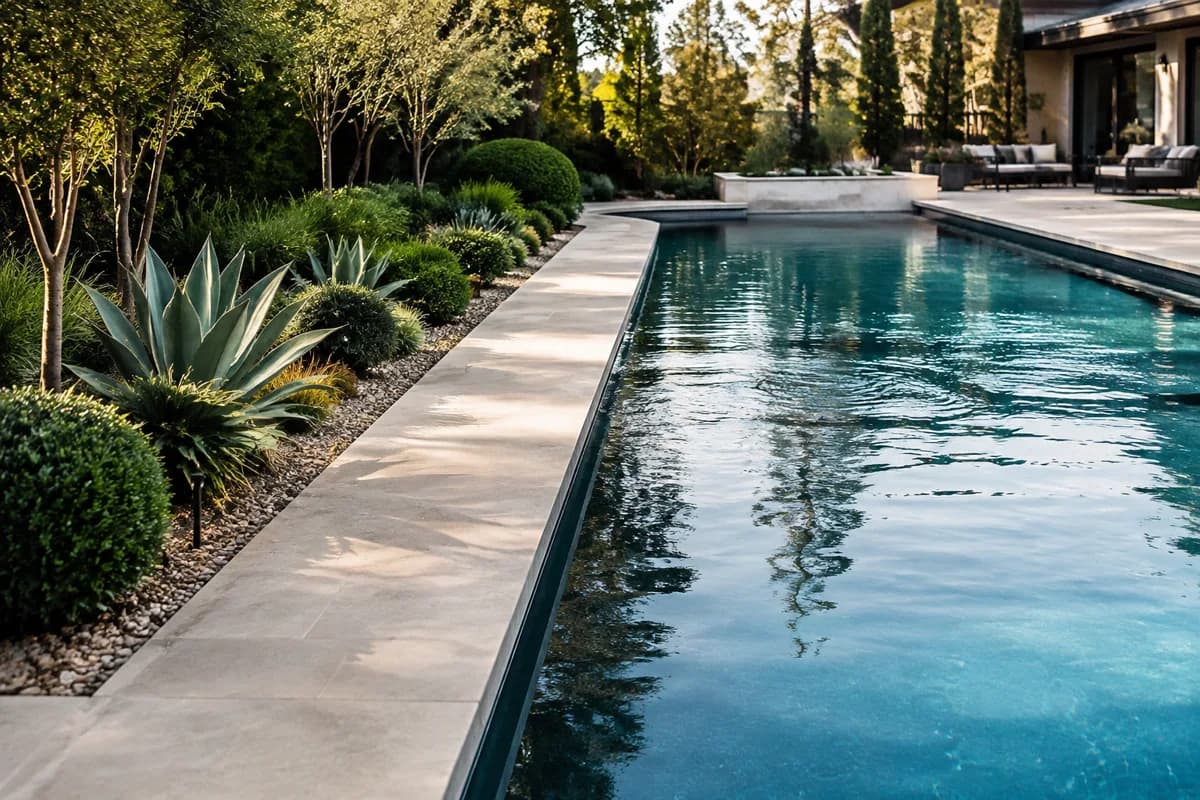
Select by mature roots and canopy, litter, thorns, sun, soil, water, pool exposure, maintenance, pet risk, and local invasive guidance.
5. Keep movable planters outside barrier paths
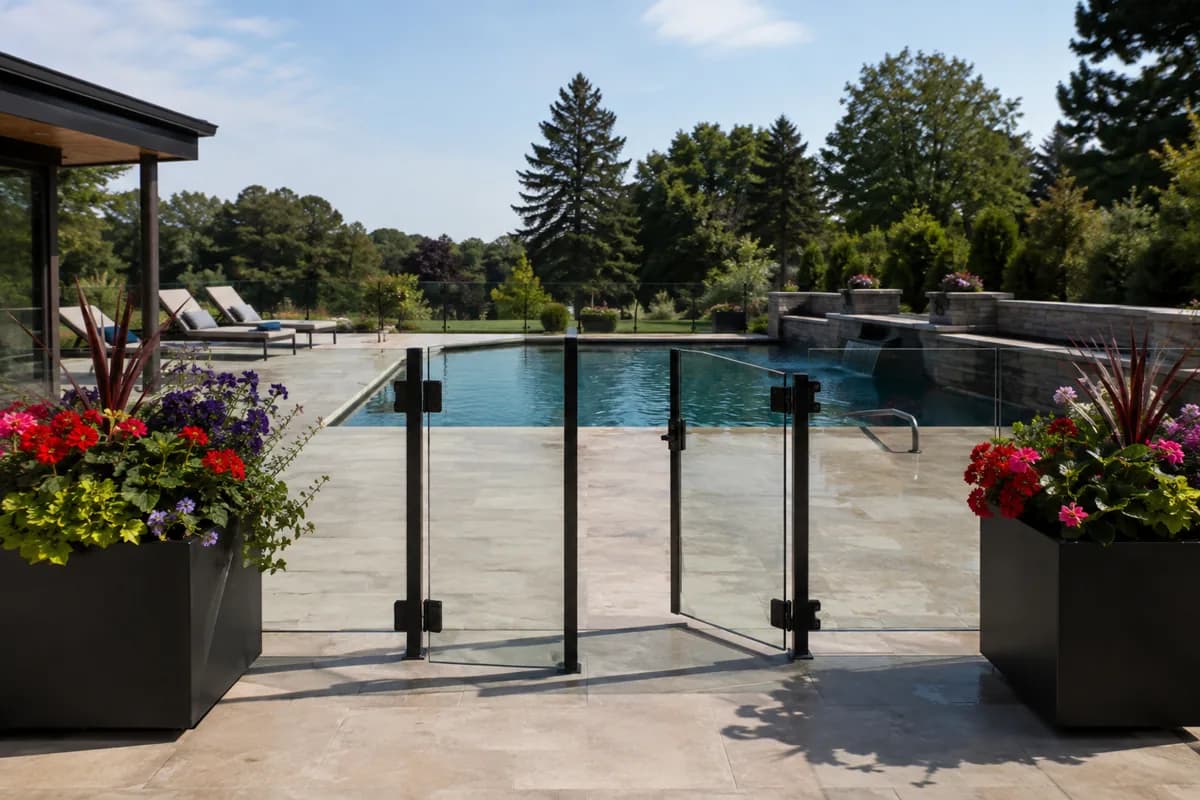
Movable containers add reversible color, but keep them stable, drained, and outside barrier and rescue paths.
6. Create a narrow bed without hiding equipment
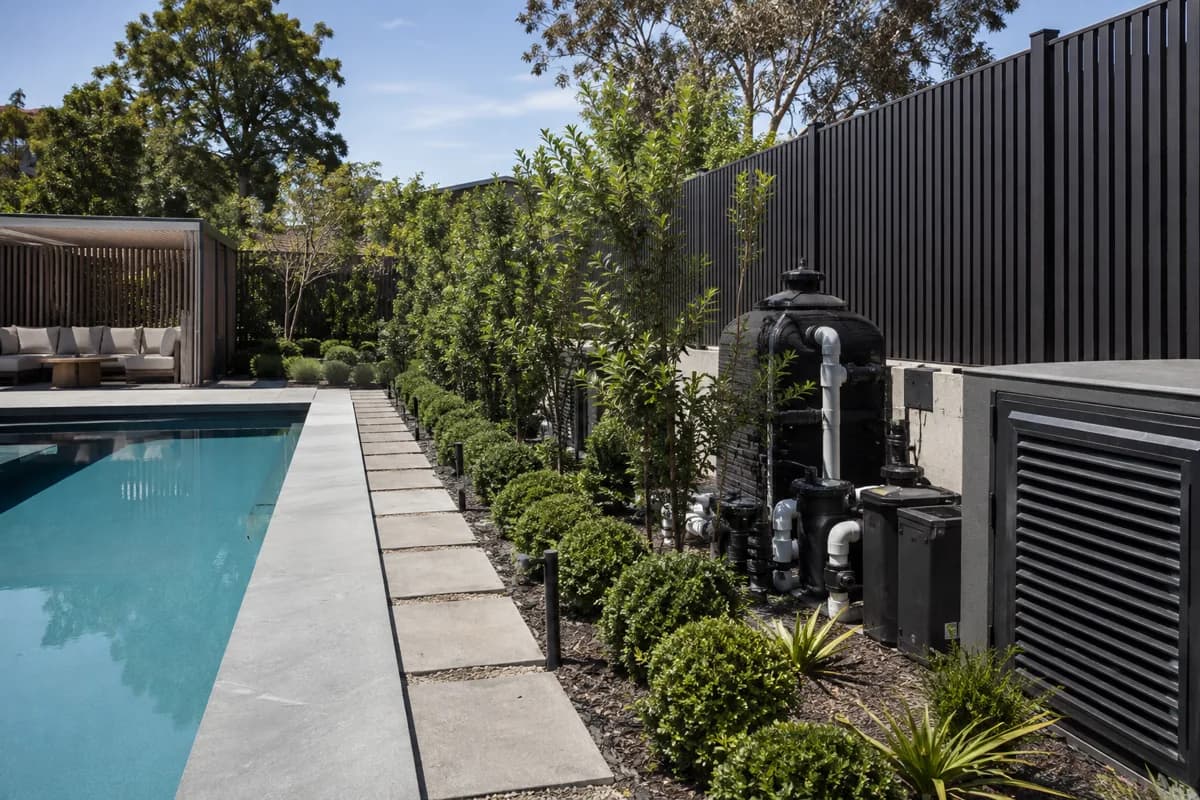
Screen equipment visually while maintaining manufacturer clearance, ventilation, drainage, shutoffs, and technician access.
7. Choose pale, slip-aware paving
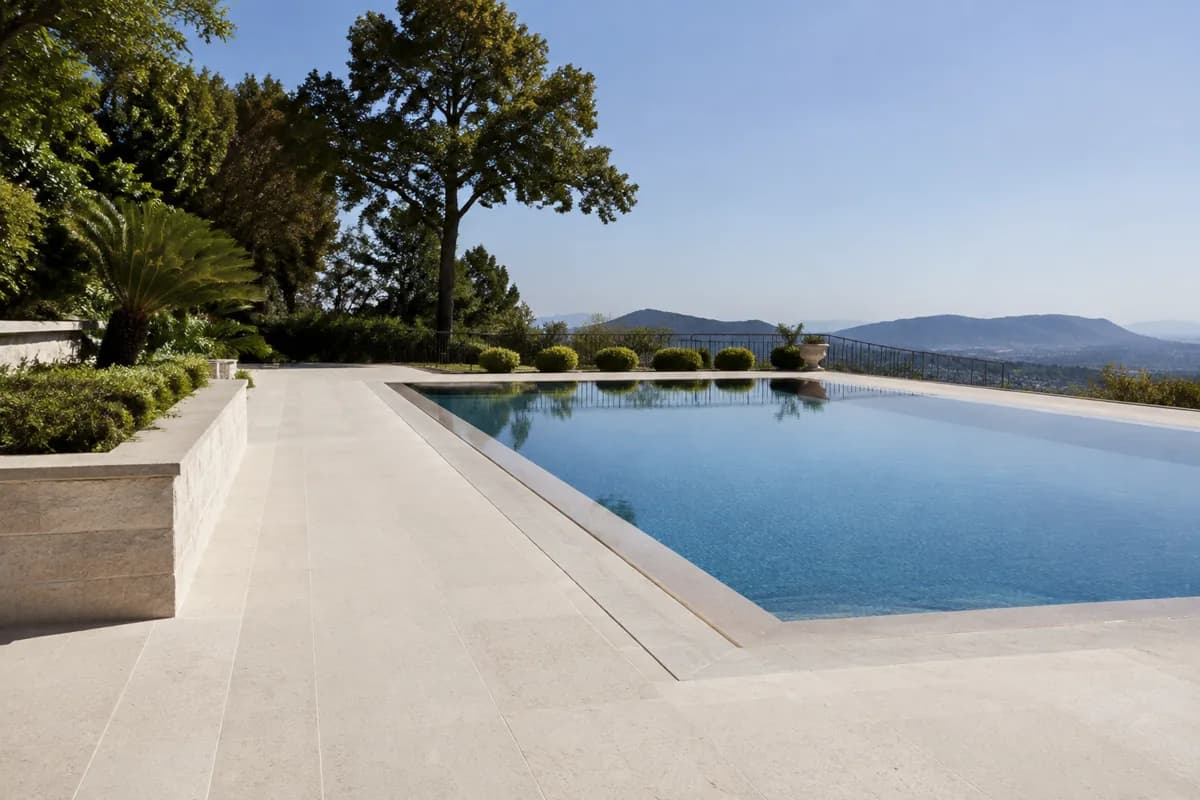
Prioritize slip awareness, heat, glare, drainage, repair, and barefoot comfort; local construction requirements decide the assembly.
8. Send runoff away from the water and house
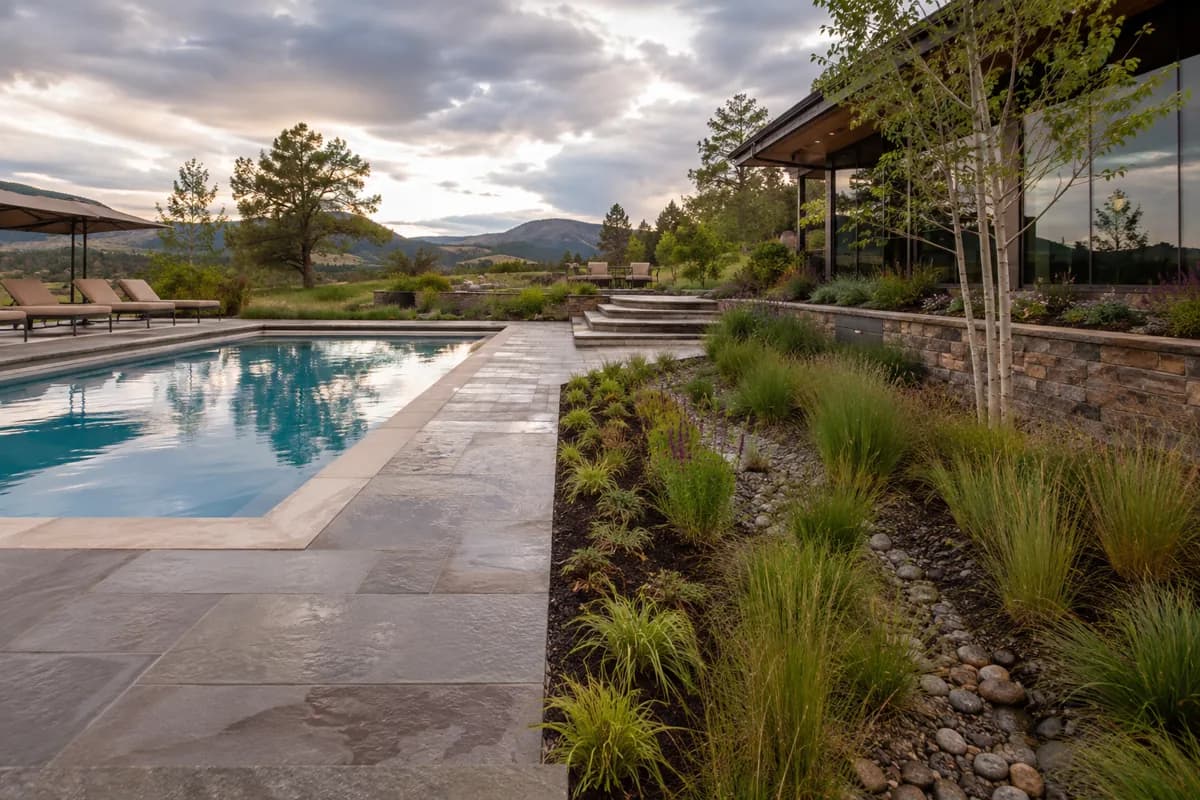
Do not let landscape runoff or soil wash into the pool or house. Verify grading and discharge with qualified site review.
Equipment, comfort, and storage
9. Screen equipment but preserve service clearance
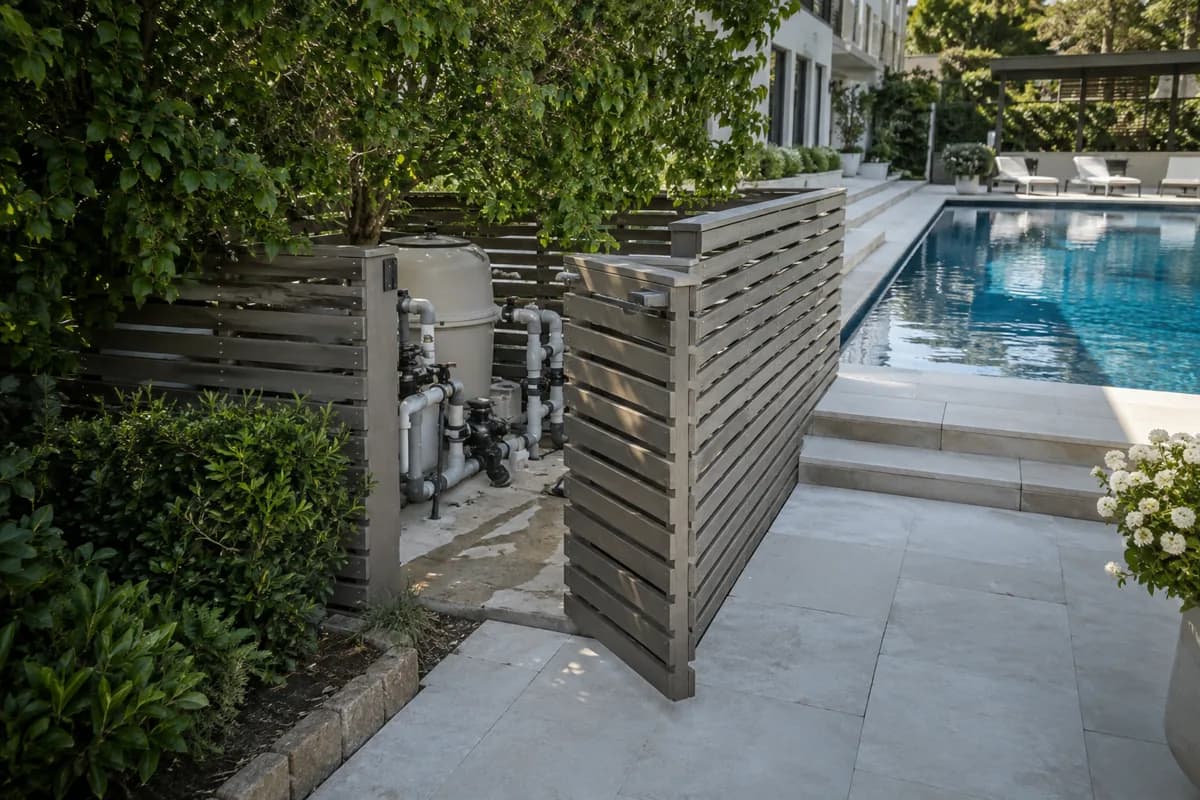
Screen equipment visually while maintaining manufacturer clearance, ventilation, drainage, shutoffs, and technician access.
10. Add a foot-rinse or shower transition
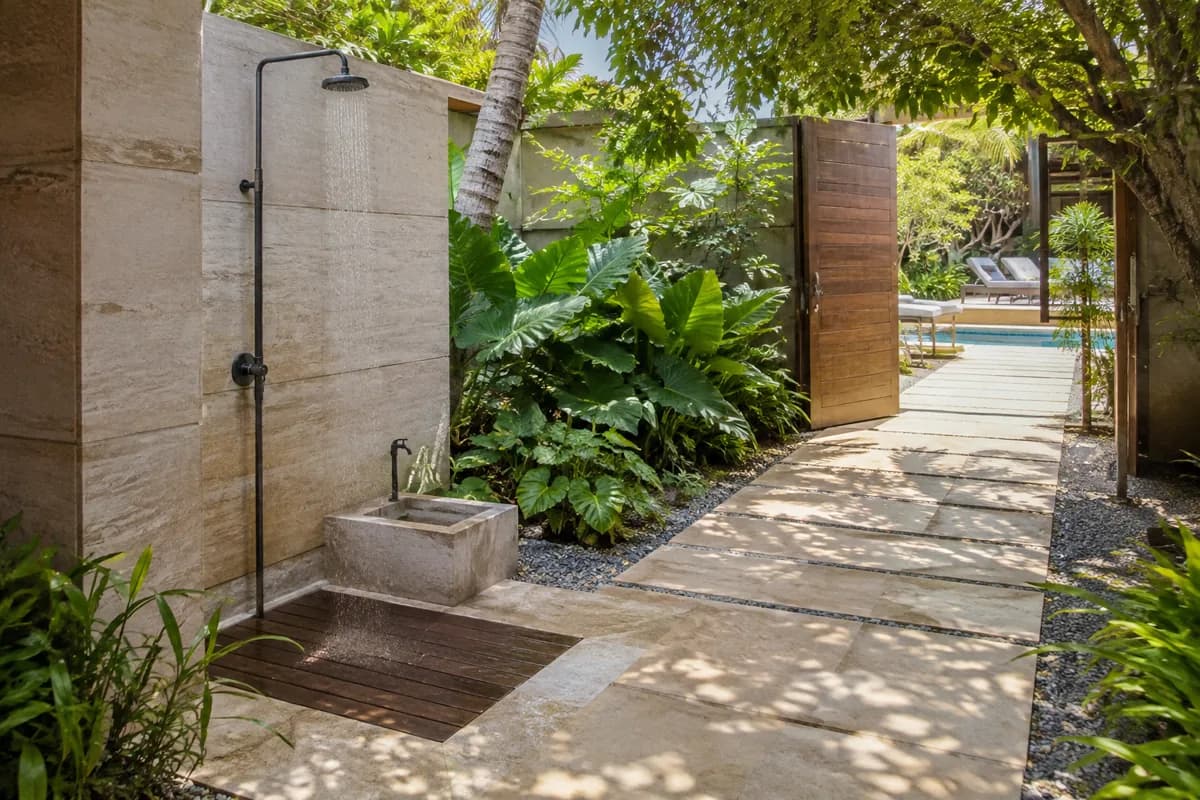
Screen equipment visually while maintaining manufacturer clearance, ventilation, drainage, shutoffs, and technician access.
11. Give towels and toys a dry home
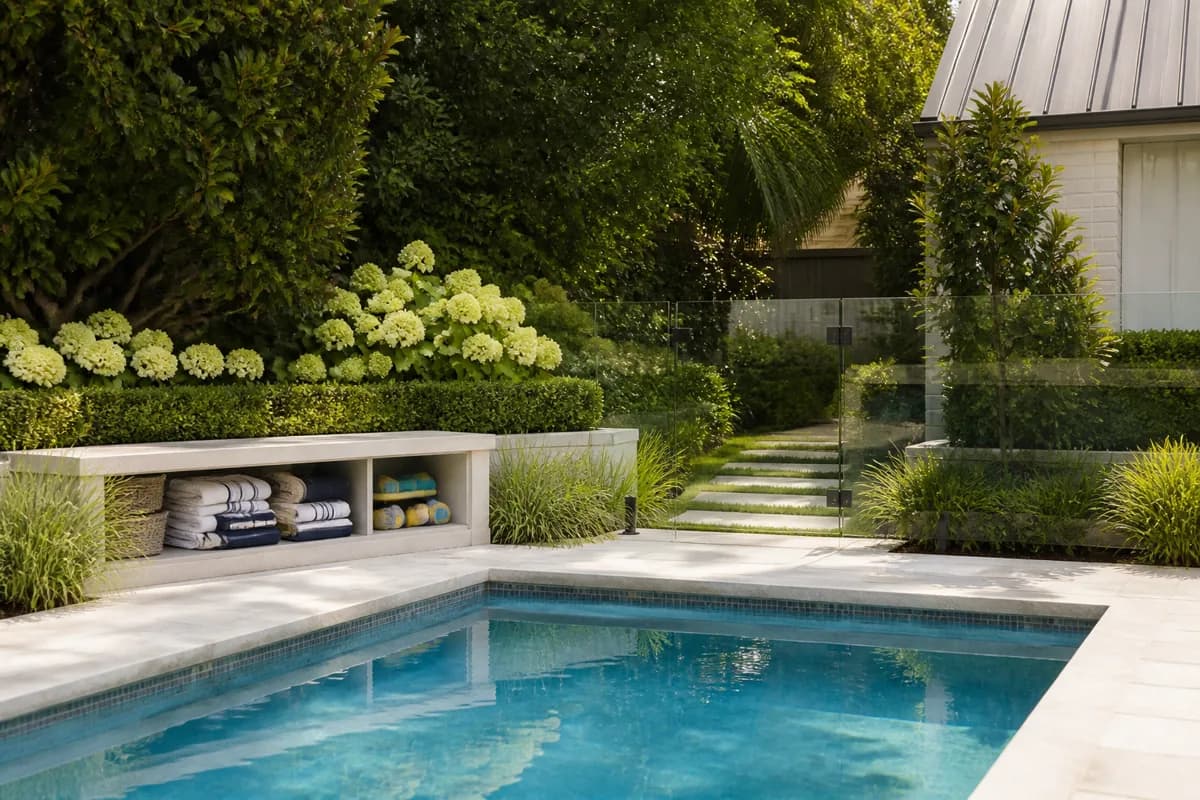
Dry, reachable storage reduces toys and towels left in routes; never turn a required gate or fence into storage.
12. Light the route without glare on water
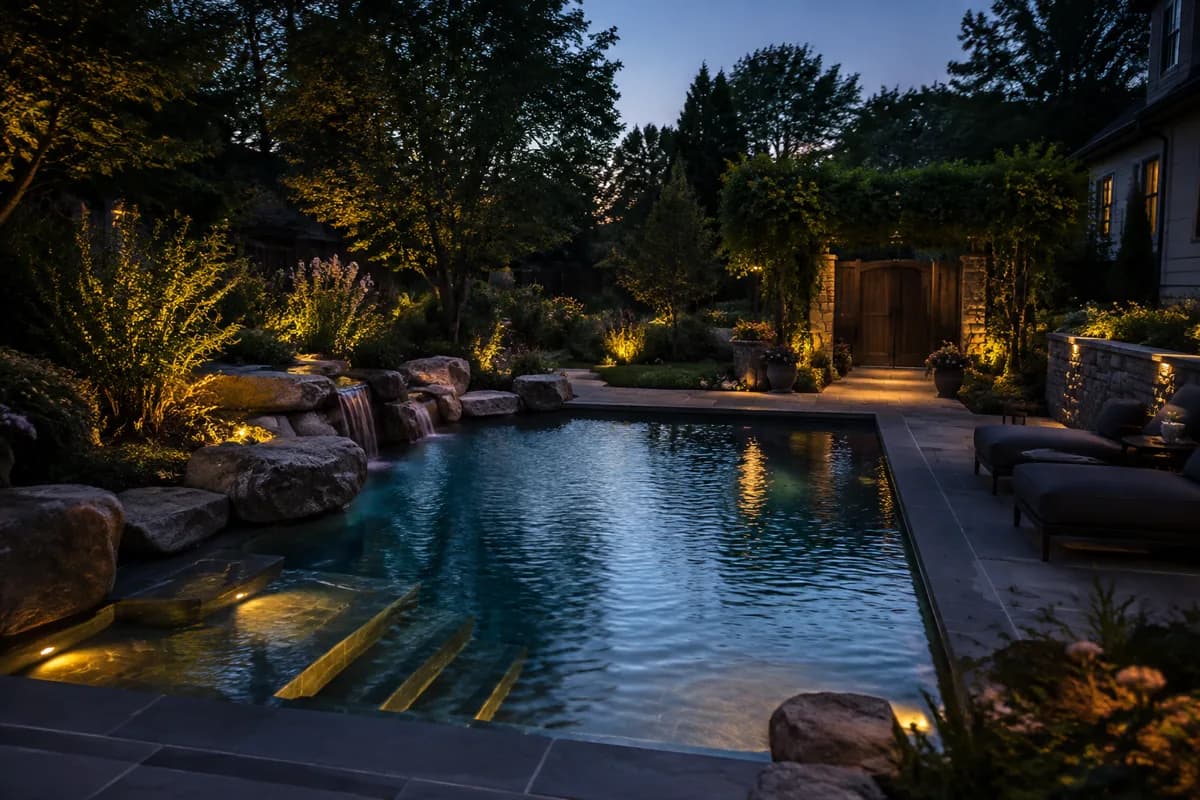
Light steps, gates, and routes without producing glare that makes the water harder to see.
Privacy and long-term planting
13. Add privacy without creating blind corners
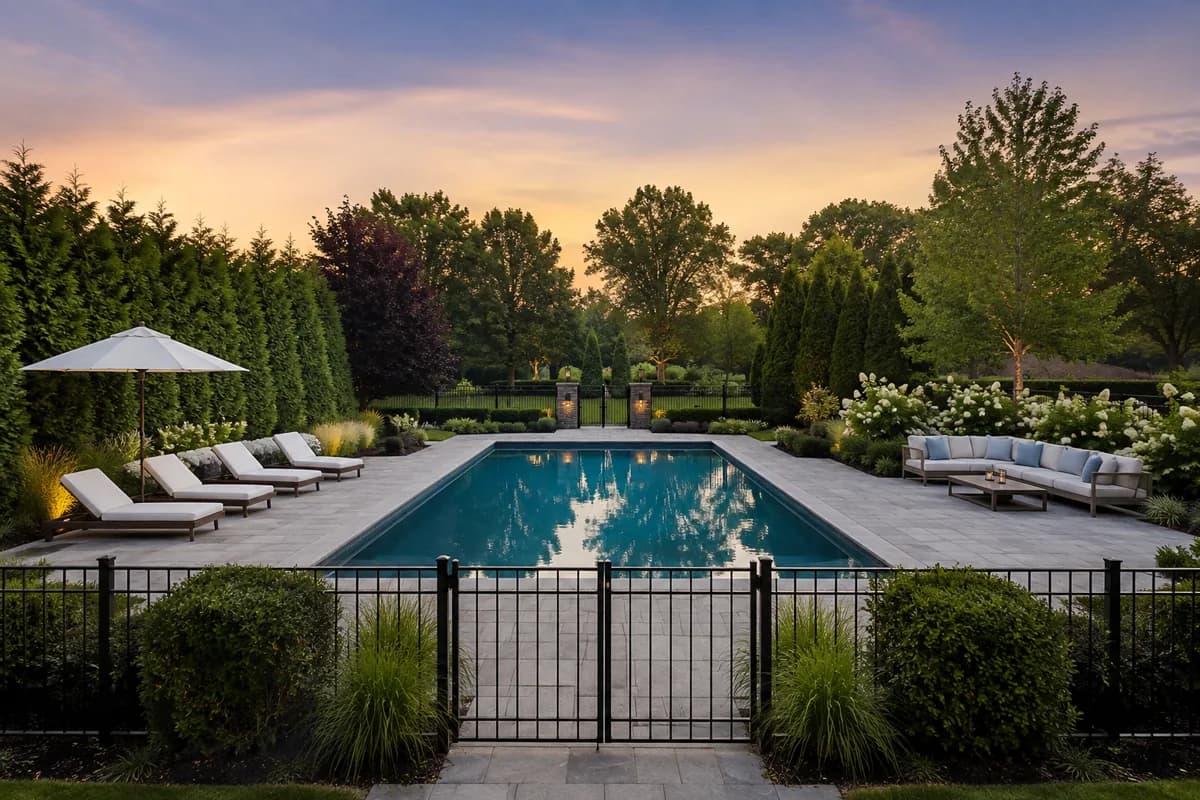
Shade and privacy must not hide the water or create blind corners from the responsible observation point.
14. Keep thorns and sharp leaves out of traffic
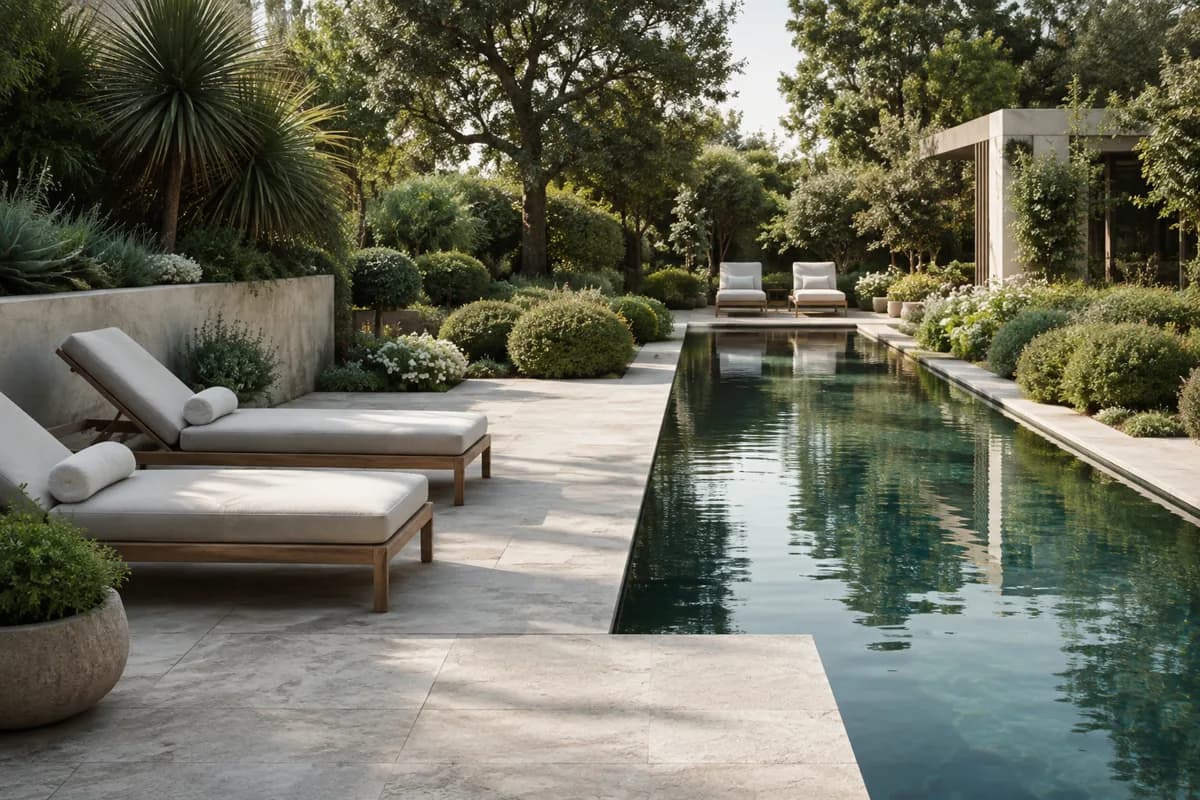
Select by mature roots and canopy, litter, thorns, sun, soil, water, pool exposure, maintenance, pet risk, and local invasive guidance.
15. Plan roots and mature canopies away from the shell
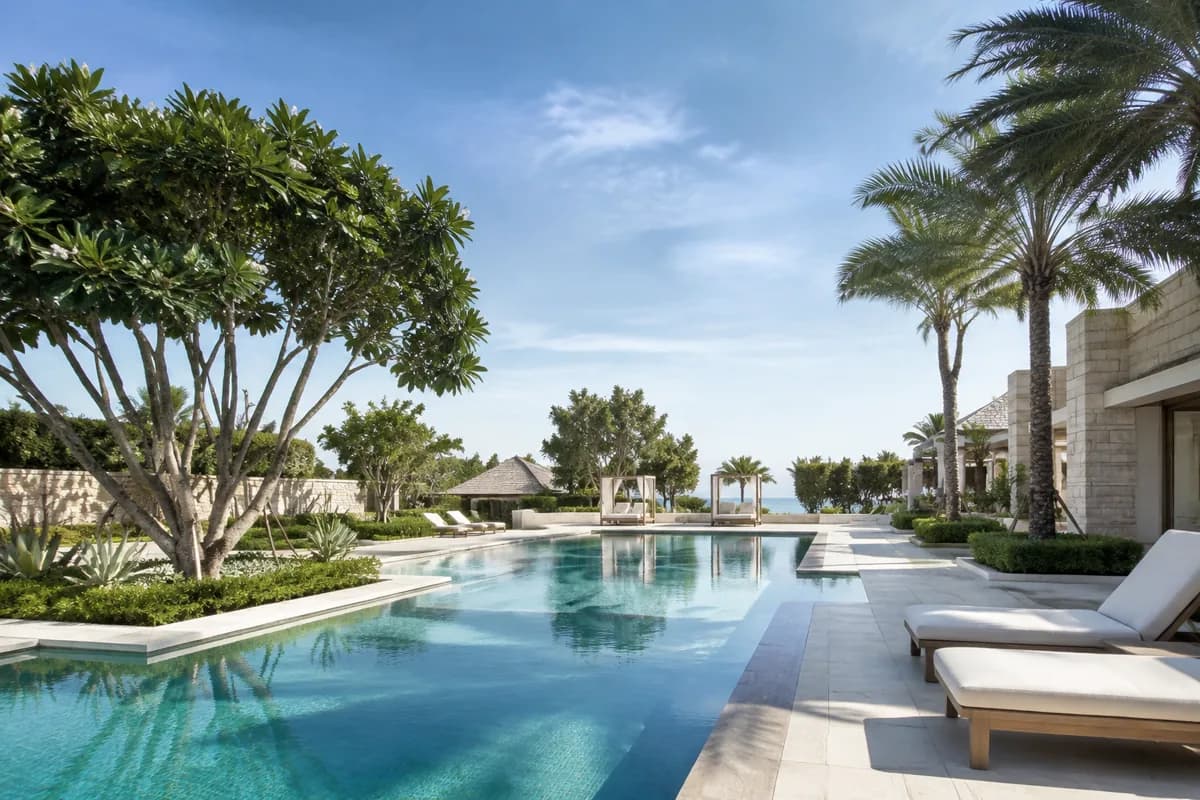
Select by mature roots and canopy, litter, thorns, sun, soil, water, pool exposure, maintenance, pet risk, and local invasive guidance.
16. Use seasonal containers for color
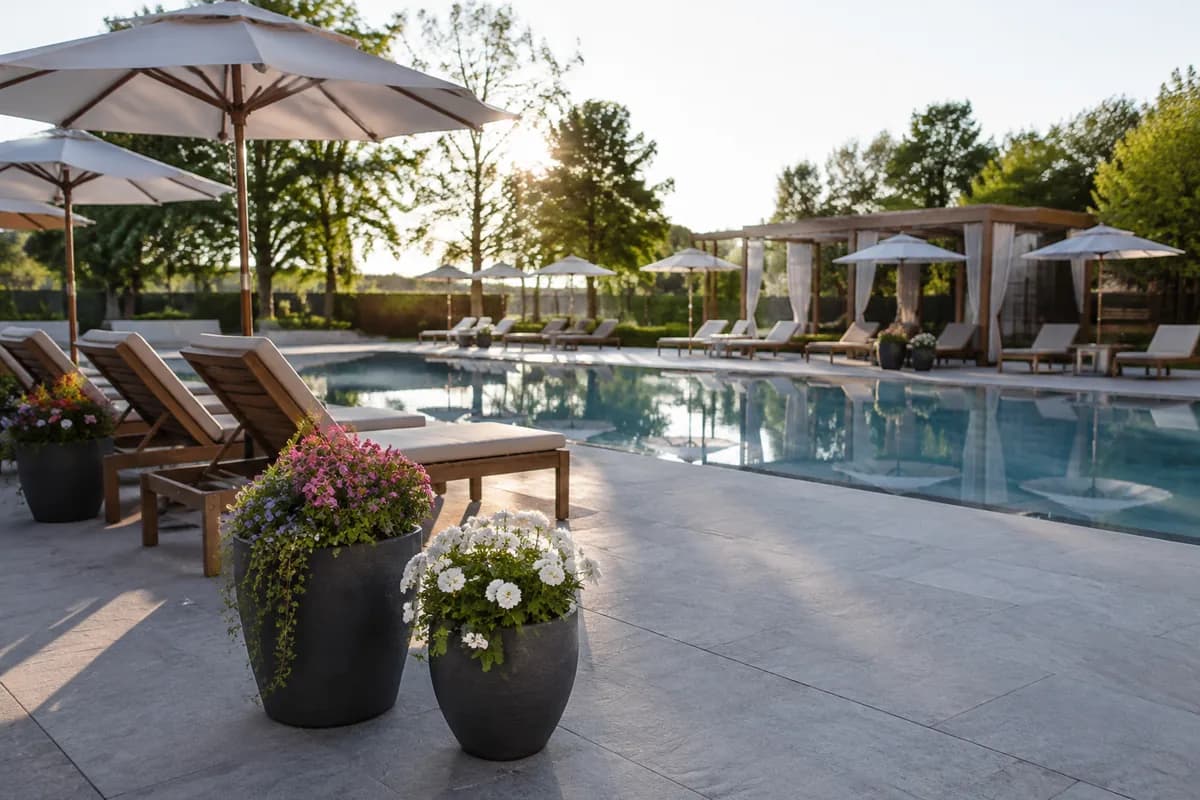
Movable containers add reversible color, but keep them stable, drained, and outside barrier and rescue paths.
Landscaping cannot replace layers of pool protection
Compare the landscape without changing the pool
- Photograph the pool, house, barrier, gate, equipment, routes, and observation point.
- Mark every required safety and service element as fixed.
- Compare three landscape directions while keeping the pool and protection system unchanged.
- Check debris, mature roots and canopy, thorns, surface heat, slip awareness, drainage, and maintenance.
- Take the shortlisted relationship to local pool, landscape, electrical, and construction review.
Frequently asked questions
What plants are best around a pool?
There is no universal list. Choose by climate, mature roots and canopy, litter, thorns, water, maintenance, pets, and local invasive guidance.
Can planting replace a pool fence?
No. Planting and decorative screens are not substitutes for required barriers, gates, alarms, covers, or supervision.
Can GardenGPT redesign the pool itself?
Use it to compare the surrounding visual landscape while keeping the existing pool and safety elements fixed; it does not engineer pools.
Which paving is safest?
No material is universally safest. Verify the installed assembly for slip, heat, drainage, maintenance, and local requirements.
A successful pool landscape makes the water easier to supervise, approach, clean, and enjoy. Decoration comes after the barrier, path, equipment, and maintenance plan remain intact.